


Lamb chops are my shortcut to a dinner that feels like an occasion. Eight minutes in a hot skillet, a sticky glaze brushed on at the end, and you have something that looks like it came from a restaurant — no grill, no special equipment, no long marinade required.
The glaze is what makes these chops: pomegranate molasses turns lacquered and sour-sweet in the hot pan, honey softens the tartness, rosemary and garlic keep it savoury, and fresh pomegranate seeds add crunch and colour at the end. Done in about 30 minutes, it works as well on a Tuesday as at a dinner party.
At a glance
- Servings: 4 (2 chops each)
- Prep time: 15 minutes (plus 30 minutes optional marinating)
- Cook time: 10 minutes
- Rest time: 5 minutes
- Total time: 30 minutes
- Method: seared in a cast-iron skillet, glazed in the last few minutes
- Why this recipe: a restaurant-looking dinner in 30 minutes, with no grill and no long marinade
- Storage: fridge 3–4 days; freeze up to 3 months
- Done when: an instant-read thermometer in the thickest part, away from the bone, reads 145°F (63°C), followed by a 3-minute rest
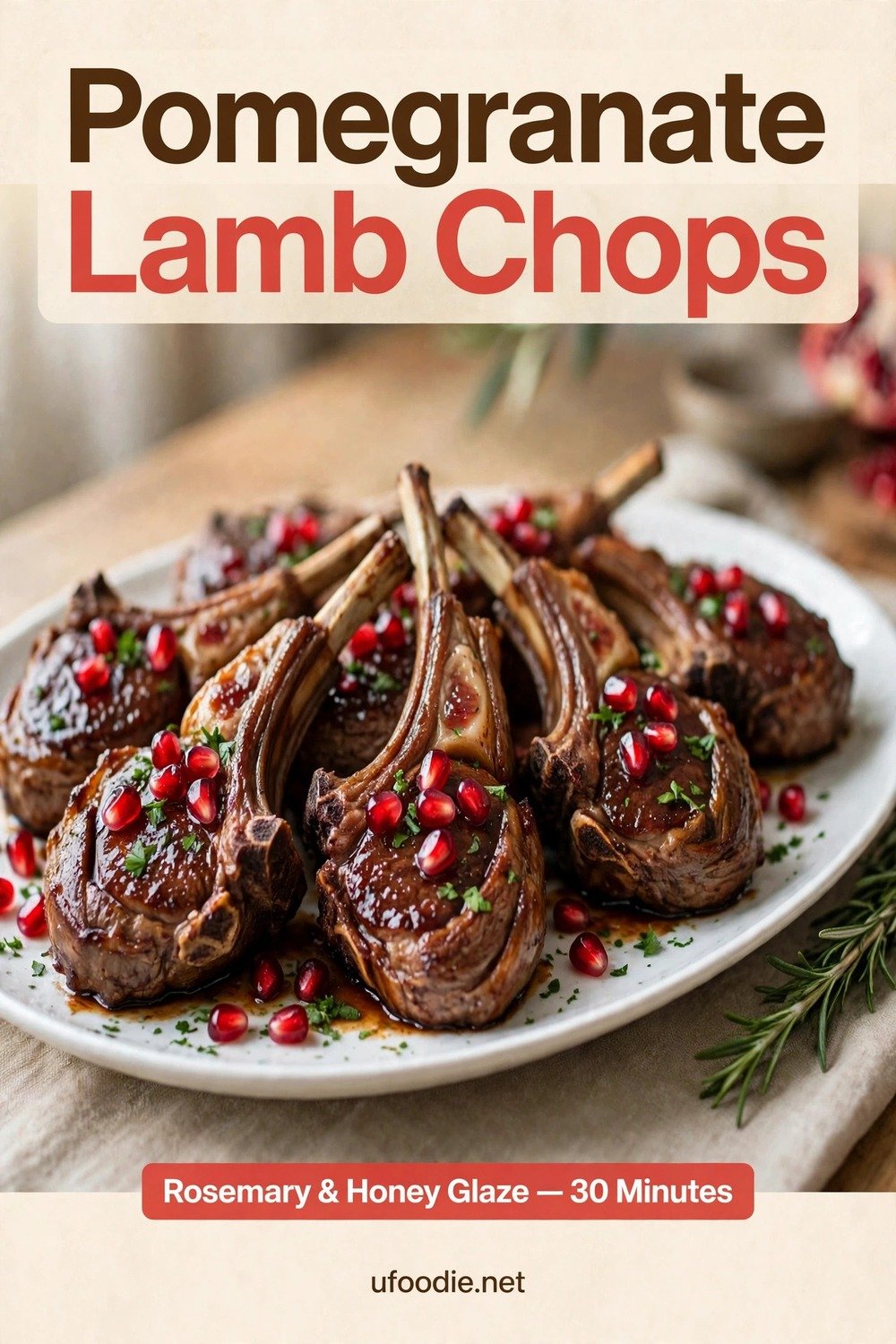
Pin this recipe for later.
Why you’ll love this recipe
- A special-occasion dinner in 30 minutes. The chops sear in about 8 minutes, the glaze takes a minute to whisk, and there is no grill or long marinade to plan around.
- The glaze does the heavy lifting. Pomegranate molasses, honey, rosemary and garlic turn plain seared lamb into something lacquered, sour-sweet and savoury.
- No special equipment beyond a thermometer. A heavy skillet, tongs and an instant-read thermometer are all you need — and the thermometer is the only reliable way to tell when lamb is done.
- It scales to a platter. Double the chops, pile them on a board with the seeds and herbs, and it works for a holiday table as easily as for a weeknight dinner for four.
Notes on ingredients
Lamb loin chops. The better pick: little T-bone steaks, more meat per chop than rib chops, usually cheaper, and more forgiving if your timing slips by a minute. Buy at least 1 inch thick, pink-red, with a thin, even fat cap that renders and helps the crust form.
Rib chops. Smaller, thinner and more delicate — 2 to 3 minutes per side — and they dry out fast, so check the temperature early. The times here are written for loin chops.
Shoulder chops. Not a fit: tougher and fattier, they need a long cook or a braise.
Kosher salt, black pepper and ground cumin. A simple rub is all the lamb needs; the cumin adds a warm, earthy note that suits the pomegranate.
Olive oil. A little in the pan for searing, a little in the glaze to loosen the molasses enough to brush.
Pomegranate molasses. The ingredient that makes the dish — a thick, dark, sour-sweet syrup of reduced pomegranate juice, sold in the international aisle or at Middle Eastern grocers. No luck finding it? Simmer pure pomegranate juice with sugar until it coats the back of a spoon; a balsamic glaze with a little brown sugar works too, but tastes less fruity.
Honey. Balances the molasses’ tartness; maple syrup works in its place.
Garlic. Finely minced, so it melts into the glaze instead of burning in chunks.
Fresh rosemary. Worth using — it holds up to heat and strong flavours. Dried works if you crush it between your fingers first.
Lemon zest and pomegranate juice. The zest brightens the glaze; the juice thins it just enough to brush (water works too).
Pomegranate arils. Not decoration — they add crunch and a sharp, juicy contrast to the rich meat. Leave them off if pomegranates are out of season rather than substituting something that doesn’t belong.
Fresh parsley and flaky salt. The finish: colour, freshness, and a pinch of salt that makes the sweet-tart flavours pop.
Find the complete recipe with measurements below.
How to make pomegranate lamb chops
Stage 1 — Season the chops and whisk the glaze
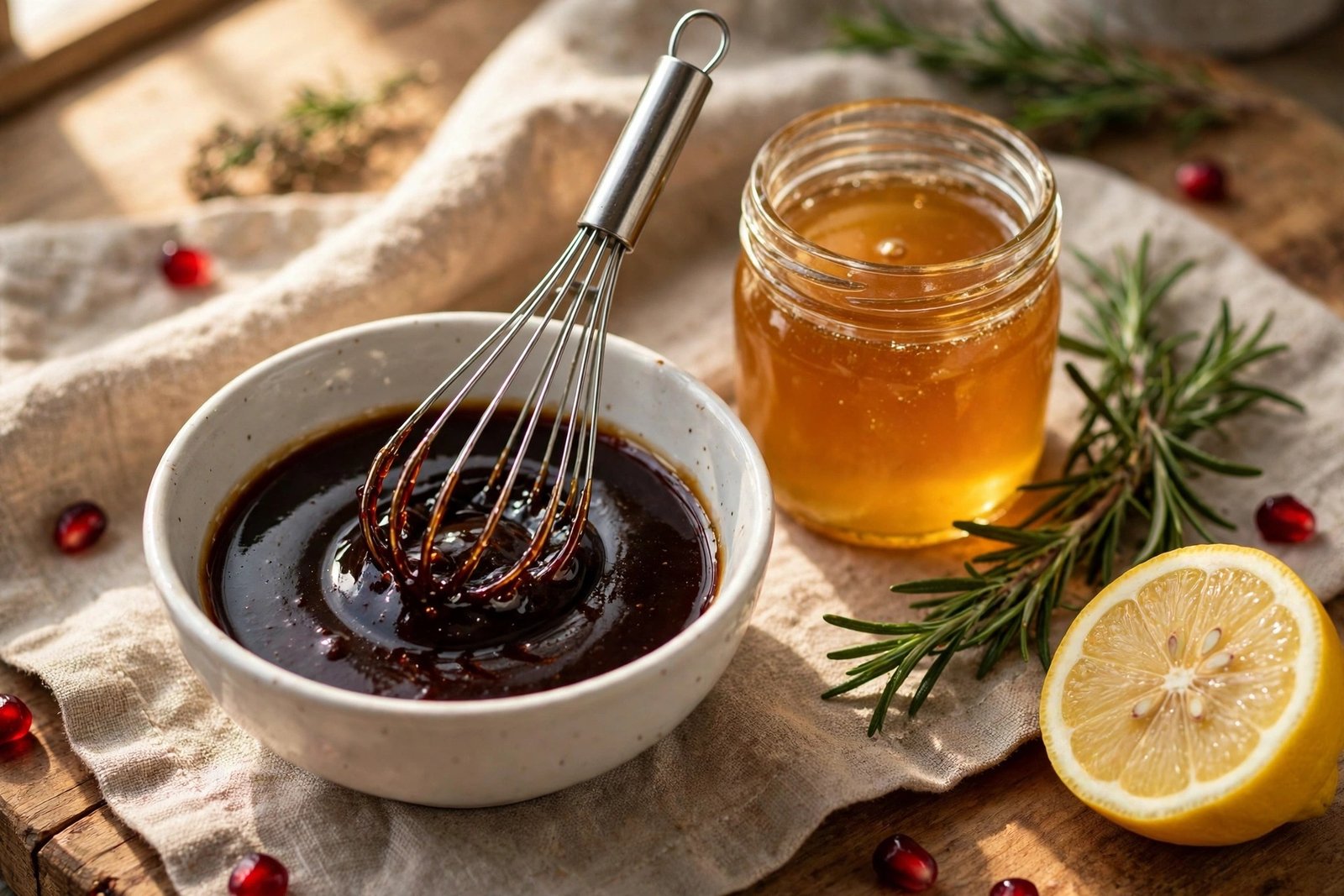
Take the chops out of the fridge 20 to 30 minutes before cooking — cold chops cook unevenly — and pat them completely dry with paper towels; a dry surface is what browns instead of steaming. Mix the salt, pepper and cumin, sprinkle over both sides and press in lightly. Whisk the molasses, olive oil, honey, garlic, rosemary, lemon zest and pomegranate juice in a small bowl until thick enough to coat a spoon but thin enough to brush; taste — sour-sweet with a savoury backbone — and add a little more honey if it is too sharp. If you have 30 minutes, spoon about half the glaze over the chops, turn to coat, cover and leave at room temperature. This is optional; most of the flavour comes from the glaze brushed on during cooking. Keep the rest in a separate bowl — never brush cooked meat with glaze that has touched raw lamb.

Stage 2 — Sear the first side
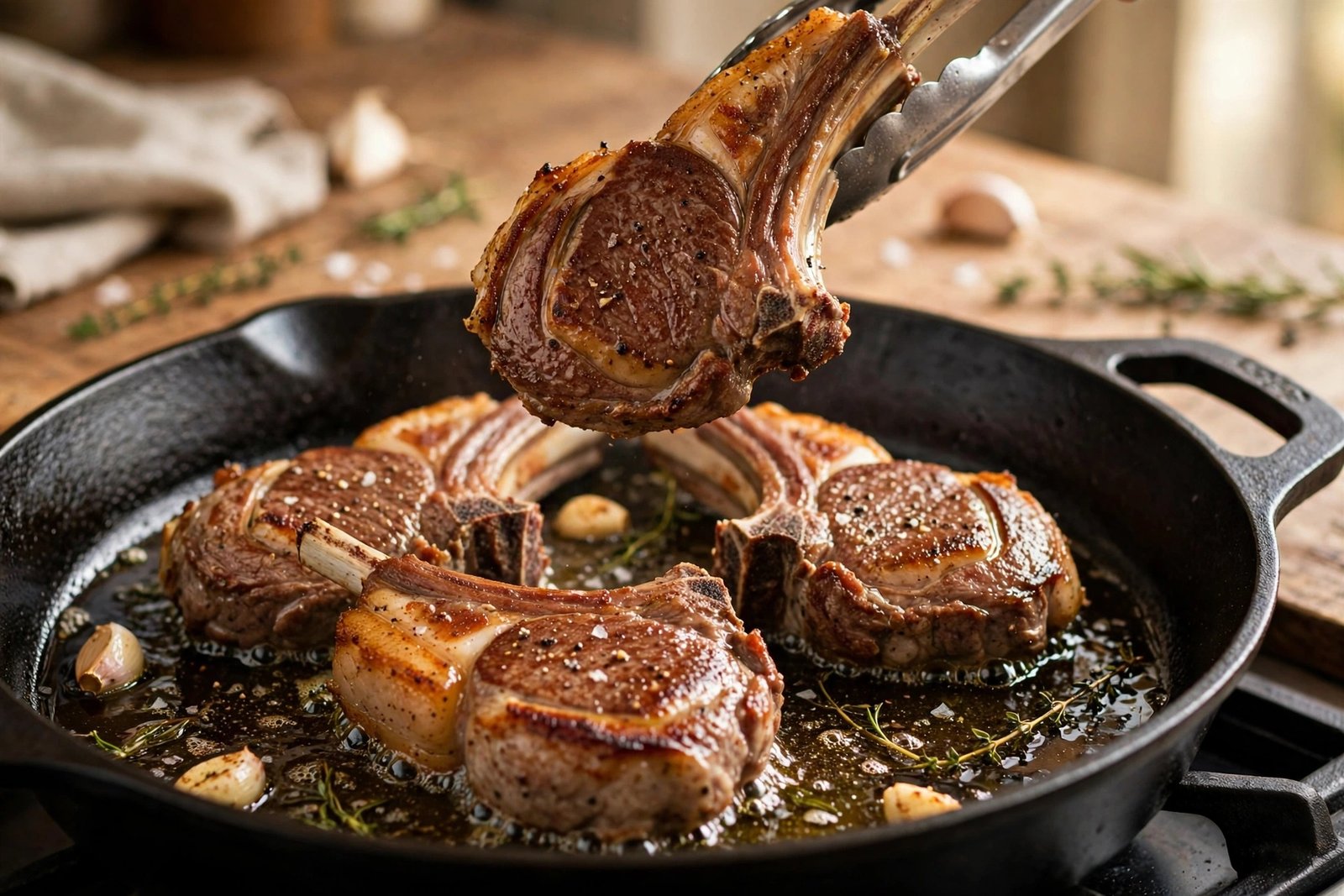
Heat the olive oil in a large cast-iron skillet or heavy stainless pan over medium-high heat until it shimmers and just starts to smoke. Lay the chops in a single layer with space between them — if they touch, they steam instead of searing — and work in two batches if your pan is small. Sear undisturbed for 3 to 4 minutes. Don’t move them or press them down; pressing squeezes out the juices. When the crust is ready, the chop releases cleanly from the pan. You want a deep golden-brown crust.
Stage 3 — Flip, glaze and check the temperature
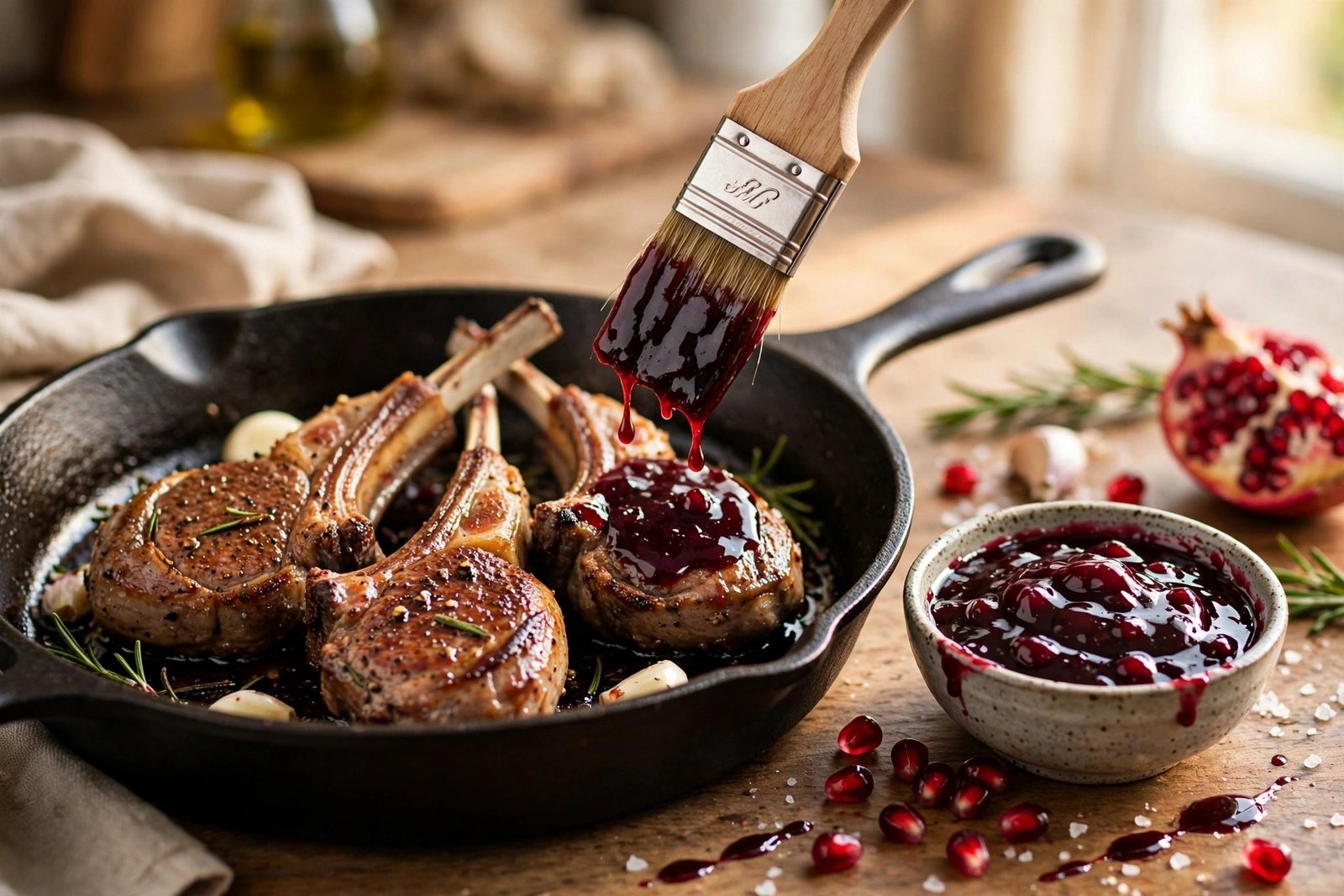
Flip the chops and brush the tops generously with the reserved glaze. Cook 3 to 4 minutes more, brushing once more in the last minute. Don’t glaze any earlier — the sugars in the molasses and honey burn easily, and glaze brushed on from the start scorches and turns bitter. The chops are done when an instant-read thermometer in the thickest part, away from the bone, reads 145°F (63°C) — the USDA safe minimum — followed by a 3-minute rest, during which the temperature climbs a few degrees. Use a thermometer, not the clock: chop thickness varies and a minute matters. Rib chops need only 2 to 3 minutes per side, so check them early. A note on doneness, stated plainly: many restaurants and cookbooks pull lamb at 130–135°F for medium-rare, below the USDA safe minimum of 145°F. If you want a rosy centre and still want to follow the USDA guidance, pull at 140°F and let the rest carry the chops to 145°F — the centre will still be pink. Past 160°F they are well done and noticeably tougher.

Stage 4 — Rest and serve
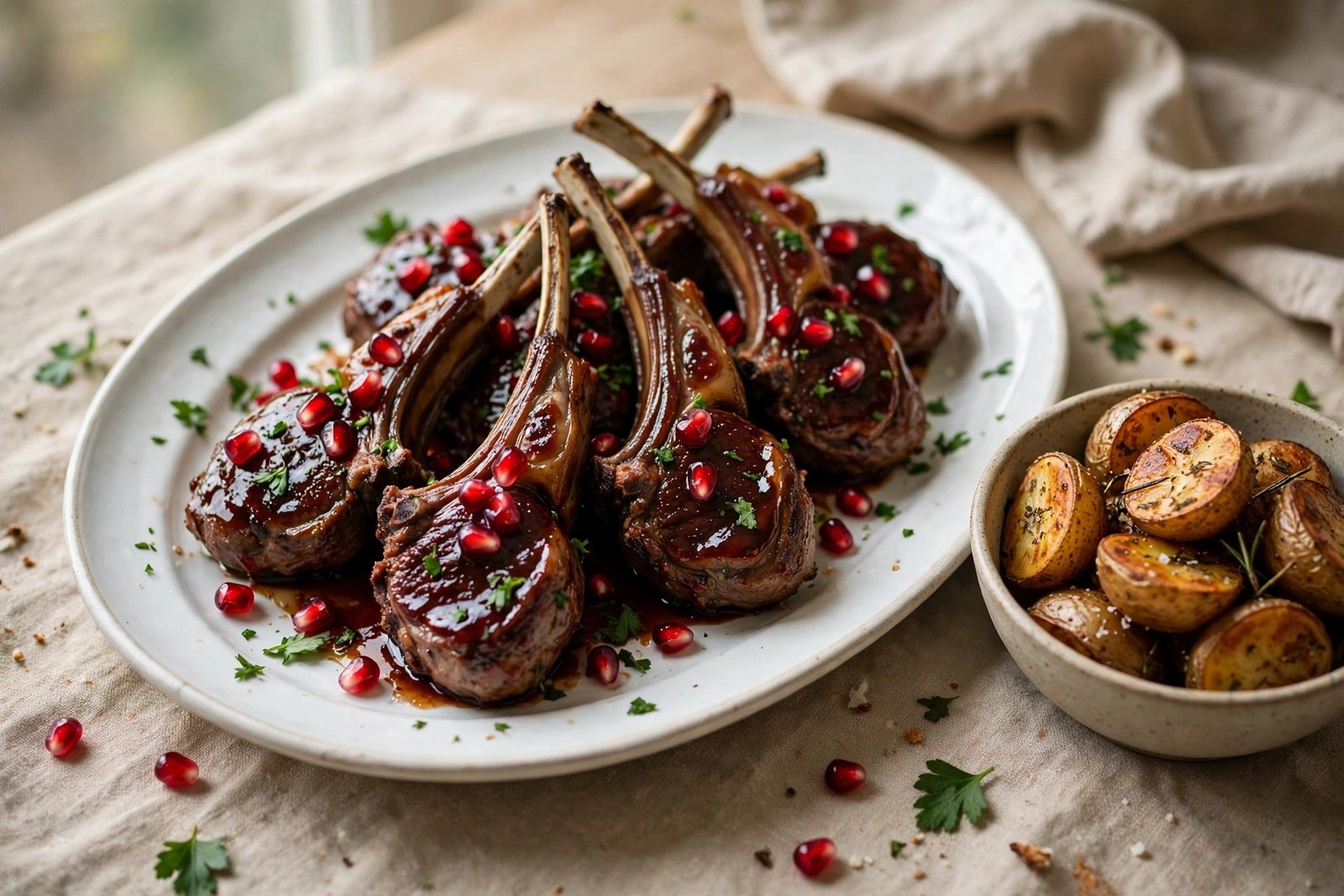
Move the chops to a plate or cutting board and tent loosely with foil. Rest for 5 minutes. The juices redistribute, the temperature evens out, and the glaze sets into a sticky coating. Do not skip this — cutting into a chop straight from the pan spills the juices onto the plate instead of keeping them in the meat. Scatter the pomegranate arils and chopped parsley over the chops and finish with a pinch of flaky salt. Serve immediately, with any pan juices spooned over the top. These chops go well with roasted potatoes, couscous, or a simple green salad.
Storage and reheating
Cooked lamb chops keep in the fridge for 3 to 4 days in an airtight container; the glaze will soften, which is normal. Don’t leave them at room temperature for more than 2 hours (1 hour above 90°F / 32°C) — see the FoodSafety.gov safe minimum internal temperatures chart and the Mayo Clinic food safety FAQ.
Reheating from the fridge: warm gently in a 300°F (150°C) oven for 8 to 10 minutes, until they reach 165°F (74°C) inside. Or slice the meat off the bone and warm it briefly in a skillet with a splash of water or broth. Avoid the microwave — it toughens lamb quickly.
Reheating from frozen: freeze leftovers up to 3 months, wrapped tightly. Thaw overnight in the fridge — never on the counter — then reheat in the oven as above, to 165°F.
Variations
- Grilled version: Heat the grill to high and oil the grates. Grill 3 to 4 minutes per side, brushing with glaze after the flip. Same 145°F target, same 5-minute rest.
- Herb swap: Swap the rosemary for fresh thyme or mint. Mint with pomegranate is a classic pairing — add it at the end rather than in the glaze, so it stays bright.
- Spicier glaze: Add a pinch of red pepper flakes or cayenne.
- Orange note: Replace the lemon zest with orange zest and swap the pomegranate juice for orange juice. It softens the tartness and leans the dish toward the Williams Sonoma style of pomegranate-glazed chops.
- Serve it as a platter: Double the chops, pile them on a board with the arils and herbs, and let everyone serve themselves.
Allergens and dietary information
- Contains: No major allergens as written. Pomegranate molasses is naturally gluten-free, dairy-free, and nut-free.
- Gluten-free: Yes, as written.
- Dairy-free: Yes, as written.
- Nut-free: Yes, as written.
- Low-carb / keto-friendly: The chops themselves are low in carbs; the glaze adds about 12 g of carbohydrate per serving from the molasses and honey. Skip the honey and use a sugar-free sweetener to cut that further, though the glaze will taste sharper.
- Not suitable for: Anyone avoiding red meat. There is no vegetarian version — the lamb is the point.
You may also like
If you like a main course that feels like an occasion without a long cook, try the Pot Roast with Mashed Potatoes — another dinner that feeds four easily. For another easy weeknight main, the Honey BBQ Chicken and Garlic Parmesan Potatoes is a good next cook, and the Chicken Gnocchi Soup or Creamy Tomato Soup and Grilled Cheese make a lighter dinner on a cold evening.
Pin this recipe for later.

Pomegranate Lamb Chops
Ingredients
Equipment
Method
- Take the chops out of the fridge 20 to 30 minutes before cooking and pat them completely dry with paper towels.
- Mix the salt, pepper, and cumin in a small bowl and sprinkle over both sides of every chop, pressing it in lightly.
- Whisk together the pomegranate molasses, 2 tablespoons of olive oil, honey, garlic, rosemary, lemon zest, and pomegranate juice in a small bowl until it coats a spoon.
- Optional: spoon about half the glaze over the chops and turn to coat. Leave at room temperature for 30 minutes. Keep the remaining glaze in a separate bowl.
- Heat the remaining tablespoon of olive oil in the cast-iron skillet over medium-high heat until it shimmers. Lay the chops in a single layer without crowding and sear undisturbed for 3 to 4 minutes, until a deep golden-brown crust forms and the chop releases cleanly from the pan.
- Flip the chops and brush the tops generously with the reserved glaze. Cook 3 to 4 minutes more, brushing once more in the last minute, until an instant-read thermometer in the thickest part, away from the bone, reads 145°F (63°C).
- Move the chops to a plate, tent loosely with foil, and rest for 5 minutes.
- Scatter the pomegranate arils and parsley over the chops, finish with flaky salt, and serve immediately with any pan juices spooned over the top.
Notes
Frequently asked questions
What temperature should lamb chops be cooked to?
The USDA safe minimum for lamb chops is 145°F (63°C), measured with a thermometer in the thickest part away from the bone, followed by a rest of at least 3 minutes. The temperature climbs a few degrees during the rest. Many cooks pull lamb at 135°F for medium-rare, but that is below the USDA minimum.
How long do lamb chops take to cook?
About 3 to 4 minutes per side in a hot skillet for 1-inch loin chops, so roughly 6 to 8 minutes of cooking plus a 5-minute rest. Rib chops are thinner and need 2 to 3 minutes per side. The thermometer, not the clock, decides when they are done.
Should I use rib chops or loin chops?
Either works, but loin chops are the more forgiving choice: they are thicker, carry more meat, and are usually a little cheaper. Rib chops are smaller and more delicate, and they overcook faster. Avoid shoulder chops for this recipe — they are tougher and need a longer cook or a braise.
Can I make pomegranate lamb chops on the grill?
Yes. Heat the grill to high, oil the grates, and grill 3 to 4 minutes per side, brushing the glaze on after the flip. Keep the same 145°F target and rest the chops for 5 minutes before serving.
What can I use instead of pomegranate molasses?
The closest homemade version is 1 cup of pure pomegranate juice simmered with ¼ cup of sugar for about 30 minutes, until it coats a spoon. A balsamic glaze with a teaspoon of brown sugar per tablespoon is a workable pantry swap, though it tastes less fruity.
Why did my glaze burn?
The sugars in pomegranate molasses and honey scorch quickly over high heat. Glaze only in the last 3 to 4 minutes of cooking, after the first side is seared, and keep the heat at medium-high rather than maximum. If the pan starts smoking hard, turn the heat down.
Can I marinate lamb chops overnight?
Yes — up to 24 hours in the fridge is fine. The molasses is acidic, so do not go beyond a day or the surface of the meat can turn soft. Let the chops come back to room temperature for 20 to 30 minutes before cooking.
What should I serve with pomegranate lamb chops?
Roasted potatoes, couscous, rice pilaf, or a simple green salad all work. The sweet-tart glaze pairs well with something plain and starchy that can soak up the pan juices.

1 Comment
Pingback: Pomegranate Avocado Quinoa Salad (Easy, 35 Minutes)