

Pomegranate Molasses Butter Cake (Tender, Glazed & Easy)
Pomegranate molasses is one of those bottles that quietly transforms a bake — pomegranate juice cooked down until it tastes like the fruit turned up to eleven. Folded into a soft butter cake, it gives the crumb a warm blush and a gentle tang that plain vanilla never manages.
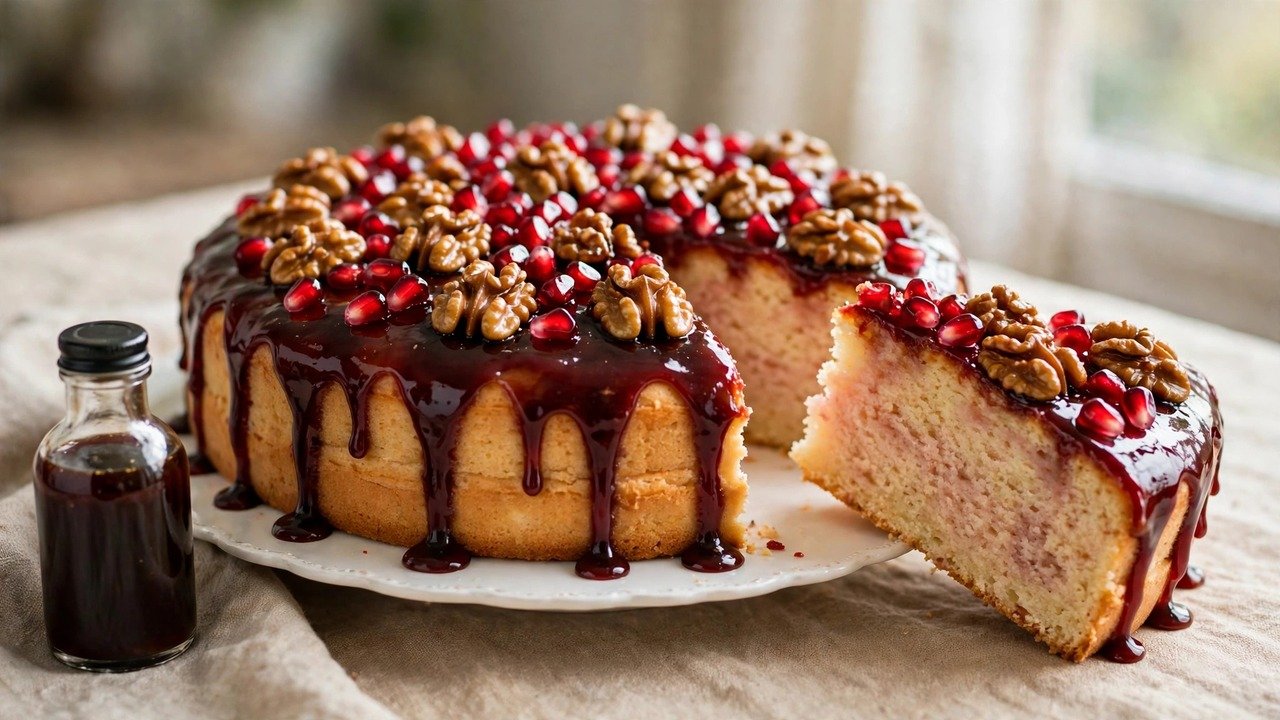
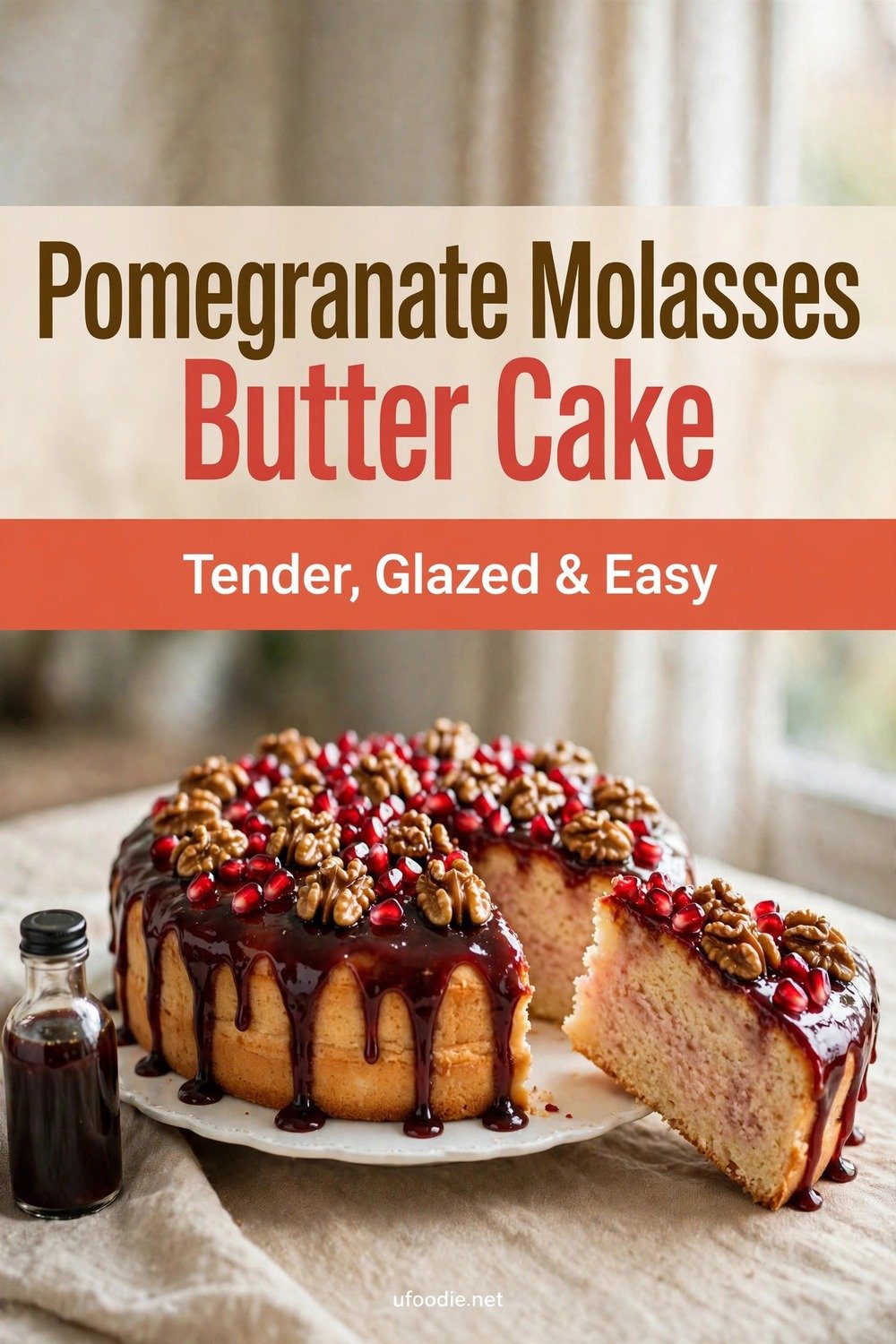
This is the cake I make when I want a bakery-window look with a weeknight bake. A thin pomegranate glaze, a scatter of candied walnuts, and a handful of fresh arils do all the showing off — no frosting to wrestle with, no filling to assemble.
The whole thing takes about an hour, most of it hands-off while the oven does the work.
At a glance
- Servings: 10 slices
- Prep time: 20 minutes
- Bake time: 35–40 minutes
- Total time: 60 minutes, plus about 1 hour cooling
- Difficulty: Easy — if you can cream butter and sugar, you can make this
- Method: Creamed butter cake, baked in a 9-inch round pan
- Why this recipe: the pomegranate molasses sweetens and adds a tart depth that keeps the rich butter crumb from tasting flat
- Storage: 2 days at room temperature, up to 5 days in the fridge, or freeze the unglazed cake for up to 2 months
Done means a clean toothpick and 200–205°F (93–96°C) in the centre — the surest test is an instant-read thermometer.
Why you’ll love this recipe
- It looks like a bakery cake with weeknight effort. The dark glaze, glossy candied walnuts, and bright red arils do the decorating for you.
- The flavour is grown-up without being fussy. The molasses brings a tart edge that balances the butter.
- It keeps and freezes beautifully. Bake it a day ahead, glaze it on the day — and the unglazed cake freezes for up to 2 months.
- It adapts to the pan you own. Round, square, loaf, bundt, or muffins — the same batter works.
Notes on ingredients
- Unsalted butter: the backbone of the crumb — use real butter, softened until it gives under a spoon. Cold butter will not cream properly and the cake bakes up dense.
- Granulated sugar: creamed with the butter, it is what makes the crumb light — beat until pale, fluffy, and almost white.
- Eggs: large and at room temperature, added one at a time — cold eggs make the creamed butter seize into lumps, so set them out 30 minutes ahead.
- Orange zest: finely grated, just enough to brighten the molasses — leave it out if you have no orange; the cake is still good, just less bright.
- All-purpose flour: spoon it into the cup and level it off — scooping straight from the bag packs in up to 25% extra flour, which dries the cake out. A little fine salt goes in with it — it sharpens the molasses and keeps the sweetness from tasting flat.
- Baking powder: measured level, not heaped. Too much leavening is one of the classic reasons a cake sinks in the middle.
- Buttermilk: at room temperature. Its acidity reacts with the baking powder and keeps the crumb soft and fine; whole milk works, but the cake will be a touch less tender. No buttermilk? Stir a little lemon juice or white vinegar into plain milk and leave it for 5 minutes.
- Pomegranate molasses: the star — thick, dark, intensely tart-sweet. Do not swap in pomegranate juice — too thin, too mild, and it would throw off the liquid balance. Look for it in the Middle Eastern aisle, near the tahini, or online. If you cannot find it, simmer pomegranate juice gently until it reduces to about a quarter of its volume and coats a spoon, then cool it before using. Vanilla, stirred into the buttermilk with the molasses, rounds the flavour out rather than competing with it.
- Powdered sugar: sifted, for a smooth glaze with no lumps. Whisk it with the molasses and just enough milk or cream to drizzle, adding the liquid a little at a time.
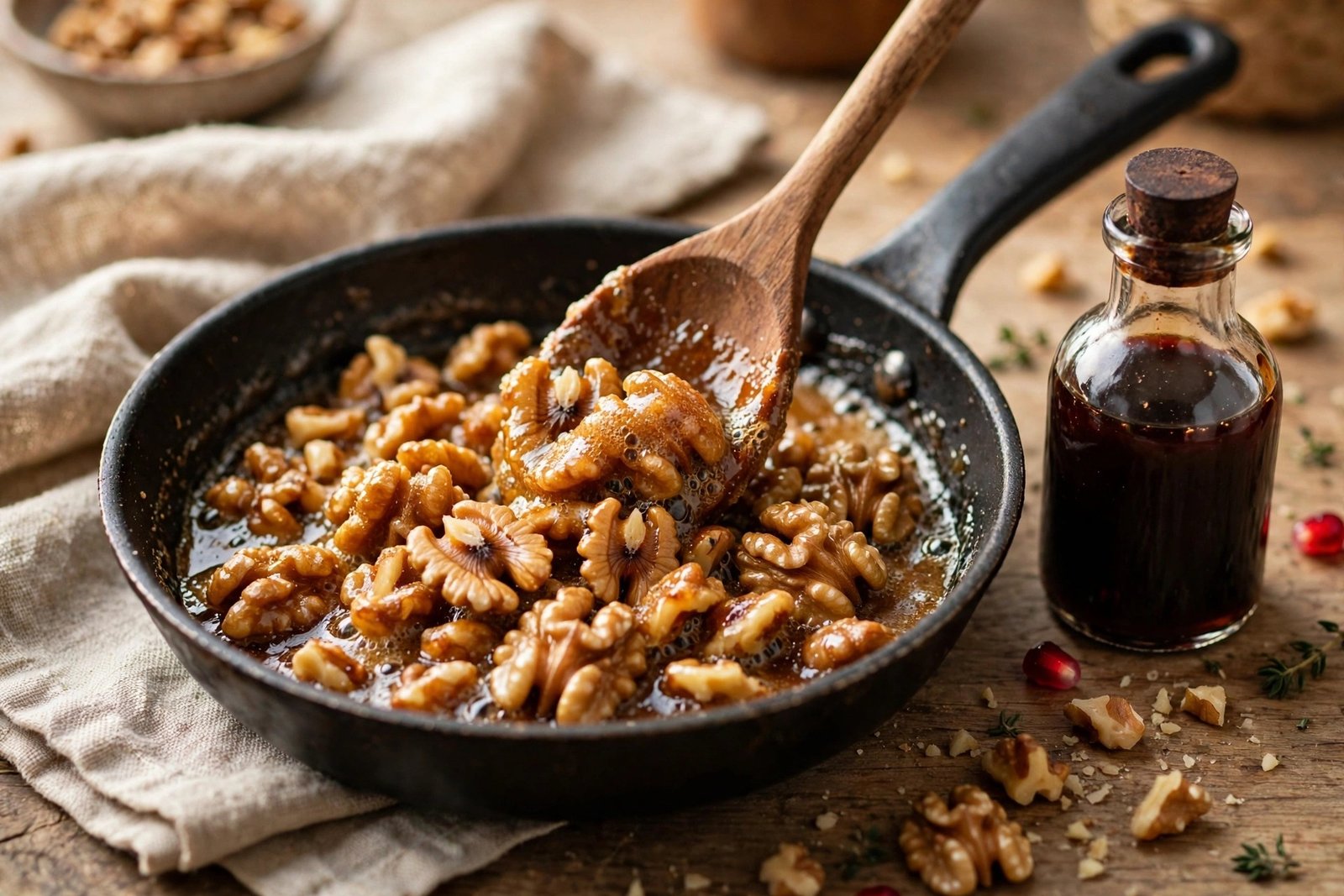
- Walnuts: roughly chopped, then candied in a skillet with a little molasses and sugar — they go from glossy to burnt in seconds, so tip them onto a plate the moment they shine.
- Fresh pomegranate arils: scattered over the finished cake for colour, crunch, and tart juice in every slice.
Find the complete recipe with measurements in the recipe card below.
How to make pomegranate molasses butter cake
Stage one: Prepare the pan and mix the dry and wet ingredients
Heat the oven to 350°F (177°C) with a rack in the middle. Butter a 9-inch round cake pan, line the bottom with parchment, butter the parchment too, then dust lightly with flour. The parchment is what lets a tender cake come out in one piece.
In a medium bowl, whisk together the flour, baking powder, and salt so the leavening is evenly distributed and the cake rises level. In a small bowl or jug, stir together the buttermilk, pomegranate molasses, and vanilla until dusky rose. Keeping the molasses in the liquid, rather than beating it straight into the butter, stops it from seizing the batter into streaks.
Stage two: Cream the butter and sugar, then combine
In a large bowl, beat the butter and sugar on medium-high for 3–4 minutes, until pale, fluffy, and almost white. Add the eggs one at a time, beating well after each, and beat in the orange zest with the last egg. If the mixture looks slightly curdled, do not worry — it comes back together once the flour goes in.
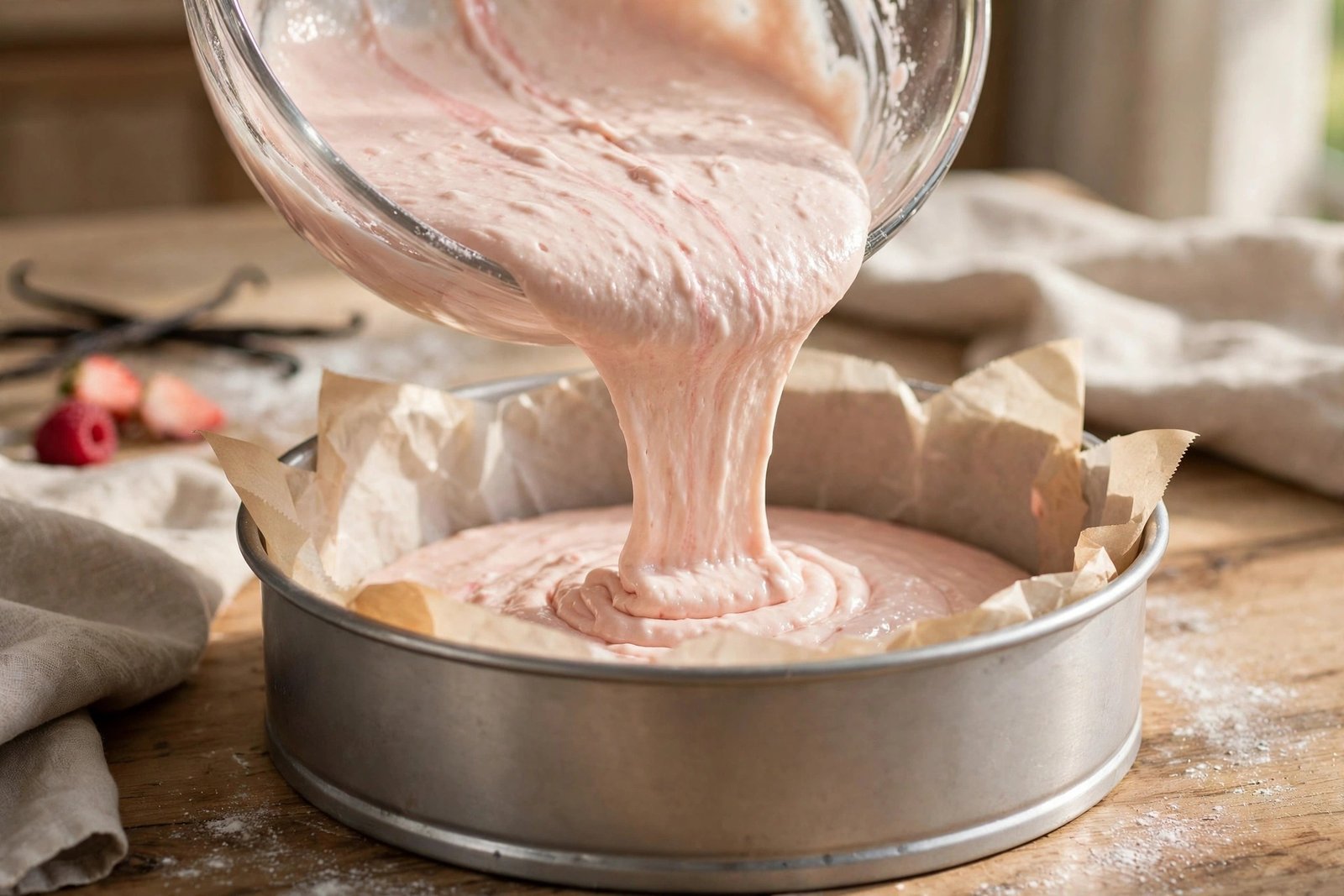
Add the flour in three batches, alternating with the buttermilk in two, mixing on low or folding by hand just until each addition disappears. Stop as soon as you cannot see dry flour — stirring too much develops gluten and turns a tender cake tough. The batter will be thick, smooth, and faintly pink.


Stage three: Bake
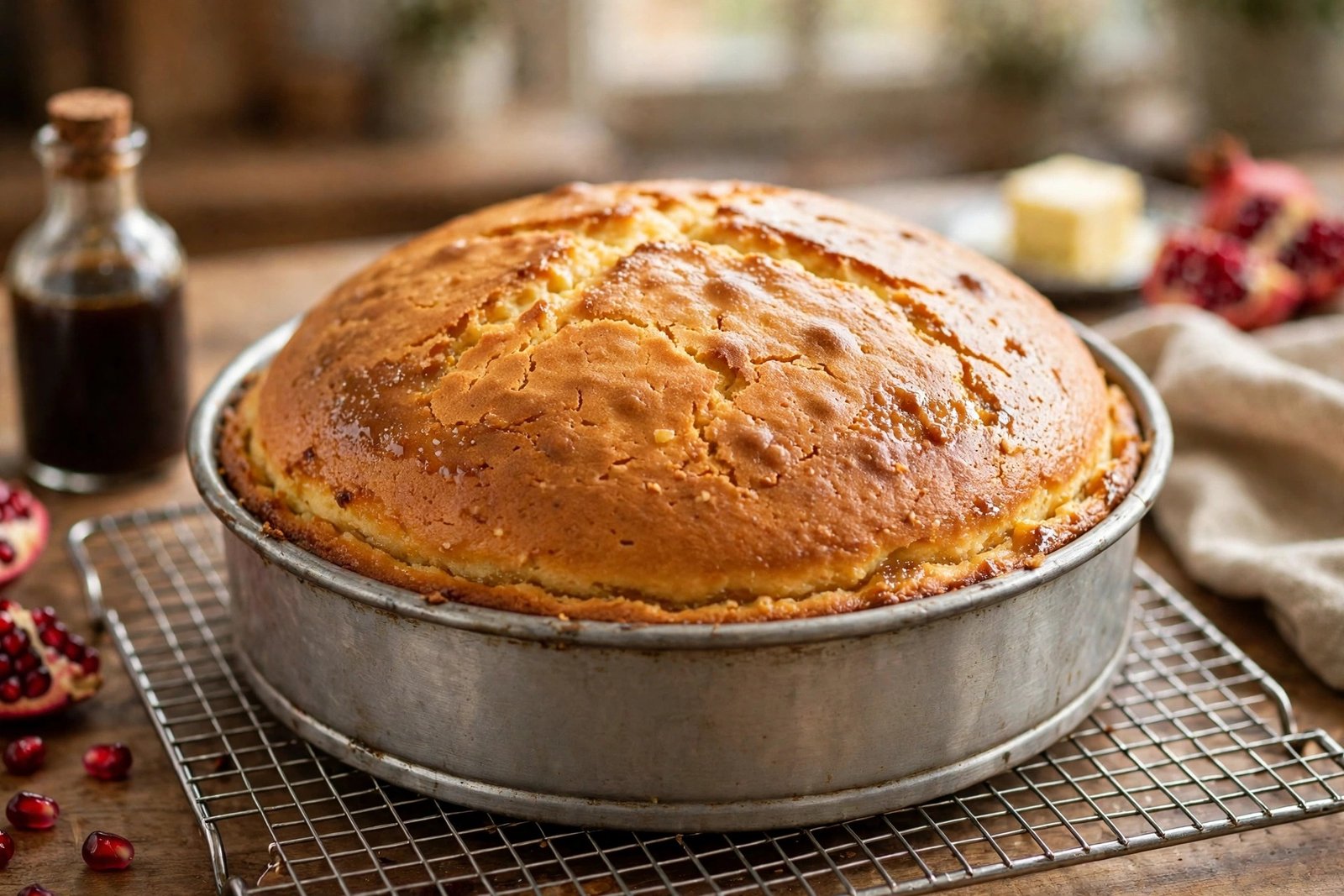
Scrape the batter into the pan, smooth the top, and bake 35–40 minutes, until golden and a toothpick in the centre comes out clean or with a few moist crumbs; the centre should read 200–205°F (93–96°C). If the top browns too fast after 30 minutes, lay foil loosely over the pan. Do not open the oven door before 30 minutes — the cake is still setting, and a rush of cool air can sink the middle. Home ovens commonly run 10–25°F off the dial, so an oven thermometer is worth having if your cakes keep sinking.
Stage four: Cool, glaze, candy the walnuts, and finish
Cool in the pan for 10 minutes, then run a thin knife around the edge, turn it out onto a wire rack, peel off the parchment, and leave it to cool completely, about 1 hour. Glaze only a fully cooled cake — a warm cake melts the glaze into a thin film.
While it cools, whisk the powdered sugar, molasses, and milk or cream until smooth, adding the last of the liquid only if the glaze is too thick to drizzle. For the candied walnuts, stir the chopped walnuts, molasses, sugar, and a pinch of salt in a small nonstick skillet over medium-high heat for about 2 minutes, until the sugar melts and coats the nuts in a thin shine. Tip them onto a plate at once — they set fast and will stick to the pan if left there.
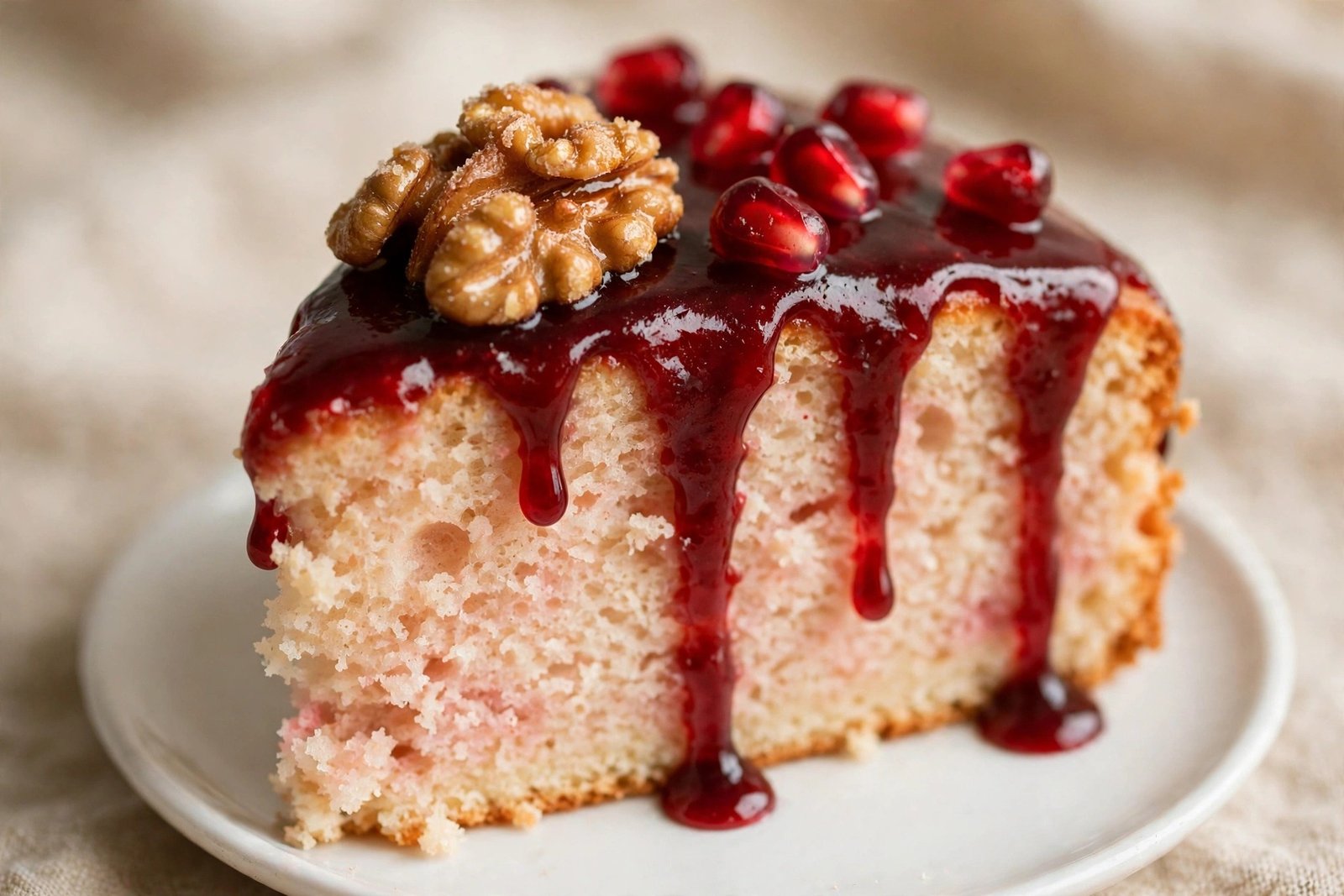
Set the cooled cake on a serving plate, spoon or brush the glaze over the top, and let it drip down the sides. Scatter the candied walnuts over the glaze, then finish with the arils. Slice with a long, sharp knife, wiping the blade between cuts. Serve at room temperature.

Storage and reheating
The cake keeps 2 days at room temperature in an airtight container or under a cake dome, and up to 5 days in the fridge. The glaze firms up in the fridge, so bring slices back to room temperature for 20–30 minutes before serving. Do not leave a glazed cake out for more than 2 hours (1 hour if the room is above 90°F / 32°C) — the FoodSafety.gov cold food storage guidance and the Mayo Clinic food safety FAQ both confirm the 2-hour rule for perishable baked goods with dairy.
For longer storage, freeze the unglazed cake wrapped tightly in plastic wrap, then foil, for up to 2 months. Reheating from frozen: thaw overnight in the fridge, bring to room temperature, then glaze and top it fresh — a glazed cake can be frozen too, but the glaze may weep as it thaws. Reheating from the fridge: let slices sit at room temperature for 20–30 minutes; no oven needed, and do not microwave the cake, which dries the crumb.
Variations and substitutions
- Square pan: Bake in a buttered and floured 9-inch square pan for the same 35–40 minutes; it serves 9 squares.
- Loaf cake: Use a 9×5-inch loaf pan and bake 55–65 minutes, tenting with foil after 40 minutes if the top darkens.
- Bundt cake: Double the recipe for a 10-cup bundt pan and bake 45–55 minutes, greasing every flute thoroughly.
- Pistachio topping: Swap the walnuts for chopped pistachios — their green against the dark glaze and red arils is the prettiest version.
- Chocolate twist: Fold a handful of dark chocolate chips into the batter with the last batch of flour — the molasses and chocolate are a natural match.
- No nuts at all: Skip the candied walnuts and top the cake with arils and extra glaze — safe for nut-free tables.
Allergens and dietary information
Contains milk/dairy (butter, buttermilk, cream or milk in the glaze), egg, wheat/gluten (all-purpose flour), and tree nuts (walnuts). Pomegranate molasses is naturally gluten-free, but check the label — some brands add thickeners.
It is vegetarian as written, but not vegan, dairy-free, gluten-free, or nut-free as written. For a dairy-free version, use plant-based butter and oat milk soured with lemon juice (the crumb will be slightly denser). For a gluten-free version, use a cup-for-cup gluten-free flour blend with xanthan gum and a splash more buttermilk, and cool the cake fully in the pan before turning it out.
You may also like
If you like baking with fruit and glaze, try the Pumpkin Cream Cheese Muffins — another easy bake with a creamy centre.

Pomegranate Molasses Butter Cake
Ingredients
Equipment
Method
- Heat the oven to 350°F (177°C) with a rack in the middle. Butter a 9-inch round cake pan, line the bottom with a round of parchment paper, and butter the parchment too. Dust lightly with flour and tap out the excess.
- Whisk together the flour, baking powder, and salt in a medium bowl. In a small bowl or jug, stir together the buttermilk, 3 tablespoons of pomegranate molasses, and the vanilla extract.
- Beat the softened butter and granulated sugar with an electric mixer on medium-high for 3–4 minutes, until pale and fluffy. Add the eggs one at a time, beating well after each one, then beat in the orange zest.
- Add the flour mixture in three batches, alternating with the buttermilk mixture in two batches: flour, buttermilk, flour, buttermilk, flour. Mix on low speed, or fold by hand, just until each addition disappears. Do not overmix.
- Scrape the batter into the prepared pan and smooth the top. Bake for 35–40 minutes, until the top is golden and a toothpick pushed into the centre comes out clean or with a few moist crumbs. The centre should read 200–205°F (93–96°C) on an instant-read thermometer. Tent loosely with foil after 30 minutes if the top browns too fast.
- Let the cake cool in the pan for 10 minutes, then run a thin knife around the edge, turn it out onto a wire rack, peel off the parchment, and leave to cool completely, about 1 hour.
- While the cake cools, whisk the powdered sugar, 1 tablespoon of pomegranate molasses, and 2 tablespoons of milk or cream until smooth, adding the last tablespoon of liquid only if the glaze is too thick to drizzle. For the candied walnuts, stir the chopped walnuts, 1 teaspoon of pomegranate molasses, 1 tablespoon of sugar, and a pinch of salt in a small nonstick skillet over medium-high heat for about 2 minutes, until the sugar melts and coats the nuts. Tip them onto a plate at once.
- Spoon or brush the glaze over the cooled cake, letting it drip down the sides. Scatter the candied walnuts over the glaze, finish with the fresh pomegranate arils, and slice with a long, sharp knife, wiping the blade between cuts. Serve at room temperature.
Notes
Frequently asked questions
What is pomegranate molasses?
Pomegranate molasses is pomegranate juice simmered down until it becomes a thick, dark, intensely tart-sweet syrup. It is a staple of Middle Eastern and Persian cooking, used in glazes, dressings, and stews. Look for it in the Middle Eastern aisle of a supermarket, near the tahini, or online. Do not confuse it with grenadine, which is a sweetened syrup with far less tartness.
Can I make pomegranate molasses at home?
Yes. Pour 1 cup of pomegranate juice into a saucepan, bring it to a simmer, and cook it gently for about 20 minutes until it reduces to roughly ¼ cup and coats the back of a spoon. Let it cool before using — it thickens further as it cools. A squeeze of lemon juice in the last minute sharpens it. It keeps for weeks in a jar in the fridge.
Can I use a different pan?
Yes. A 9-inch square pan bakes in the same 35–40 minutes and serves 9 squares. A 9×5-inch loaf pan needs 55–65 minutes — tent it with foil after 40 minutes if the top darkens. A doubled recipe in a 10-cup bundt pan bakes 45–55 minutes. Muffin cups take 18–22 minutes. Whatever pan you use, the doneness test is the same: a clean toothpick and 200–205°F (93–96°C) in the centre.
How do I know when the cake is done?
Three signs together: the top is golden and springs back when pressed lightly, the edges have just started to pull away from the pan, and a toothpick pushed into the centre comes out clean or with a few moist crumbs. An instant-read thermometer is the most reliable test — 200–205°F (93–96°C) in the centre means it is baked through.
Why did my cake sink in the middle?
The usual causes are an underbaked centre, opening the oven door too early, or too much leavening. Check the cake at 35 minutes with a toothpick rather than guessing, keep the door shut for the first 30 minutes, and measure the baking powder with a level teaspoon. An oven running cooler than the dial says is another common cause — an oven thermometer costs little and solves the mystery.
Can I make this cake ahead of time?
Yes. Bake the cake a day ahead, wrap it well once cool, and keep it at room temperature. Glaze it and add the walnuts and arils on the day you serve it — the glaze stays glossy and the nuts stay crisp that way. The glazed cake also keeps 2 days at room temperature once finished.
How long does pomegranate molasses butter cake keep?
Two days at room temperature in an airtight container, up to 5 days in the fridge, and up to 2 months in the freezer if wrapped tightly before glazing. Bring fridge-cold slices to room temperature for 20–30 minutes before serving. Do not leave it out for more than 2 hours at room temperature.
Can I make this cake without nuts?
Yes. Skip the candied walnuts entirely and top the cake with the fresh pomegranate arils and a little extra glaze. You can also use toasted pumpkin seeds for crunch without tree nuts. The cake itself contains no nuts — only the topping does.
