

Jump to recipe ↓
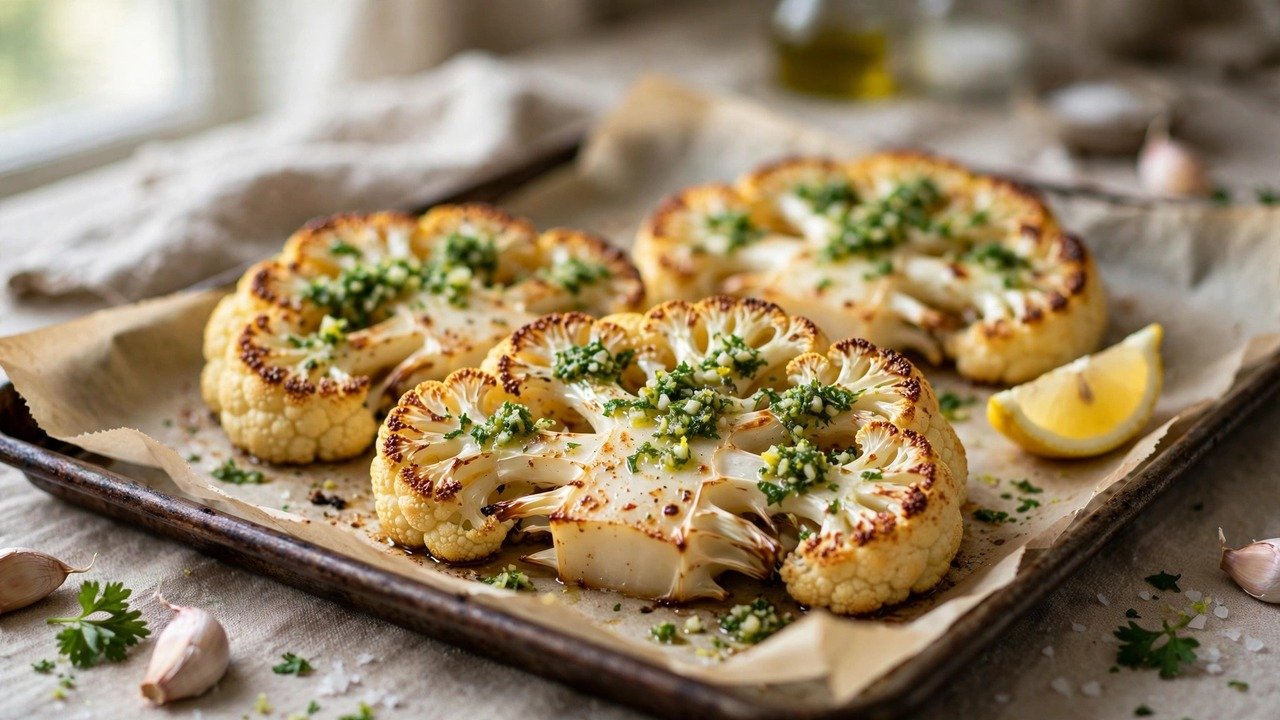
A whole head of cauliflower, sliced thick and roasted until the edges go dark gold and crisp, is one of the best arguments I know for treating vegetables like the main event. Caramelised edges, a tender centre with a little bite, and bright lemon gremolata spooned over the top — dinner in 45 minutes, no special equipment.
The trick: cut the steaks thick, keep the core intact, and give them a hot oven and plenty of space — then the cauliflower browns instead of steaming, and the slices hold together from pan to plate.
At a glance
- Servings: 4 steaks (one per person as a main, or a generous side for 4)
- Prep time: 15 minutes
- Cook time: 30 minutes
- Total time: 45 minutes
- Oven temperature: 425°F (218°C)
- Why this recipe: a vegetable main that eats like a proper dinner, brightened with lemon gremolata
- Storage: fridge 3–4 days in an airtight container; freezing is possible but not recommended
- Make ahead: slice and season up to 24 hours ahead; gremolata keeps 2 days
- Done when: a knife slides into the thickest part of the core with only slight resistance; both sides deep golden with crisp, lacy edges

Why you’ll love this recipe
- It makes cauliflower the main event. Thick-cut steaks with dark golden edges and a tender centre — no one misses the meat.
- A 45-minute weeknight dinner. One tray, one small bowl, and the oven does the work.
- The gremolata does the heavy lifting. Fresh parsley, garlic and lemon take five minutes and make the whole plate taste bright.
- It fits almost any table. Naturally gluten-free and vegan without the optional Parmesan, and low-carb at about 9 g of carbohydrates per serving.
Notes on ingredients
Cauliflower. Pick dense, heavy heads with compact curds and fresh green leaves — loose, spongy or yellowing heads fall apart when sliced. A medium head gives the most even steaks, and one head gives two good steaks from the centre, so this recipe uses two heads. Roast the loose florets that fall away on the same tray — they make a good cook’s snack.
Smoked paprika. This gives the steaks their warm colour and gentle smoky note; sweet paprika works, but the smoky version is worth buying. Hot paprika adds heat — use half as much.
Garlic powder, not fresh garlic. Fresh minced garlic burns at 425°F over 30 minutes and turns bitter; garlic powder seasons evenly and browns with the oil. Save fresh garlic for the gremolata, where it never sees heat.
Cumin. A little adds warmth without pushing the dish toward any one cuisine; leave it out for a cleaner lemon-herb flavour.
Parmesan. Optional, and the only dairy in the recipe — leave it off and the steaks are fully vegan and dairy-free. Tahini thinned with lemon juice makes a good creamy alternative.
Lemon. One large lemon covers the zest, the gremolata and the wedges — zest it before juicing. In the gremolata, the juice tames the raw garlic and the oil carries the parsley flavour.
Parsley. Flat-leaf parsley, finely chopped, is the base of the gremolata; it needs a few minutes with the lemon and garlic so the flavours meld — do not skip that rest.
Find the complete recipe with measurements below.
How to make roasted cauliflower steaks
Stage 1 — Cut the steaks
Heat the oven to 425°F (218°C) with a rack in the middle position and line a large rimmed baking sheet with parchment paper — it stops the steaks sticking and keeps the caramelised underside from tearing when you flip.
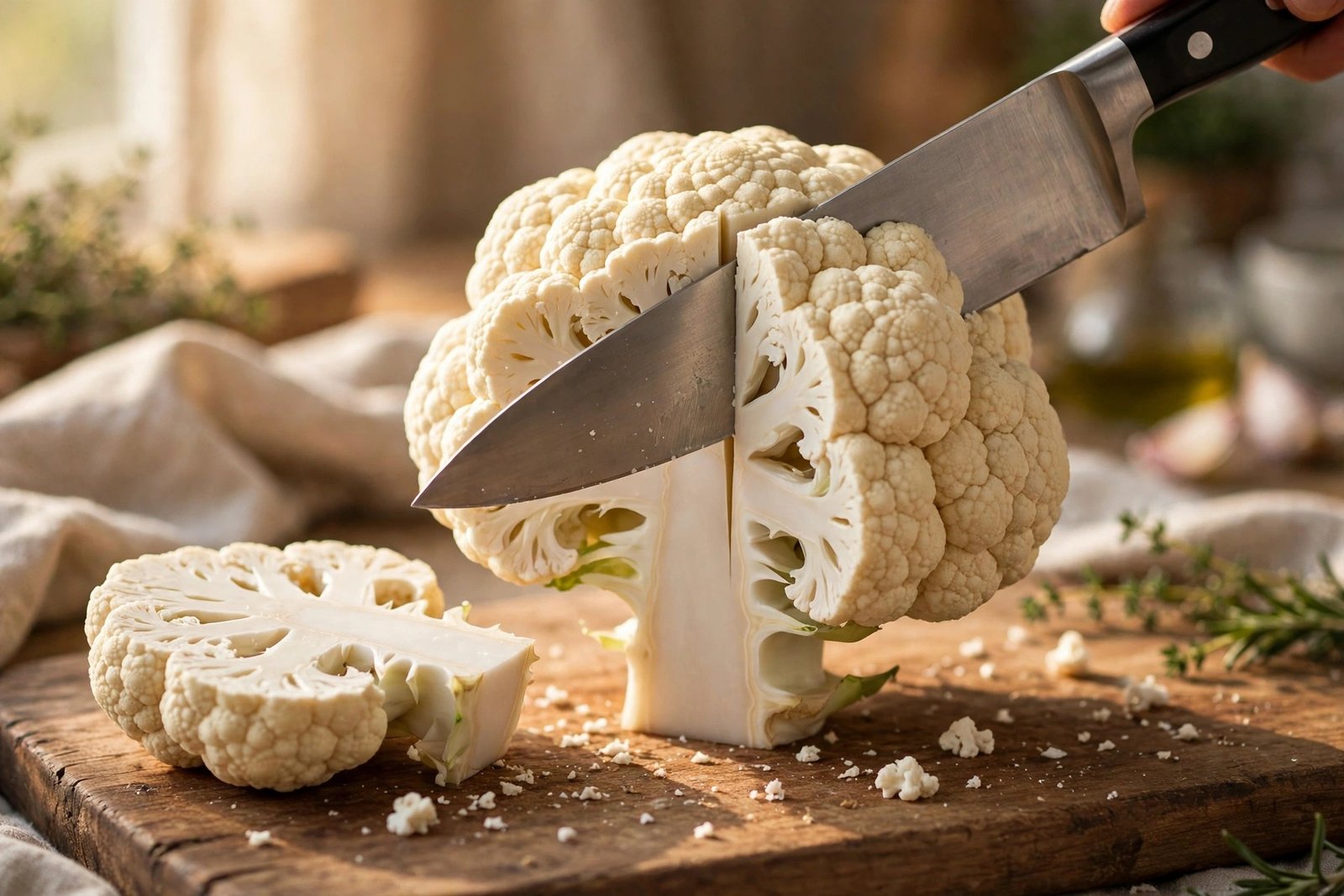
Pull off the outer leaves and trim just the bottom of the stem so the head sits flat, but do not cut the core out — it holds each slice together. After rinsing, pat the heads completely dry: water on the surface turns to steam and works against browning.
Set the head stem-side down and cut straight through the centre into two halves. Working with one half at a time flat-side down, cut a 1-inch-thick slab from the centre, then one more from the other half — 2 steaks per head, 4 in total. One inch is the sweet spot: thinner slices fall apart, thicker ones cook unevenly. Cut in one clean, steady motion — sawing fractures the florets, and a dull knife crushes them.
The rounded outer pieces fall away as loose florets. Toss them with a little seasoning oil and roast them on the same tray — they cook faster, so pull them after about 15 minutes. Slices thinner than ¾ inch will not survive the flip; roast those as loose pieces instead.
Stage 2 — Season and arrange
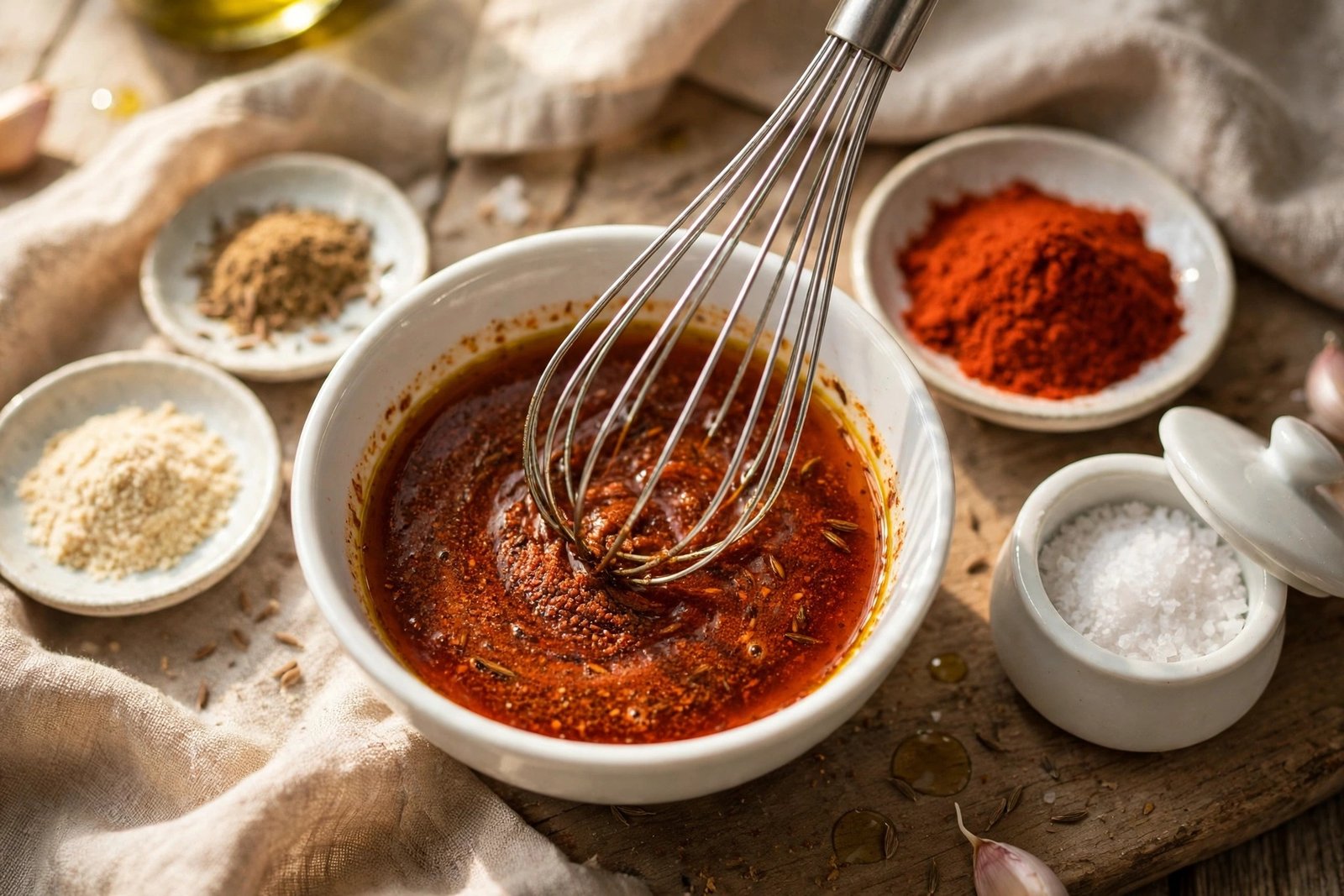
In a small bowl, whisk together the olive oil, garlic powder, smoked paprika, cumin, salt, pepper and lemon zest. It should be rusty-red and smell warmly spiced — taste a drop; it should taste a touch saltier than you think, because cauliflower is very mild. Seasoning the oil coats every surface, including the crevices plain salt never reaches.
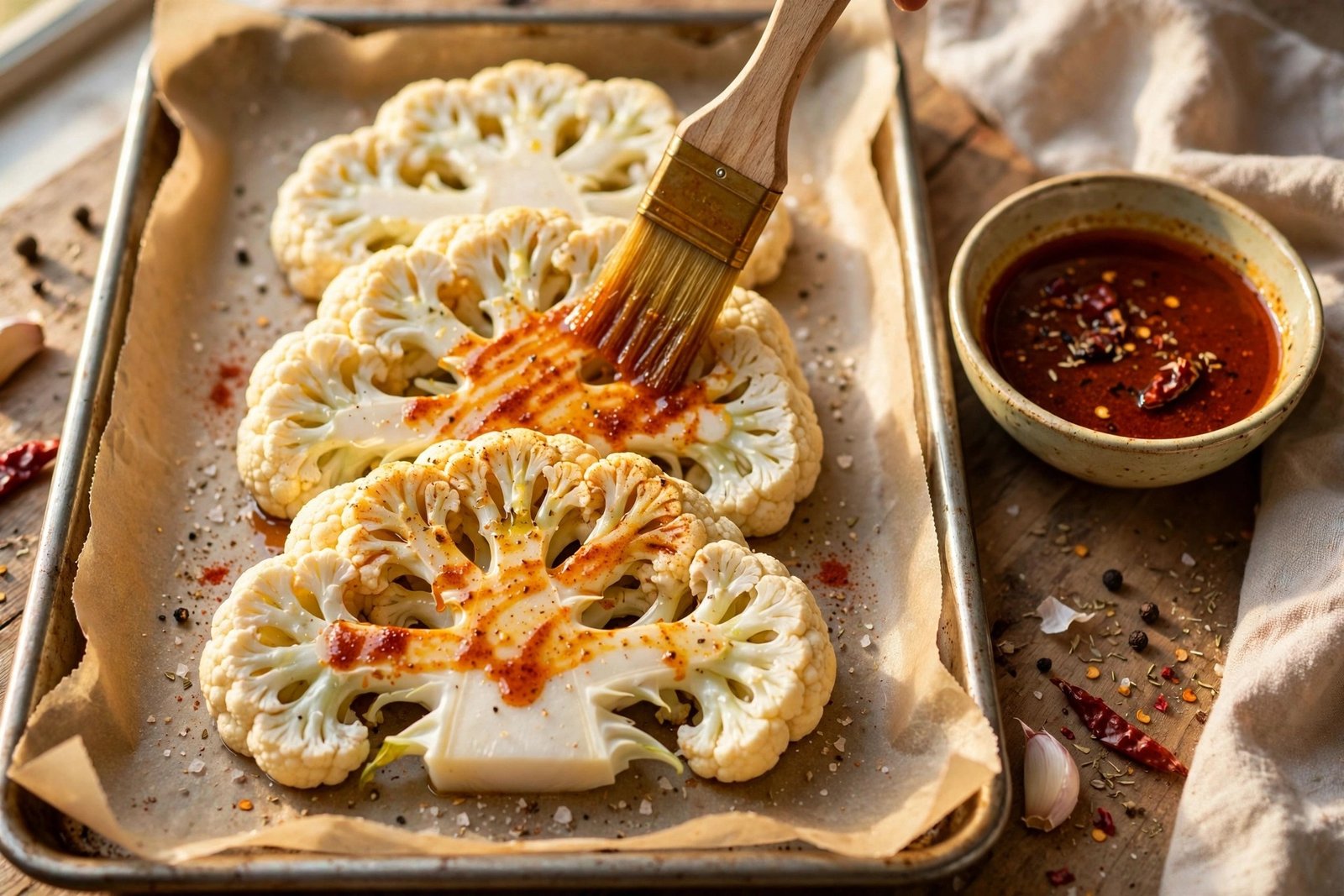
Lay the steaks in a single layer, at least an inch apart, and brush the tops generously with about half the seasoning oil, getting it into the nooks, then flip carefully and brush the other side. Crowding traps steam and the edges stay pale — two heads on one large tray is the limit, so use two trays if yours is small.
If your steaks keep coming out pale, preheat the empty sheet in the oven and lay the oiled steaks on the hot pan — the sizzle is browning starting immediately.
Stage 3 — Roast and flip
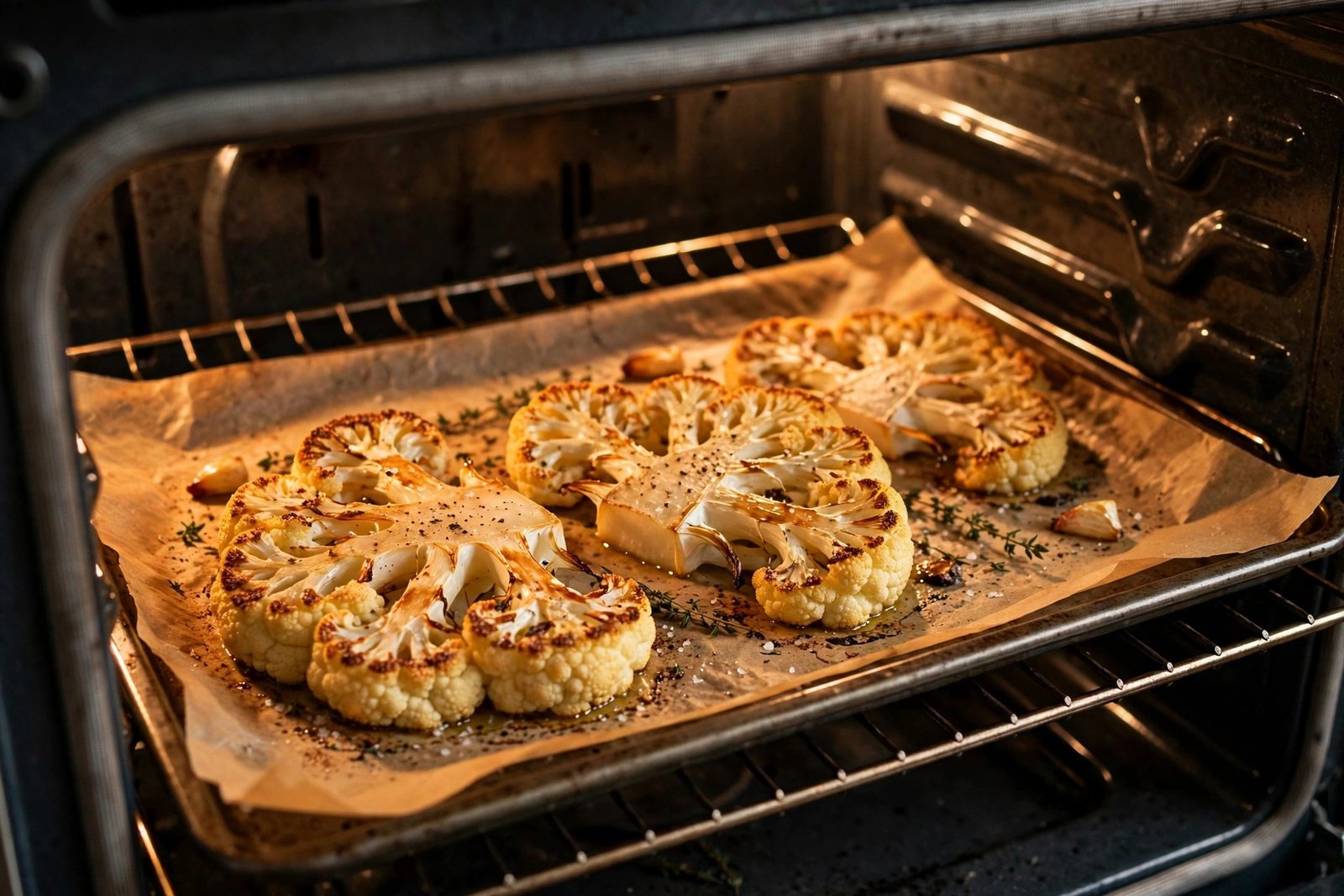
Roast for 15 to 18 minutes, undisturbed — do not open the oven before 15 minutes, as every opening drops the temperature and slows the browning. The crust forms where the cauliflower sits still against the hot pan. At 15 minutes, lift one corner: you want a rich, dark gold underside, not pale blonde. If it is still pale, give it another 3 to 5 minutes.
Slide a wide spatula fully under each steak and flip in one smooth motion — a fish spatula is ideal. The second side needs 10 to 12 minutes more; the steaks are done when a knife slides into the thickest part of the core with only slight resistance and both sides are deep golden with crisp, lacy edges.
Total roasting time is 25 to 30 minutes: thicker than 1 inch, add 5 minutes; smaller heads, start checking at 22 minutes. If the edges burn before the centre is tender, move the rack one notch lower or tent loosely with foil for the last 5 minutes.

Stage 4 — Gremolata, rest and serve
While the steaks roast, stir together the parsley, minced garlic, lemon zest, lemon juice, olive oil and salt, and let it sit for at least 5 minutes so the flavours meld. It keeps in the fridge for up to 2 days — bring it to room temperature before serving.
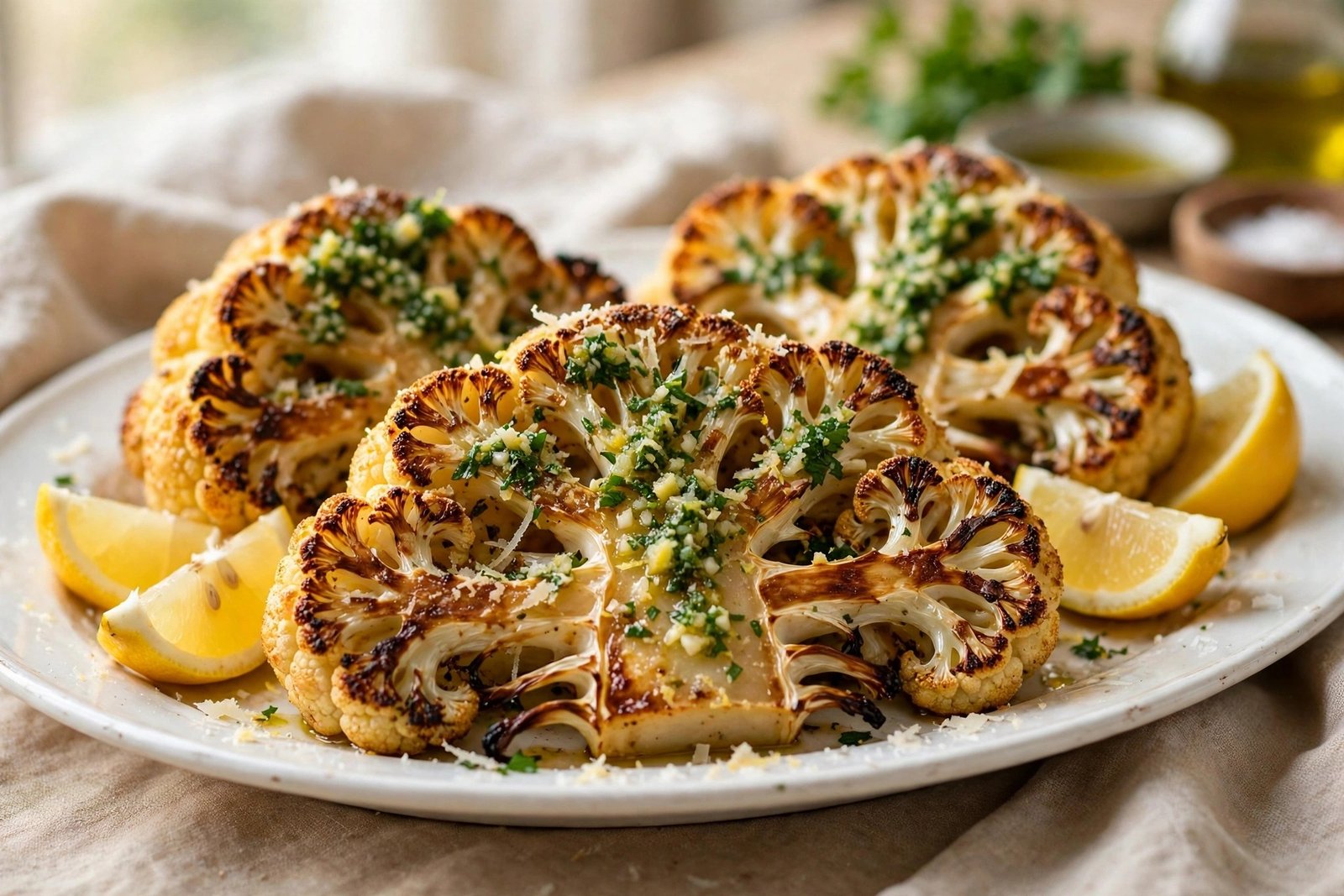
Rest the steaks on the tray for 2 to 3 minutes — they firm up slightly and are easier to move. Transfer to plates, spoon the gremolata over the top, and scatter the Parmesan over it if you are using it. Serve with lemon wedges.
Serve them hot — the edges are crisp straight from the oven and soften as they sit, so have your sides ready.
Storage and reheating
Cool completely before storing — sealing them warm traps steam and softens the crisp edges. Store in an airtight container in the fridge for 3 to 4 days, per the FoodSafety.gov Cold Food Storage Chart (https://www.foodsafety.gov/food-safety-charts/cold-food-storage-charts) and the Mayo Clinic leftovers FAQ (https://www.mayoclinic.org/healthy-lifestyle/nutrition-and-healthy-eating/expert-answers/food-safety/faq-20058500?p=1).
Reheat on a baking sheet in a 400°F (200°C) oven for 5 to 7 minutes, until hot through; an air fryer at 375°F (190°C) for 5 minutes revives the edges best. The microwave works in a pinch — about 1 minute — but leaves them soft. Do not leave cooked cauliflower at room temperature for more than 2 hours.
Freezing is possible but not recommended — the texture goes soft on thawing. If you do freeze them, freeze flat in a single layer, bag for up to 2 months, and reheat from frozen in a 400°F oven for 10 to 12 minutes.
You can also prep ahead: slice and season up to 24 hours in advance, covered on a parchment-lined tray in the fridge, and let them sit at room temperature for 15 minutes before roasting.
Variations
- Romesco-topped: Spoon romesco sauce over the finished steaks instead of gremolata — it adds tree nuts (almonds).
- Tahini and herbs: Whisk 3 tablespoons of tahini with lemon juice and warm water until pourable, drizzle over the steaks, and finish with parsley and a pinch of sumac. Adds sesame.
- Indian-spiced: Swap the smoked paprika and cumin for 1 teaspoon of garam masala and ½ teaspoon of turmeric; serve with a mint-yogurt sauce. The yogurt adds dairy.
- Parmesan-crusted: Sprinkle the grated Parmesan over the steaks for the last 5 minutes of roasting instead of at serving, so it melts into a crisp, golden crust.
- Air fryer: Cook at 375°F (190°C) for 12 to 15 minutes, flipping halfway, in a single layer — crowding the basket steams the steaks, so work in batches.
- Grilled: Grill over medium-high heat for 5 to 6 minutes per side, brushing with the seasoning oil as they cook. The steaks are fragile on the grill — flip once, gently.
- With white beans: Serve over warm white beans simmered with garlic and olive oil for a filling, protein-rich dinner.
Allergens and dietary information
- Contains: milk/dairy — Parmesan cheese only, and it is optional. Leave it off and the recipe is dairy-free.
- Naturally free from: gluten, egg, soy, nuts, fish, shellfish.
- Vegan: yes, without the Parmesan.
- Gluten-free: yes, as written.
- Low-carb: about 9 g of carbohydrates per serving, so it fits a low-carb or keto-style plate.
- Variations that add allergens: romesco sauce adds tree nuts (almonds); tahini adds sesame; the mint-yogurt variation adds milk/dairy.
For a dairy allergy, leave the Parmesan off entirely — including the Parmesan-crusted variation — and use the tahini version instead.
You may also like
For another easy weeknight dinner, try the Honey BBQ Chicken and Garlic Parmesan Potatoes — a one-pan main, ready in about 50 minutes. For slow, hearty cooking, the Pot Roast with Mashed Potatoes is the dinner to make when you have an afternoon to spare.

Roasted Cauliflower Steaks
Ingredients
Equipment
Method
- Heat the oven to 425°F (218°C) with a rack in the middle position. Line a large rimmed baking sheet with parchment paper.
- Pull off the outer leaves. Trim just the bottom of the stem, about 1/4 inch, so the head sits flat, but do not cut out the core. Set the head stem-side down and cut straight down through the centre into two halves. Working with one half at a time flat-side down, cut a 1-inch-thick slab from the centre. Repeat with the second head for 4 steaks in total. Save the loose florets to roast alongside.
- Whisk together the 3 tablespoons of olive oil, garlic powder, smoked paprika, cumin, salt, pepper and lemon zest in a small bowl.
- Lay the steaks in a single layer on the lined baking sheet with at least an inch of space between them. Brush the tops generously with half the seasoning oil, flip carefully, and brush the other side with the rest.
- Roast for 15 to 18 minutes, undisturbed, until the underside is deep golden-brown where it touches the pan.
- Slide a wide spatula fully under each steak and flip in one smooth motion. Roast 10 to 12 minutes more, until a knife slides into the thickest part of the core with only slight resistance and both sides are deep golden with crisp edges. Total roasting time is 25 to 30 minutes.
- While the steaks roast, stir together the parsley, minced garlic, lemon zest, lemon juice, olive oil and salt for the gremolata. Let it sit for at least 5 minutes.
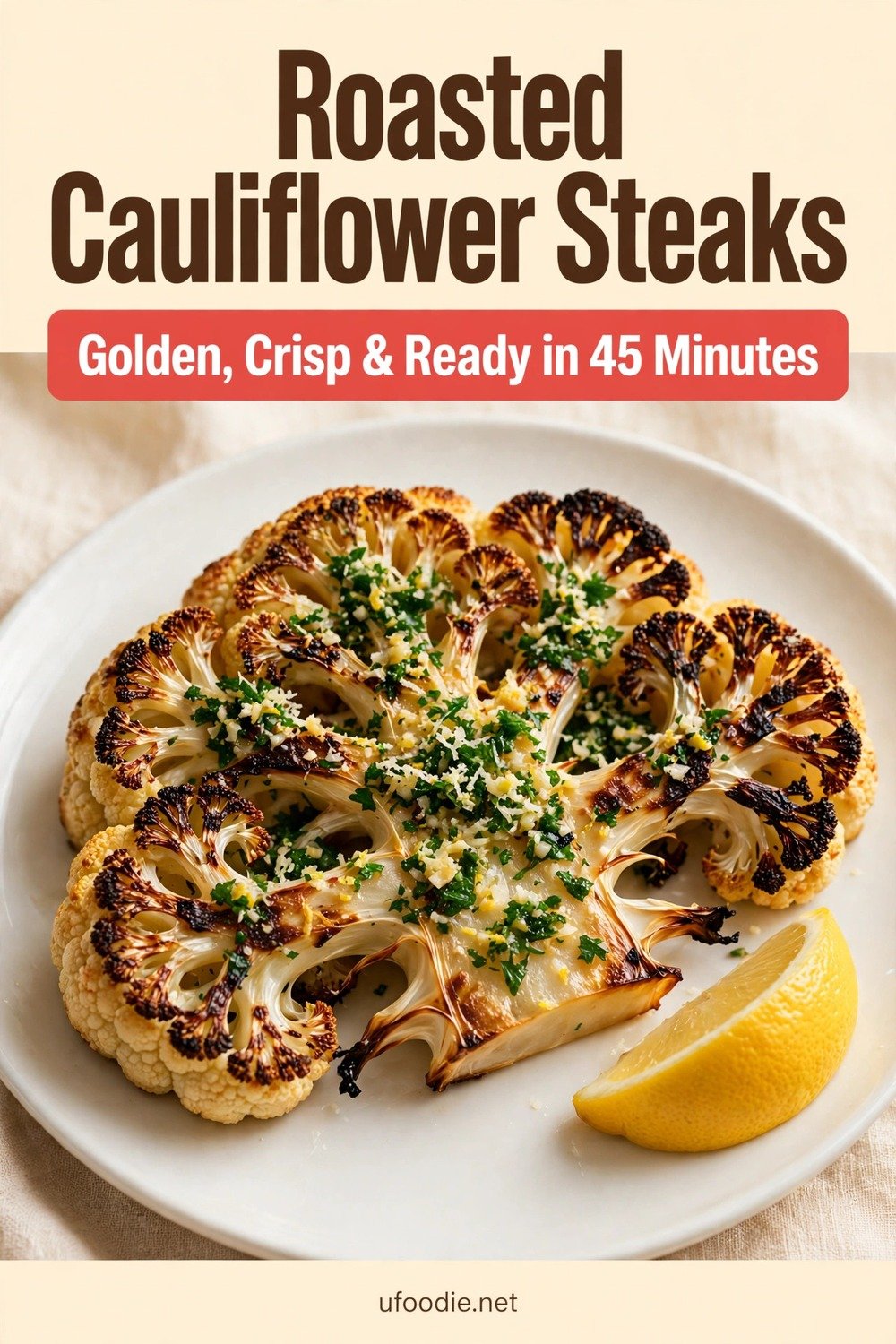
- Rest the steaks on the tray for 2 to 3 minutes, then transfer to plates. Spoon the gremolata over the top, scatter the Parmesan over it if using, and serve with lemon wedges.
Notes
Frequently asked questions
How thick should cauliflower steaks be?
One inch thick. Thinner than ¾ inch and the slices fall apart when you flip them; thicker than 1¼ inches and the edges burn before the core turns tender. Cut vertically through the core, with a sharp knife, in one steady motion.
Why do my cauliflower steaks fall apart?
Almost always one of three things: the core was removed, the slices were cut horizontally instead of vertically, or they were cut too thin. The core is the spine that holds the florets together. Keep it in every slice, cut straight down through the stem, stay at 1 inch thick, and use a sharp knife. A loose or overripe head will also crumble more — pick firm, heavy heads with tight florets.
How do I know when cauliflower steaks are done?
A knife should slide into the thickest part of the core with only slight resistance, and both sides should be deep golden-brown with crisp, lacy edges. That usually takes 25 to 30 minutes at 425°F (218°C), flipping once. If the outside is dark but the centre still resists the knife, give it 5 more minutes — cauliflower is forgiving and hard to overcook by a few minutes.
Can I make cauliflower steaks ahead of time?
Yes. Slice and season them up to 24 hours ahead and keep them covered on a parchment-lined tray in the fridge. Let them sit at room temperature for 15 minutes before roasting. The gremolata keeps for up to 2 days in the fridge. Roast just before serving — they are best hot from the oven.
Can I cook cauliflower steaks in the air fryer?
Yes. Cook at 375°F (190°C) for 12 to 15 minutes, flipping halfway through, in a single layer. Work in batches if needed — a crowded basket steams the steaks instead of crisping them. The same 1-inch thickness and core-intact cutting rules apply.
Are roasted cauliflower steaks vegan and gluten-free?
Yes, as written — just leave off the Parmesan and they are fully vegan, dairy-free and gluten-free. They are also naturally nut-free, egg-free and soy-free, and low-carb at about 9 g of carbohydrates per serving. The romesco and tahini variations add nuts and sesame respectively, so check those if allergies matter.
How do I store and reheat leftover cauliflower steaks?
Cool them completely, then store in an airtight container in the fridge for 3 to 4 days. Reheat on a baking sheet in a 400°F (200°C) oven for 5 to 7 minutes, or in an air fryer at 375°F (190°C) for 5 minutes — both revive the crisp edges. The microwave works but leaves them soft. Do not leave them at room temperature for more than 2 hours.
What do I serve with cauliflower steaks?
As a main, they are good over grains like couscous or quinoa, over warm white beans with garlic and olive oil, or with a spoonful of romesco or tahini sauce. As a side, they sit well next to roast chicken, salmon, or a simple green salad. A glass of something crisp and cold does not hurt either.
