

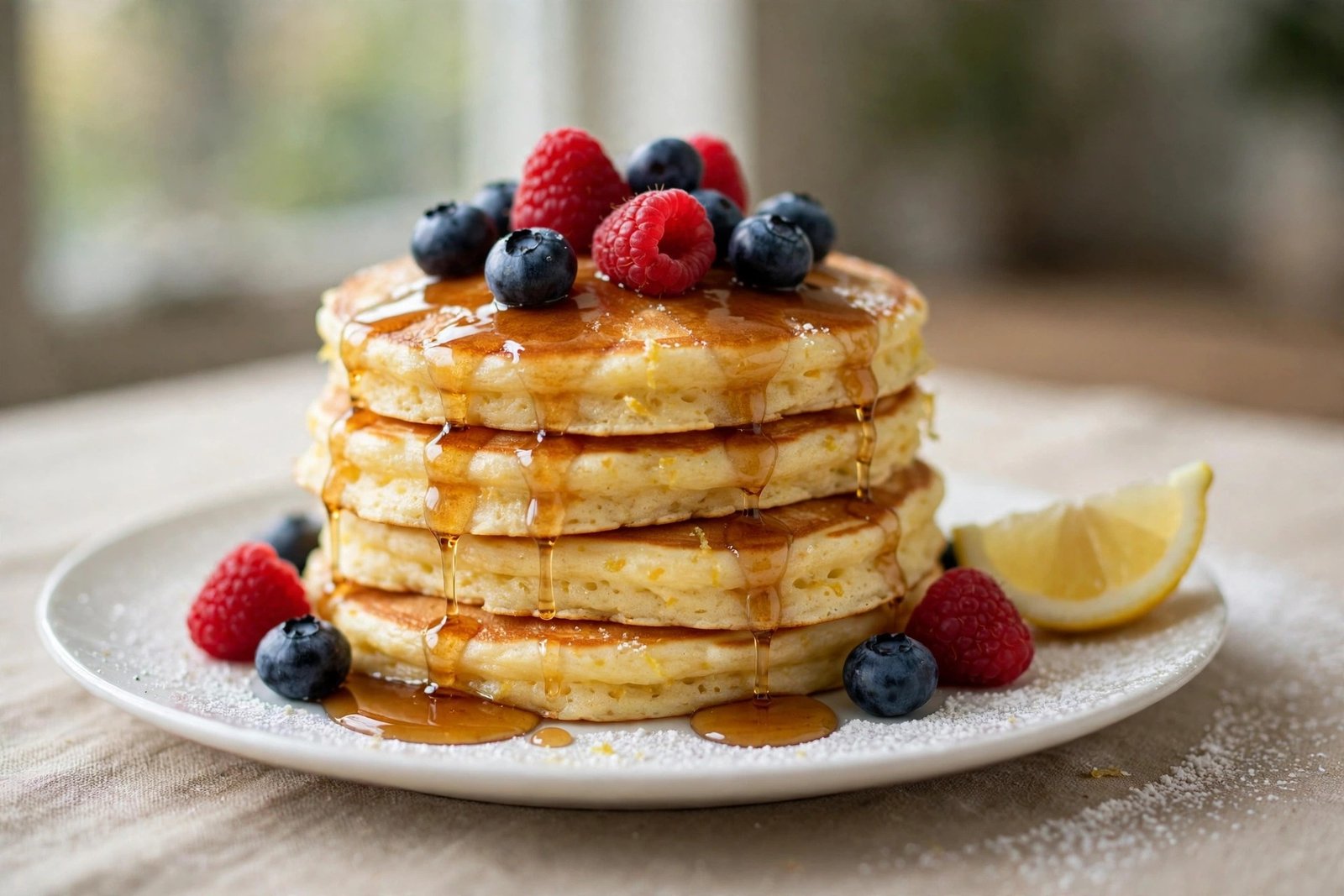
Most pancakes are fine. These are different in a way you can feel on the fork: the inside is soft and almost custardy, the edges turn crisp and golden, and every bite carries a bright hit of lemon. Ricotta does the heavy lifting — it keeps the crumb moist and tender — and whipped egg whites folded in at the end give the stack its height. It is a fifteen-minute batter and a twenty-minute cook, and it tastes like a café brunch without leaving the kitchen.
The two things that make the difference are the ricotta and the egg whites: whole-milk ricotta keeps the crumb soft and custardy where regular pancakes go dry, and whites whipped to soft peaks and folded in gently give the stack a height baking powder alone cannot match.
At a glance
- Servings: 4 (3 pancakes each; 12 pancakes total)
- Prep time: 15 minutes
- Cook time: 20 minutes
- Total time: 35 minutes (includes a 5-minute batter rest)
- Method: Griddle or skillet, medium-low heat, about 325°F (165°C)
- Why this recipe: a soft, custardy centre, crisp golden edges, and bright lemon in every bite
- Storage: fridge 3–4 days, freezer up to 3 months; reheat until steaming hot throughout, to 165°F (74°C)
- Done when: the first side is deep golden, the edges look set and dry, and the second side is golden and puffed — the centre should spring back when pressed lightly, not feel wet or raw
Pin this recipe for later.
Why you’ll love this recipe
- Tall and cloud-like. Whipped egg whites folded in at the end give these a height no baking powder alone can match.
- Custardy, not dry. Whole-milk ricotta keeps the crumb soft and moist, with crisp golden edges.
- Bright, real lemon flavour. The zest is rubbed into the sugar first, so the lemon runs through the whole stack instead of sitting in little flecks.
- Weekend-easy and freezer-friendly. Fifteen minutes of batter, twenty minutes on the griddle, and leftovers that freeze well for busy mornings.
Notes on ingredients
All-purpose flour. Spooned and levelled into the cup — scooping straight from the bag packs in too much flour and makes dense pancakes.
Baking powder and baking soda. Both are doing a job here, so measure them carefully. The baking soda needs the acid from the lemon juice and buttermilk to work, and the baking powder gives a second lift on the griddle.
Granulated sugar. Rubbed with the lemon zest first: rubbing releases the oils from the zest into the sugar, which spreads the lemon flavour through the whole batter.
Lemons. Finely grated zest and fresh juice. The zest is where most of the lemon flavour lives, so fresh lemons are worth it here — bottled lemon juice gives some acidity but almost none of the fragrance.
Whole-milk ricotta. Thick and rich, and that richness is what gives these pancakes their soft, custardy centre. Low-fat and part-skim ricotta are wetter and thinner, and they make a flatter, less creamy pancake. If your ricotta looks watery, drain it in a fine-mesh sieve for 15 minutes first.
Buttermilk. Tangy and acidic, it works with the baking soda and keeps the crumb tender. No buttermilk? Stir lemon juice or white vinegar into whole milk and let it stand for 5 minutes. It will not be quite as tangy as real buttermilk, but it works.
Eggs. Separated, at room temperature. The yolks go into the batter; the whites get whipped to soft peaks and folded in. Cold ricotta and cold eggs make a lumpy batter that is hard to fold, so set them out 20 to 30 minutes before you start.
Unsalted butter. Melted and cooled for the batter, plus a little more for the griddle.
Vanilla extract. Rounds out the lemon and keeps the flavour from tasting sharp.
For serving. Maple syrup, fresh berries, and extra lemon zest — the classic pairing.
Find the complete recipe with measurements below.
How to make lemon ricotta pancakes
Stage 1 — Lemon sugar and wet ingredients
Put the sugar in a large bowl and add the lemon zest. Rub them together with your fingertips for about 30 seconds, until the sugar looks damp and smells strongly of lemon.
Add the ricotta, buttermilk, egg yolks, lemon juice, melted butter, and vanilla to the lemon sugar and whisk until smooth and glossy, with no big lumps of ricotta left — about 1 minute. It should look thick and creamy, like a loose custard.


Stage 2 — Dry ingredients and combining
In a separate medium bowl, whisk the flour, baking powder, baking soda, and salt together until evenly combined.
Pour the dry ingredients into the ricotta mixture and stir with a spatula just until no dry streaks of flour remain — about 10 gentle strokes. The batter will be thick and slightly lumpy. Stop there: overmixing develops gluten and makes tough, flat pancakes.
Stage 3 — Whip and fold the egg whites
In a clean, grease-free bowl, beat the egg whites with an electric mixer on medium-high speed for 2 to 3 minutes, until soft peaks form — the peaks should bend over gently when you lift the beaters. Do not beat them to stiff, dry peaks; stiff whites are harder to fold in and can make the pancakes tough. A speck of yolk or grease in the bowl will stop the whites whipping properly, so keep the bowl clean.
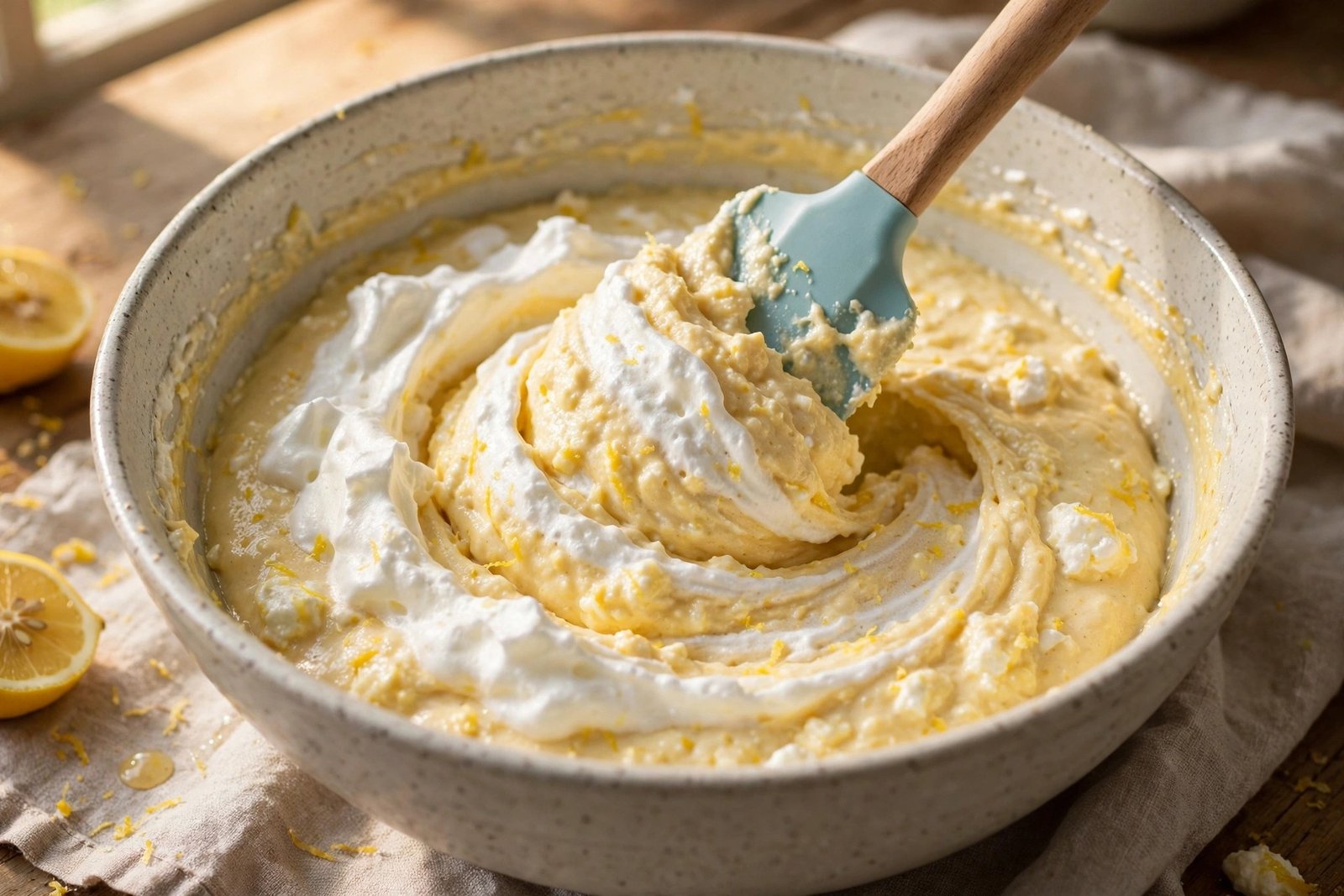
Scoop about a third of the whipped whites into the batter and fold them in firmly to lighten it, then add the rest in two additions, folding gently with broad, sweeping strokes from the bottom of the bowl up and over, until no white streaks remain. Fold, don’t stir: stirring knocks the air out of the whites. Stop as soon as the streaks disappear — the batter should look thick, billowy, and airy — and let it rest for 5 minutes while the griddle heats, so the flour hydrates and the leaveners start working.

Stage 4 — Heat the griddle and cook the pancakes
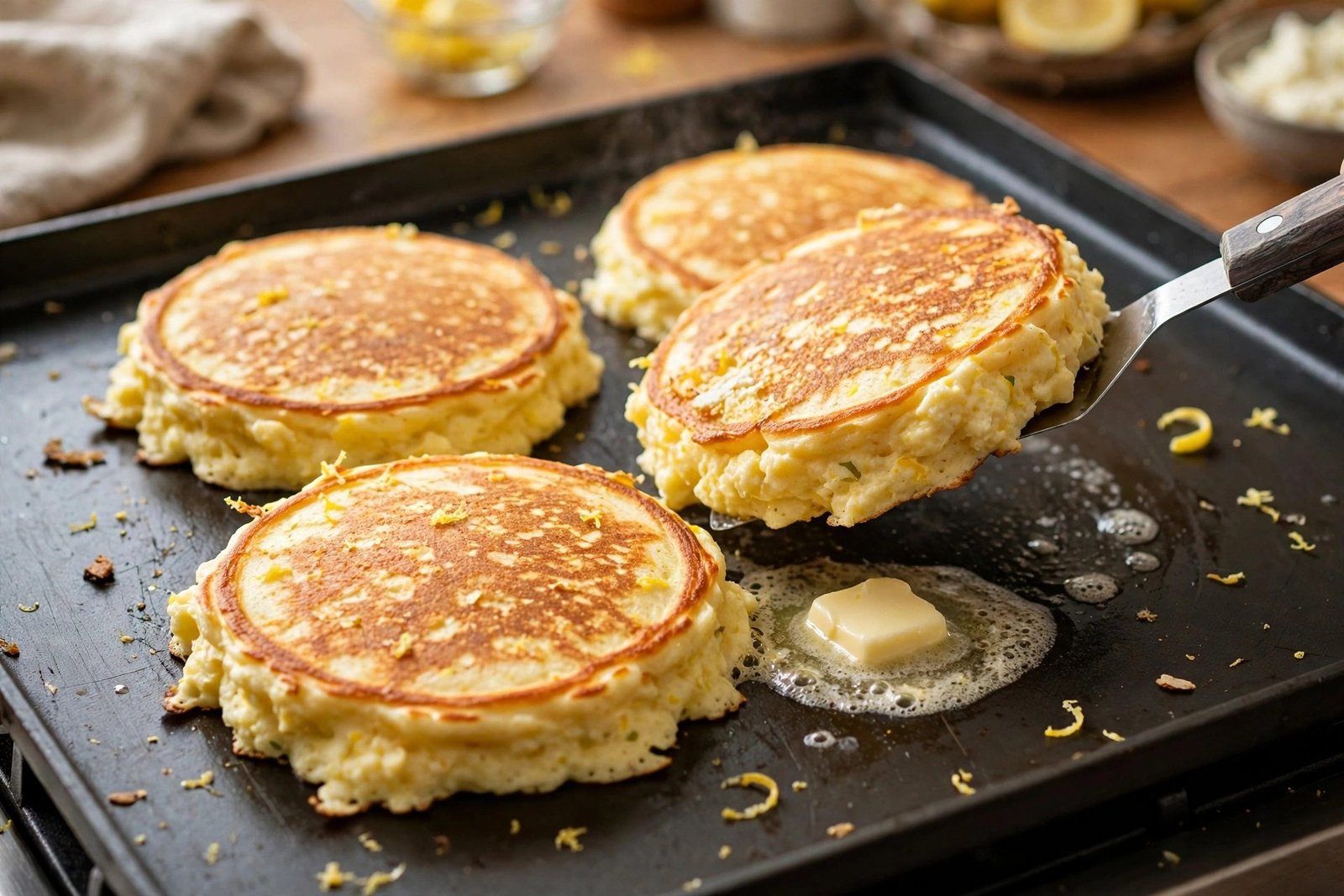
Set a large nonstick skillet or griddle over medium-low heat — about 325°F (165°C) if you have an infrared thermometer. Add a small pat of butter and wipe it around with a paper towel so the surface is lightly filmed, not pooled. Test the heat with a drop of water: it should sizzle gently, not spit and dance. Too hot and the outside burns before the thick centre cooks; too cool and the pancakes spread flat and pale. Medium-low is the whole secret: gentle heat gives the centre time to cook through and puff before the outside over-browns, so if the first batch browns too fast, turn the heat down, not up.
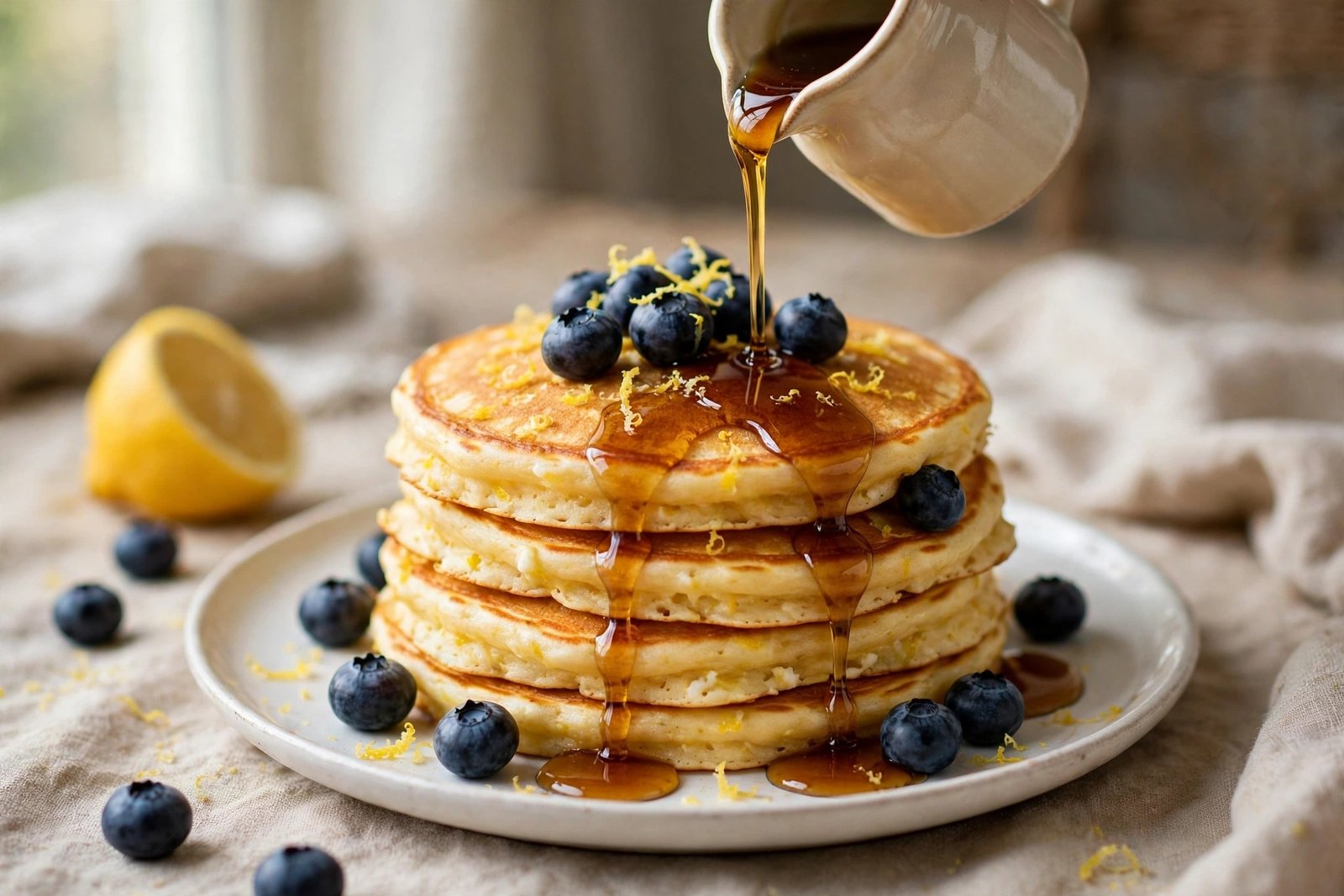
Scoop ⅓-cup portions onto the griddle, leaving about 2 inches between them — they spread and rise. Cook for 2 to 3 minutes without touching them, until the edges look set and dry, small bubbles appear around the edges, and the underside is deep golden. Slide a thin spatula underneath and flip in one smooth motion. Cook the second side for 1 to 2 minutes more, until golden and puffed, and the centre springs back when pressed lightly. Don’t press them down with the spatula — pressing squeezes out the air you just folded in. Move finished pancakes to a wire rack set over a baking sheet in a 200°F (95°C) oven to stay warm while you cook the rest. Serve straight away with maple syrup, berries, and extra lemon zest.
Storage and reheating
Cool cooked pancakes completely on a wire rack so trapped steam doesn’t make them soggy. Refrigerate them within 2 hours in an airtight container, layered with parchment paper so they don’t stick, and use within 3 to 4 days.
To freeze, lay them flat in a single layer on a lined baking sheet until firm (1 to 2 hours), then stack with parchment between each pancake in a freezer bag, press out the air, and freeze for up to 3 months.
Reheat straight from the fridge or freezer — in a toaster on low to medium for 1 to 2 cycles, in a 350°F (177°C) oven for 5 to 8 minutes (10 to 15 from frozen), or in a dry skillet over medium-low heat for about 1 minute per side — until steaming hot throughout. Per USDA guidance on leftovers, reheat to 165°F (74°C) throughout: https://www.fsis.usda.gov/food-safety/safe-food-handling-and-preparation/food-safety-basics/leftovers-and-food-safety
Don’t store leftover batter: the baking powder weakens and the raw egg makes it unsafe to keep — cook it all the same day.
Variations
- Blueberry lemon ricotta pancakes: Dot a few fresh blueberries onto each pancake after scooping the batter onto the griddle — don’t stir them into the batter, or their weight drags the airy batter down.
- Raspberry or strawberry: Serve with fresh raspberries or sliced strawberries instead of blueberries; a spoonful of lemon curd on top is good too.
- Dairy-free: Use a thick dairy-free ricotta-style spread, oat milk soured with lemon juice for the buttermilk, and dairy-free butter. The texture will be a little less custardy, but the method is the same.
- Gluten-free: Use a cup-for-cup gluten-free flour blend and let the batter rest for 10 minutes instead of 5, so the starches hydrate.
- Orange ricotta pancakes: Swap the lemon zest and juice for orange zest and juice for a sweeter, rounder citrus version.
- Make them smaller: Use a ¼-cup scoop for 16 smaller pancakes — good for kids, and they cook a minute faster per side.
Allergens and dietary information
Contains milk/dairy (ricotta, buttermilk, butter), egg (yolks and whites), and wheat/gluten (all-purpose flour). It is vegetarian as written, but not vegan, gluten-free, or dairy-free as written — see the variations above. Ricotta is a soft cheese: check the label that it is made from pasteurised milk, and if you are cooking for someone who is pregnant, serve the pancakes straight from the griddle, piping hot.
You may also like
For another weekend baking favourite, the Pumpkin Cream Cheese Muffins use the same cosy, make-ahead rhythm — bake once, eat well all week. And if your brunch table wants something savoury beside the pancakes, the High-Protein Breakfast Burritos are built for exactly that.
Pin this recipe for later.

Lemon Ricotta Pancakes
Ingredients
Equipment
Method
- Put the sugar in a large bowl and add the lemon zest. Rub them together with your fingertips for about 30 seconds, until the sugar looks damp and smells strongly of lemon.
- Add the ricotta, buttermilk, egg yolks, lemon juice, melted butter, and vanilla to the lemon sugar. Whisk until smooth and glossy, with no big lumps of ricotta left, about 1 minute.
- In a separate medium bowl, whisk the flour, baking powder, baking soda, and salt together until evenly combined.
- Pour the dry ingredients into the ricotta mixture and stir with a spatula just until no dry streaks of flour remain, about 10 gentle strokes. The batter will be thick and slightly lumpy; do not overmix.
- In a clean, grease-free bowl, beat the egg whites with an electric mixer on medium-high speed for 2 to 3 minutes, until soft peaks form. The peaks should bend over gently when you lift the beaters; do not beat to stiff, dry peaks.
- Scoop about a third of the whipped whites into the batter and fold in firmly to lighten it. Add the rest in two additions, folding gently with broad strokes from the bottom of the bowl up and over, until no white streaks remain. Let the batter rest for 5 minutes.
- Set a large nonstick skillet or griddle over medium-low heat, about 325°F (165°C). Add a small pat of butter and wipe it around with a paper towel so the surface is lightly filmed.
- Scoop 1/3-cup portions of batter onto the griddle, leaving about 2 inches between them. Cook 2 to 3 minutes without touching them, until the edges look set and dry and the underside is deep golden. Flip in one smooth motion and cook 1 to 2 minutes more, until golden and puffed and the centre springs back when pressed lightly. Keep finished pancakes warm on a wire rack in a 200°F (95°C) oven. Serve straight away with maple syrup, berries, and extra lemon zest.
Notes
Frequently asked questions
Why are my lemon ricotta pancakes flat?
Usually one of three things: the egg whites were beaten to stiff, dry peaks instead of soft peaks; the whites were stirred in rather than folded, which knocked the air out; or the batter was overmixed after adding the flour. Fold gently, stop when the white streaks disappear, and keep the griddle at medium-low so the pancakes have time to puff before they set.
Can I make lemon ricotta pancakes without whipping the egg whites?
Yes — whisk the whole eggs straight into the wet ingredients and skip the whipping step. The pancakes will still taste good, but they will be noticeably denser and flatter, more like regular pancakes. The whipped whites are what make these tall and cloud-like.
Do I have to use whole-milk ricotta?
For the best result, yes. Whole-milk ricotta is thick and creamy; part-skim and low-fat ricotta are wetter and thinner, and the pancakes come out flatter and less custardy. If your ricotta looks watery, drain it in a fine-mesh sieve for 15 minutes before measuring.
Can I use bottled lemon juice instead of fresh lemons?
The juice will work for acidity, but the zest is where most of the lemon flavour comes from, and bottled juice has none of it. Fresh lemons are worth it here. If you only have bottled juice, add an extra teaspoon of vanilla and serve with fresh berries to make up for the missing fragrance.
What temperature should I cook lemon ricotta pancakes at?
Medium-low, about 325°F (165°C) on the griddle surface. These pancakes are thick, so gentle heat lets the centre cook through and puff before the outside browns. If the first batch browns in under 2 minutes, the heat is too high — turn it down.
Can I make the batter ahead of time?
No — cook it the same day you mix it. The baking powder starts working as soon as the wet and dry ingredients meet, and it weakens over time, so batter left overnight makes flat pancakes. The whipped egg whites also deflate as they sit. Mix the batter, rest it 5 minutes, and cook it straight away.
How do I store leftover lemon ricotta pancakes?
Cool them completely on a wire rack, then refrigerate in an airtight container with parchment between the layers for 3 to 4 days, or freeze flat in a freezer bag for up to 3 months. Reheat in a toaster, oven, or dry skillet until steaming hot throughout — 165°F (74°C) per USDA guidance.
What should I serve with lemon ricotta pancakes?
Maple syrup and fresh berries are the classic pairing. Lemon curd, a dusting of powdered sugar, whipped cream, or a spoonful of blueberry compote all work well. For a fuller brunch, serve them with crispy bacon or breakfast sausage on the side.
