


There is a particular kind of quiet that falls over a kitchen when a lemon loaf is in the oven. It smells like a bakery and a spring morning at the same time, and by the time the glaze goes on, everyone wanders past the cooling rack. This lemon poppy seed bread is the loaf that earns that — a tender, fine crumb, a bright hit of real lemon in every bite, and the faint crunch of poppy seeds that makes a plain slice feel finished.
Two small moves make it work: rubbing the lemon zest into the sugar first, and sour cream in the batter, which keeps the crumb moist for days. No yeast, no rising, no mixer — two bowls and about fifteen minutes.
At a glance
- Servings: 10 slices
- Prep time: 15 minutes
- Bake time: 50–60 minutes
- Cooling time: 60 minutes
- Total time: 1 hour 10 minutes (plus cooling)
- Method: Quick bread, baked in a 9×5-inch loaf pan at 350°F (177°C)
- Why this recipe: a tender, fine crumb, bright real lemon, and the faint crunch of poppy seeds; it stays moist for days
- Storage: 2 to 3 days at room temperature, up to 5 days in the fridge; the unglazed loaf freezes well for up to 3 months
- Done when: the top is domed and golden with a crack down the centre, the edges have pulled away from the pan, and the centre reads 200–205°F (93–96°C) — or a toothpick comes out clean or with a few moist crumbs

Pin this recipe for later.
Why you’ll love this recipe
- Real lemon flavour, not faintly lemony. Rubbing the zest into the sugar pulls its oils out, carrying the lemon through the whole loaf.
- It stays moist for days. Sour cream keeps the crumb tender well past baking day.
- It freezes beautifully. The unglazed loaf keeps for up to 3 months, and the same batter makes muffins or mini loaves.
Notes on ingredients
All-purpose flour. Spooned and levelled into the cup — scooping straight from the bag packs in up to 25% extra flour, the most common reason a lemon loaf turns out dry.
Baking powder, baking soda and salt. The baking soda reacts with the sour cream’s acidity for a better rise, and the baking powder adds lift of its own. Whisk them evenly through the flour so the loaf rises evenly, not in lopsided pockets. The salt sharpens the lemon and keeps the sweetness from tasting flat.
Poppy seeds. The faint crunch that makes a plain slice feel finished; they soften as the loaf bakes, so no soaking is needed.
Granulated sugar and lemon zest. The sugar is rubbed with the finely grated zest before anything else — the sugar’s crystals pull the oils out of the zest, and those oils carry the lemon flavour through the whole loaf in a way juice alone never does. The zest is where most of the lemon flavour comes from; bottled juice has no zest at all.
Full-fat sour cream. It does two jobs: its fat keeps the crumb tender and moist for days, and its acidity reacts with the baking soda for a better rise. Full-fat Greek yogurt works the same way; bring it to room temperature, since cold dairy does not emulsify as well with the oil.
Neutral oil. Vegetable or sunflower oil keeps the crumb moist; melted butter, cooled slightly, gives a richer crumb that is a touch less moist on day two.
Eggs, lemon juice and vanilla. The eggs go in at room temperature, like the sour cream, so the batter emulsifies properly. The juice comes from the same lemons as the zest, for the batter and the glaze, and the vanilla rounds out the lemon.
Powdered sugar (for the glaze). Sifted, then whisked with lemon juice until it falls off the whisk in a slow, thick ribbon — thin enough to drizzle, thick enough to sit on top.
Find the complete recipe with measurements below.
How to make lemon poppy seed bread
Stage 1 — Heat the oven and prep the pan
Heat the oven to 350°F (177°C) with a rack in the centre. Grease a 9×5-inch loaf pan and line it with a strip of parchment paper covering the bottom and hanging over the two long sides — the overhang works as a sling and lifts the loaf out cleanly later. A light-coloured metal pan browns most evenly; dark or glass pans run hotter and can over-brown the crust.
Stage 2 — Whisk the dry ingredients, then the wet
In a medium bowl, whisk the flour, baking powder, baking soda, salt, and poppy seeds until evenly combined, about 20 seconds — this also breaks up flour clumps. Set the bowl aside.
Put the sugar in the large bowl, add the lemon zest, and rub them together with your fingertips for about 30 seconds, until the sugar feels damp and smells strongly of lemon.
Add the sour cream, oil, eggs, lemon juice, and vanilla and whisk until smooth and pale, about 1 minute — glossy and pourable, no streaks of egg white.

Stage 3 — Combine and bake
Pour the dry ingredients into the wet and fold together with a rubber spatula, scraping the bottom and sides of the bowl, just until the last streaks of flour disappear — about 15 to 20 strokes. Thick and slightly lumpy is exactly right: overmixing develops the gluten, and a quick bread mixed too long bakes up tough and tunnelled instead of tender. A small pocket of flour after 20 strokes gets two more strokes, then stop.
Scrape the batter into the prepared pan and smooth the top. Bake for 50 to 60 minutes, starting to check at 50: the top should be domed and golden with a deep crack down the centre — normal in a quick bread — and the edges should have pulled slightly away from the pan. A wooden toothpick in the centre should come out clean or with a few moist crumbs, never wet batter. The most reliable check is a thermometer: the centre should read 200–205°F (93–96°C), the doneness range for quick breads per the ThermoWorks baked goods temperature guide: https://www.thermoworks.com/blogs/thermoblog/baked-goods-temps. Trust the thermometer over the clock — ovens vary — and do not open the oven door in the first 30 minutes. If the top browns too fast, lay a loose sheet of foil over the pan for the last 10 to 15 minutes.
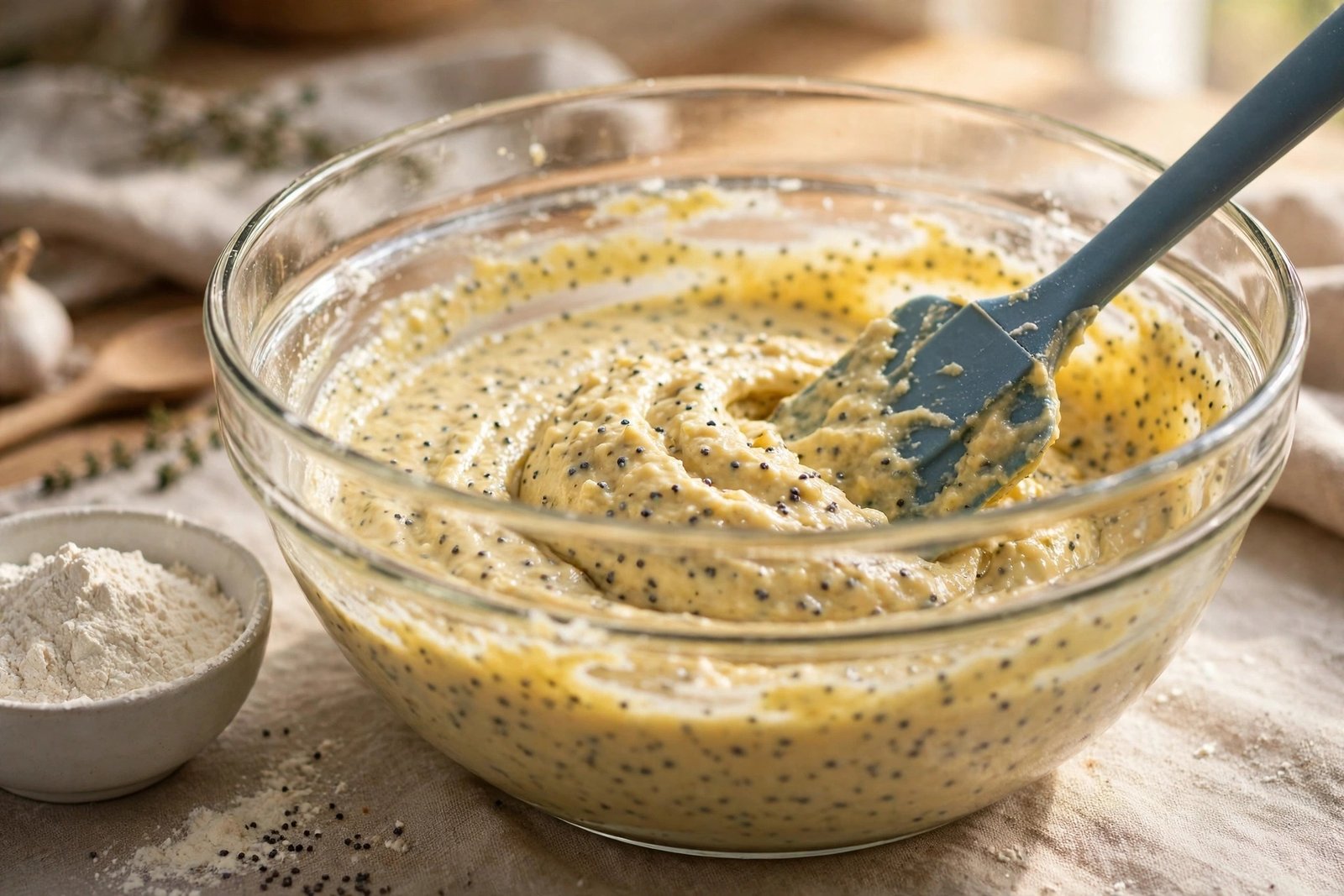


Stage 4 — Cool, glaze and slice
Let the loaf cool in the pan on a wire rack for 10 minutes — long enough for the crumb to set, short enough that it does not steam itself soggy — then lift it out with the parchment sling onto the rack. Let it cool completely, about 1 hour, before glazing: a warm loaf melts the glaze into a sticky puddle, and slicing a warm quick bread compresses the crumb and makes it gummy.
While the loaf cools, whisk the sifted powdered sugar with 2 tablespoons of lemon juice until smooth, adding the third tablespoon a little at a time until the glaze falls off the whisk in a slow, thick ribbon — thin enough to drizzle, thick enough to sit on top instead of running off. Spoon or drizzle it over the completely cooled loaf, letting it drip a little down the sides, and leave the loaf uncovered for about 15 minutes, until the glaze sets.
Cut into 10 slices with a serrated knife, using a gentle sawing motion so the glaze does not crack and the crumb does not compress. Serve at room temperature — good with coffee or tea, even better with whipped cream or fresh berries.


Storage and reheating
Once the glaze has set, store the loaf airtight or wrapped tightly in plastic wrap: 2 to 3 days at room temperature in a cool kitchen, up to 5 days in the fridge — bring chilled slices back to room temperature for 20 to 30 minutes before serving.
The unglazed loaf freezes well for up to 3 months: wrap tightly in plastic wrap, then foil or a freezer bag, and thaw wrapped at room temperature before glazing. Individual slices freeze the same way and thaw in about an hour. Reheat thawed slices in a toaster or a 300°F (150°C) oven for 5 minutes — do not reheat from frozen. Do not microwave a glazed slice — the glaze melts and the crumb goes rubbery.
Variations
- Lemon poppy seed muffins: Divide the batter among 12 lined muffin cups, filled about two-thirds, and bake at 350°F (177°C) for 18–22 minutes, until a toothpick comes out clean; glaze the tops once cool.
- Mini loaves: Divide the batter among 4 greased mini loaf pans and bake for 30–35 minutes — good gifts, and they freeze beautifully.
- Hot lemon syrup instead of glaze: While the loaf is still warm, brush the top with a syrup of ¼ cup lemon juice and ¼ cup granulated sugar warmed until the sugar dissolves. It soaks in and keeps the loaf extra moist — skip the powdered-sugar glaze if you do this.
- Blueberry lemon poppy seed bread: Fold 1 cup of fresh blueberries, tossed in 1 tablespoon of flour, into the batter at the end of combining. Add 5 minutes to the bake time and check the centre temperature.
- Almond version: Replace the vanilla with ½ teaspoon of almond extract and scatter 2 tablespoons of sliced almonds over the batter before baking.
- Gluten-free: Use a cup-for-cup gluten-free flour blend with xanthan gum, in the same amounts; the loaf may need 5 extra minutes, so check the centre temperature.
Allergens and dietary information
Contains wheat/gluten (all-purpose flour), milk/dairy (sour cream), and egg. Poppy seeds are the seeds of the opium poppy plant — a standard food ingredient, safe in normal amounts, but they can trigger a positive result on some drug screening tests, so mention them if that matters to you. The bread is vegetarian as written, not vegan, gluten-free, or dairy-free as written — see the variations above for the gluten-free and dairy-free swaps. Check your baking powder label if you need the loaf to be corn-free.
You may also like
For another easy bake from the same shelf, the Pumpkin Cream Cheese Muffins are a weekend favourite — bake once, eat well all week.

Pin this recipe for later.

Lemon Poppy Seed Bread
Ingredients
Equipment
Method
- Heat the oven to 350°F (177°C) with a rack in the centre. Grease a 9×5-inch loaf pan and line it with a strip of parchment paper covering the bottom and hanging over the two long sides.
- In a medium bowl, whisk together the flour, baking powder, baking soda, salt, and poppy seeds until evenly combined, about 20 seconds. Set aside.
- Put the sugar in a large bowl and add the lemon zest. Rub the zest into the sugar with your fingertips for about 30 seconds, until the sugar feels damp and smells strongly of lemon. Add the sour cream, oil, eggs, lemon juice, and vanilla and whisk until smooth and pale, about 1 minute.
- Pour the dry ingredients into the wet ingredients and fold together with a rubber spatula, scraping the bottom and sides of the bowl, just until the last streaks of flour disappear, about 15 to 20 strokes. Do not overmix.
- Scrape the batter into the prepared pan and smooth the top. Bake for 50 to 60 minutes, starting to check at 50 minutes. The loaf is done when the top is domed and golden with a crack down the centre, the edges have pulled slightly away from the pan, and the centre reads 200 to 205°F (93 to 96°C) on an instant-read thermometer, or a wooden toothpick comes out clean or with a few moist crumbs. If the top browns too fast, lay a loose sheet of foil over the pan for the last 10 to 15 minutes.
- Let the loaf cool in the pan on a wire rack for 10 minutes, then lift it out using the parchment sling and set it directly on the rack. Let it cool completely, about 1 hour, before glazing.
- Whisk the sifted powdered sugar with 2 tablespoons of lemon juice until smooth, adding the third tablespoon a little at a time until the glaze falls off the whisk in a slow, thick ribbon. Spoon or drizzle over the completely cooled loaf and leave uncovered for about 15 minutes, until the glaze sets.
- Cut into 10 slices with a serrated knife, using a gentle sawing motion, and serve at room temperature.
Notes
Frequently asked questions
Do I need to soak poppy seeds before baking?
No, not for this bread. Poppy seeds soften as the loaf bakes and give a gentle crunch. Some bakers soak them in warm milk or lemon juice for 10 minutes for a softer texture, and that works fine too — just fold them in with the wet ingredients instead of the dry ones if you do.
Why did my lemon poppy seed bread sink in the middle?
Almost always underbaking. The top sets and browns before the centre finishes, so the loaf looks done, then collapses as it cools. Check the centre with a thermometer — it needs to reach 200–205°F (93–96°C) — and do not open the oven door in the first 30 minutes. Too much baking powder or overmixing can cause the same problem.
Can I use bottled lemon juice instead of fresh?
For the juice, yes — bottled lemon juice works in the batter and the glaze, though fresh tastes brighter. For the zest, there is no substitute: bottled juice has no zest, and the zest rubbed into the sugar is where most of the lemon flavour comes from. Use 2 large fresh lemons and you will have both the zest and the juice you need.
Why is my lemon loaf dry?
The usual cause is too much flour. Spoon the flour into the cup and level it off rather than scooping from the bag — a packed cup can add 25% more flour than the recipe calls for. Overbaking is the other cause: start checking at 50 minutes and pull the loaf as soon as the centre hits 200–205°F.
Can I make lemon poppy seed bread gluten-free?
Yes. Use a cup-for-cup gluten-free flour blend that contains xanthan gum, in the same amounts as the all-purpose flour. The loaf may need about 5 extra minutes in the oven, so check the centre temperature rather than relying on the clock. The texture will be slightly more delicate, so let the loaf cool fully before slicing.
Can I make muffins instead of a loaf?
Yes, the same batter makes 12 muffins. Divide it among lined muffin cups, filling each about two-thirds full, and bake at 350°F (177°C) for 18–22 minutes, until a toothpick inserted in the centre comes out clean. Let them cool 5 minutes in the pan, then move them to a rack and glaze once completely cool.
How long does lemon poppy seed bread last?
At room temperature in an airtight container, 2 to 3 days. In the fridge, up to 5 days — let chilled slices come back to room temperature for 20 to 30 minutes before serving. In the freezer, an unglazed loaf wrapped tightly keeps for up to 3 months; thaw it wrapped at room temperature, then glaze it.
Can I skip the glaze?
Yes. The bread is sweet and lemony on its own, and the glaze is a finishing touch, not a structural part of the recipe. If you skip it, brush the warm loaf with the hot lemon syrup from the variations section instead — it soaks in and adds moisture and a stronger lemon hit without any powdered sugar.
