


Jump to recipe ↓
Winter citrus is the one bright thing about the cold months, and blood oranges are the showiest of the lot. Cut one open and the flesh runs from ruby streaks to deep wine red, sweet and tart at once, with a berry note no ordinary orange has.
This salad lets that colour do the talking: blood orange segments over peppery arugula, creamy avocado, torn burrata, and crunchy pistachios, finished with a honey-citrus dressing made from the juice you squeeze out of the oranges themselves. Twenty minutes, no real cooking, and it looks like something from a restaurant.
It works as a light lunch on its own, a starter, or a side next to roast chicken or fish — and the only skill it asks for is supreming an orange, which is easier than it sounds.
At a glance
- Servings: 4 as a side or light lunch (stretches to 6 small starter portions)
- Prep time: 15 minutes
- Cook time: 5 minutes (toasting the pistachios)
- Total time: 20 minutes
- Method: No-cook assembly; pistachios toasted in a dry skillet
- Why this recipe: ruby blood oranges, creamy burrata and avocado, crunchy pistachios — a restaurant-looking winter salad in 20 minutes with no real cooking
- Storage: components keep separately in the fridge for up to 24 hours; the assembled, dressed salad does not keep — serve it straight away
- Done when: the segments glisten over the greens, the burrata is torn over the top, and the dressing goes on at the last minute

Why you’ll love this recipe
- It looks like a restaurant salad. Ruby segments, creamy burrata, green pistachios — the colour does the work.
- Twenty minutes, no real cooking. The only heat is a dry skillet for the pistachios.
- The dressing is free. It is whisked from the juice you squeeze out of the orange membranes — nothing wasted.
- Easy to make your own. Swap the cheese, the nuts, or the oranges, and it still works.
Notes on ingredients
Blood oranges. Pick fruit that feels heavy for its size — heaviness means juice. Moro is the darkest, with a bold berry-like tartness; Tarocco is the sweetest; Sanguinello sits in between. Any of the three works here. Blood oranges are in season from December to April, peaking in January and February. Chill them before you supreme — cold fruit is firmer and cuts more cleanly.
Arugula. Baby arugula, peppery against the sweet oranges. Baby spinach or spring mix can stand in if that is what you have.
Avocado. Large and ripe, sliced at the last minute — it browns within an hour even with lemon juice.
Burrata. A ball of burrata, torn by hand into rough pieces — tearing gives better texture than cutting. Fresh mozzarella is the closest swap; goat cheese is tangier; crumbled feta is saltier.
Pistachios. Shelled, toasted, and roughly chopped for crunch. Walnuts or toasted almonds can replace them; toasted pumpkin seeds make the salad nut-free.
Red onion. Sliced very thin and soaked in cold water — the soak takes the raw bite out while keeping the crunch.
Mint. Torn fresh leaves scattered over the top; a little goes a long way.
Dressing ingredients. Blood orange juice squeezed from the membranes, lemon juice, extra-virgin olive oil, honey, Dijon mustard, salt and pepper. For a vegan version, swap the honey for maple syrup. White balsamic vinegar can replace the lemon juice — use half the amount and taste before adding more.
Flaky sea salt and black pepper. Season the oranges directly as well as the greens — a pinch of salt on the segments sharpens their flavour the way salt sharpens a tomato.
Find the complete recipe with measurements below.
How to make blood orange salad
Stage 1 — Toast the pistachios
Put the pistachios in a dry skillet over medium heat. Toast for 3 to 4 minutes, shaking the pan often, until they smell nutty and a few have turned lightly golden at the edges. Tip them onto a plate straight away — they keep cooking in a hot pan and burn fast. Let them cool for a few minutes, then chop roughly.

Stage 2 — Supreme the blood oranges
Chill the oranges first — cold fruit is firmer and cuts more cleanly. Slice a thin piece off the top and bottom of one orange so it stands flat, then stand it upright and slice downward following the curve of the fruit, cutting away the peel and all the white pith in strips. Shave off any white patches that remain — pith is where the bitterness lives. Hold the peeled orange over a bowl and slide a paring knife along one side of a segment, right next to the membrane, cutting toward the centre; cut along the other side the same way, and the segment drops free. Repeat around the fruit, then squeeze the leftover membrane frame hard over the bowl — you should get about 3 tablespoons of juice per orange, and that juice is the base of the dressing. Repeat with the remaining oranges.
If your knives are not sharp, skip supreming and slice the peeled oranges into thin rounds instead — the salad will still look beautiful. Supreming needs a sharp paring knife; a dull one tears the segments and squeezes the juice out.

Stage 3 — Whisk the dressing
Measure the blood orange juice from the bowl into a small bowl or jar. Add the lemon juice, honey, Dijon mustard, salt, and pepper, and whisk. Pour in the olive oil in a slow stream, whisking constantly, until the dressing turns slightly thick and cloudy — that is the emulsion, and it is what keeps the dressing from separating on the salad. Taste it: it should be bright and lightly sweet, not sharp. If the oranges were very tart, add a little more honey.
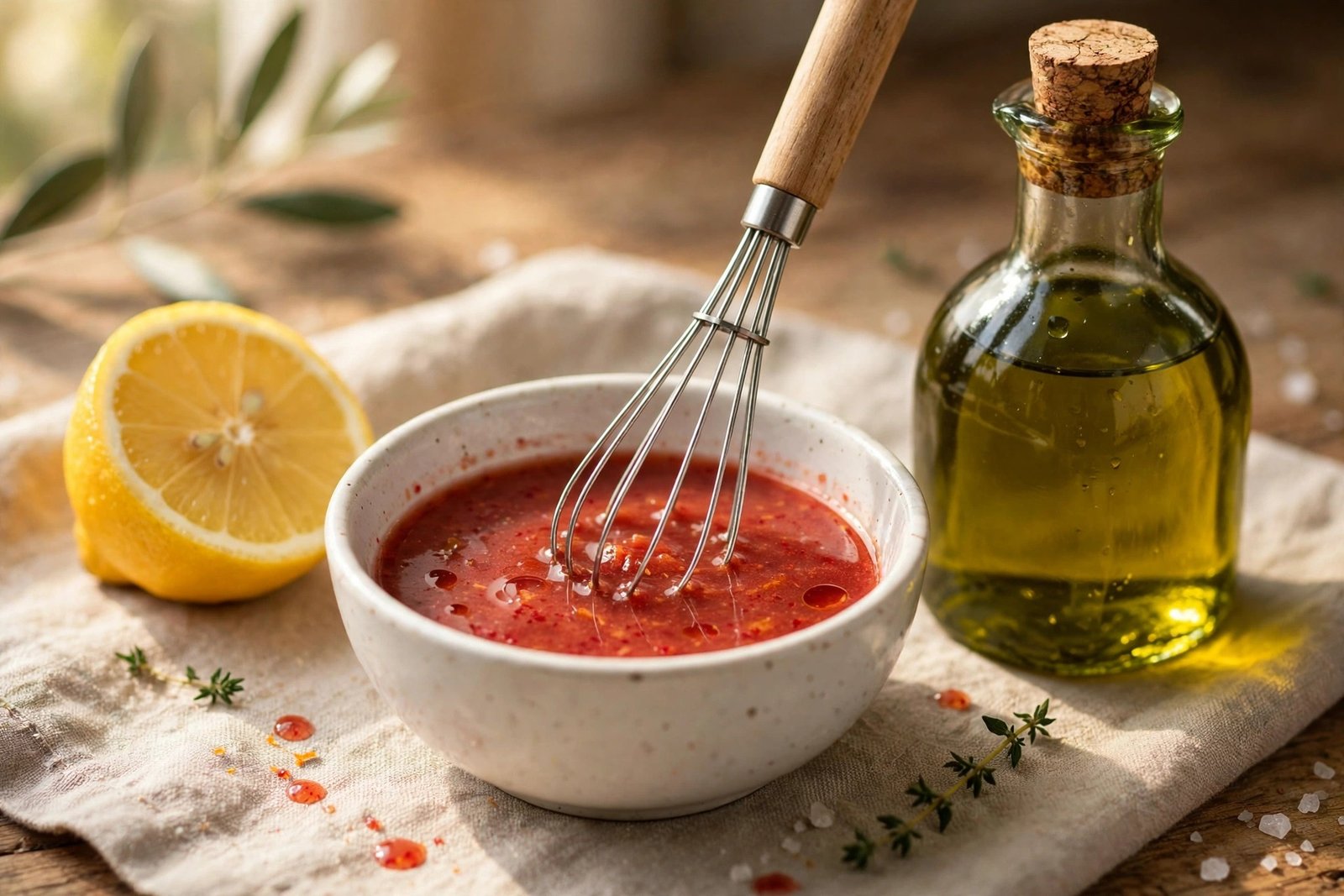
Stage 4 — Soften the onion and slice the avocado
Put the sliced red onion in a small bowl of cold water for 10 minutes — this takes the raw bite out of it — then drain and pat dry. Cut the avocado in half, remove the pit, and slice it just before assembling; avocado browns quickly once cut, so this is the last thing to prepare. A squeeze of lemon juice over the slices buys you a little extra time.
Stage 5 — Build the salad and serve
Spread the arugula in an even layer on a large platter or in a wide shallow bowl and season it very lightly with a pinch of flaky salt and a grind of pepper. A platter works better than a deep bowl here — the oranges and burrata should sit on top where they can be seen, not sink into the greens.
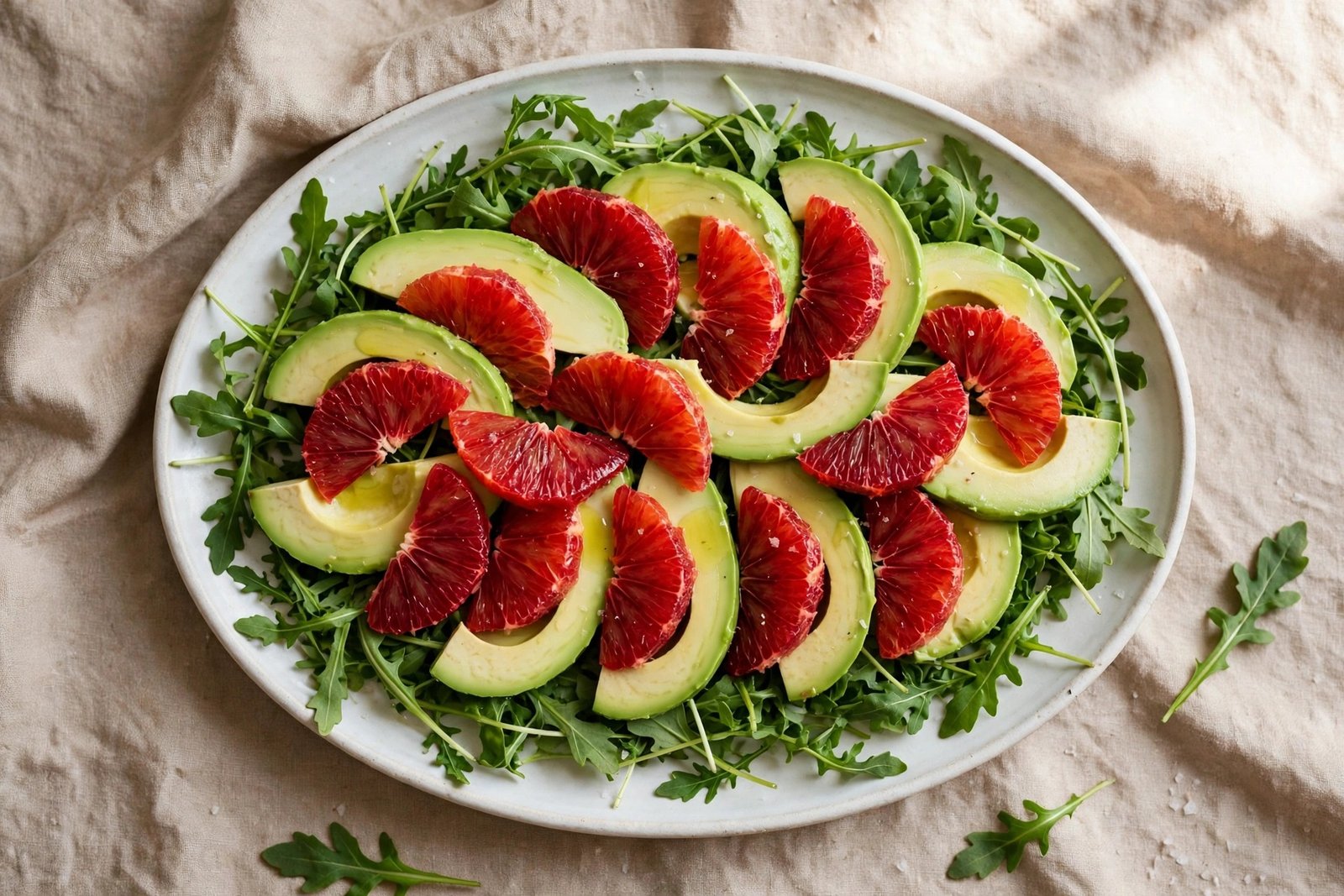
Lay the blood orange segments over the arugula in a single layer, overlapping them slightly so the red shows from every angle. Tuck the avocado slices between the orange segments. Try not to stack the fruit in a pile: a flat, even layer means every serving gets oranges, avocado, and greens together.
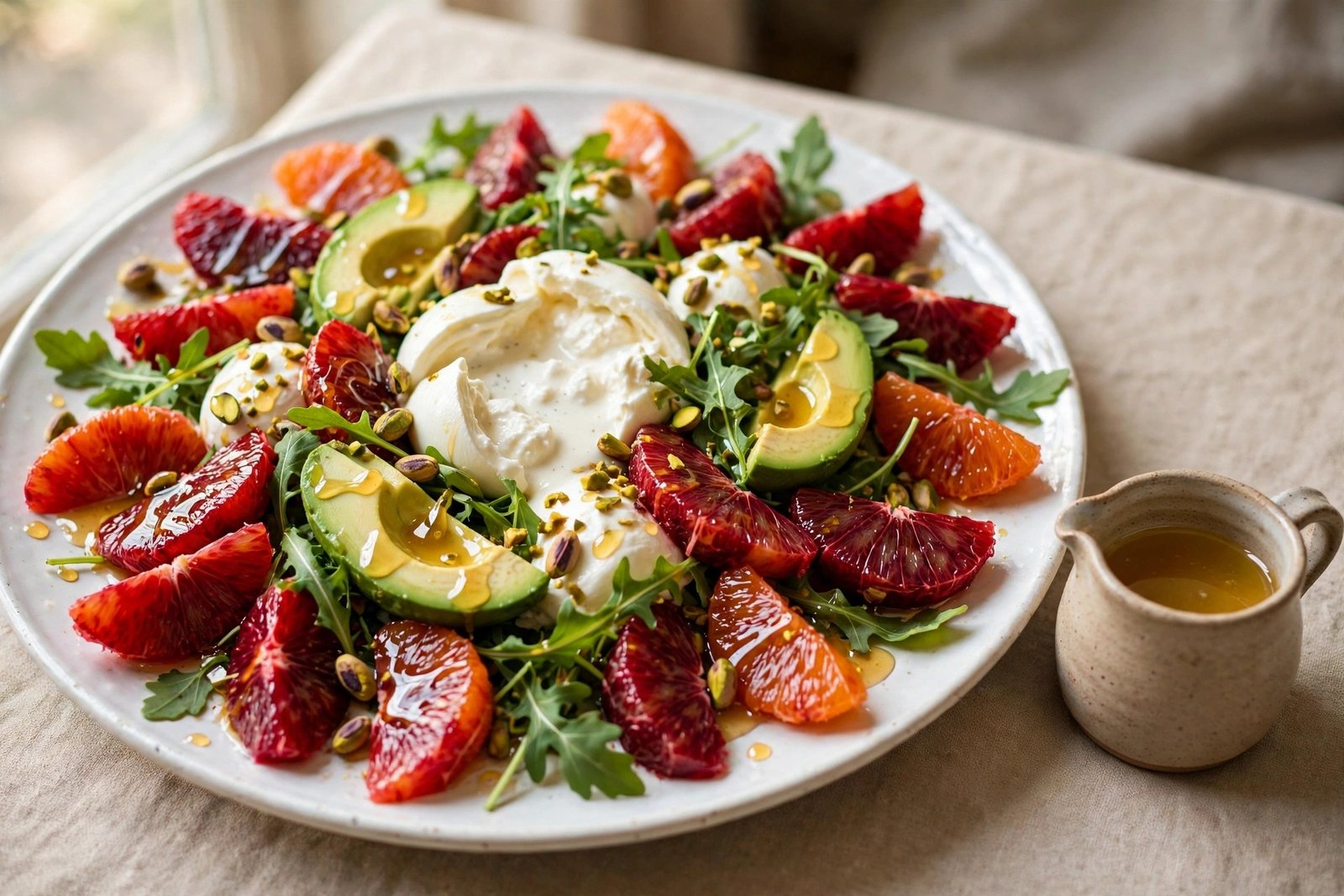
Tear the burrata into rough pieces and scatter them over the salad, then scatter the drained red onion, the chopped pistachios, and the torn mint over the top. Finish with a pinch of flaky sea salt and a few grinds of black pepper.
Drizzle the dressing over the salad just before it goes to the table — about two-thirds of it to start, with the rest passed separately so nobody gets a soggy salad. Serve immediately. Once dressed, the arugula starts to wilt within minutes, and the orange juice slowly tints the burrata pink, so there is no waiting around with this one.

Storage and reheating
This salad is at its best the moment it is dressed, so do not make the assembled salad ahead. The components keep well separately: supremed oranges in their juice, the sliced onion, and the dressing each keep in airtight containers in the fridge for up to 24 hours; the toasted pistachios keep at room temperature in a sealed jar for up to a week. Cut the avocado only when you are about to serve — it browns within an hour even with lemon juice.
Leftovers of the dressed salad do not keep well: the arugula wilts, the avocado browns, and the oranges bleed colour into everything. If you do have leftovers, refrigerate them in an airtight container and eat them the next day. As with all cut fruit, do not leave the salad at room temperature for more than 2 hours (1 hour if it is above 90°F / 32°C). It does not freeze, and there is nothing to reheat — this is a cold salad. The USDA’s full leftovers guidance is at https://www.fsis.usda.gov/food-safety/safe-food-handling-and-preparation/food-safety-basics/leftovers-and-food-safety.
Variations
- Sicilian-style: Skip the burrata and avocado and add thinly sliced fennel, pitted black olives, and a drizzle of olive oil — the classic Sicilian orange salad. Our Sicilian Fennel and Orange Salad is the full version of that idea.
- With grapefruit: Replace one blood orange with a pink grapefruit, supremed the same way, for a sharper edge.
- Goat cheese version: Swap the burrata for 3 oz of crumbled goat cheese and a tablespoon of chopped chives — tangier, and it holds up better if the salad has to sit for a while.
- Add protein: Top with sliced grilled chicken, seared salmon, or cooked shrimp and it becomes a light main course.
- Nut-free: Leave out the pistachios and add toasted pumpkin seeds instead — same crunch, no tree nuts.
- Vegan: Skip the burrata (or use a vegan soft cheese) and swap the honey in the dressing for maple syrup.
- Winter fruit swap: When blood oranges are out of season, Cara Cara oranges give a similar pink-orange colour, and navel oranges work any time of year.
Allergens and dietary information
Contains milk/dairy (burrata) and tree nuts (pistachios). Honey is not suitable for children under 12 months. The salad is vegetarian and gluten-free as written. It is not vegan or dairy-free as written — see the variations above. It is not nut-free as written; use pumpkin seeds instead of pistachios for a nut-free version.
You may also like
Soup and salad is a classic lunch for a reason — try the Creamy Tomato Soup and Grilled Cheese alongside this one. For another light, make-ahead lunch, the Spicy Chipotle Egg Salad keeps in the fridge and is ready when you are.
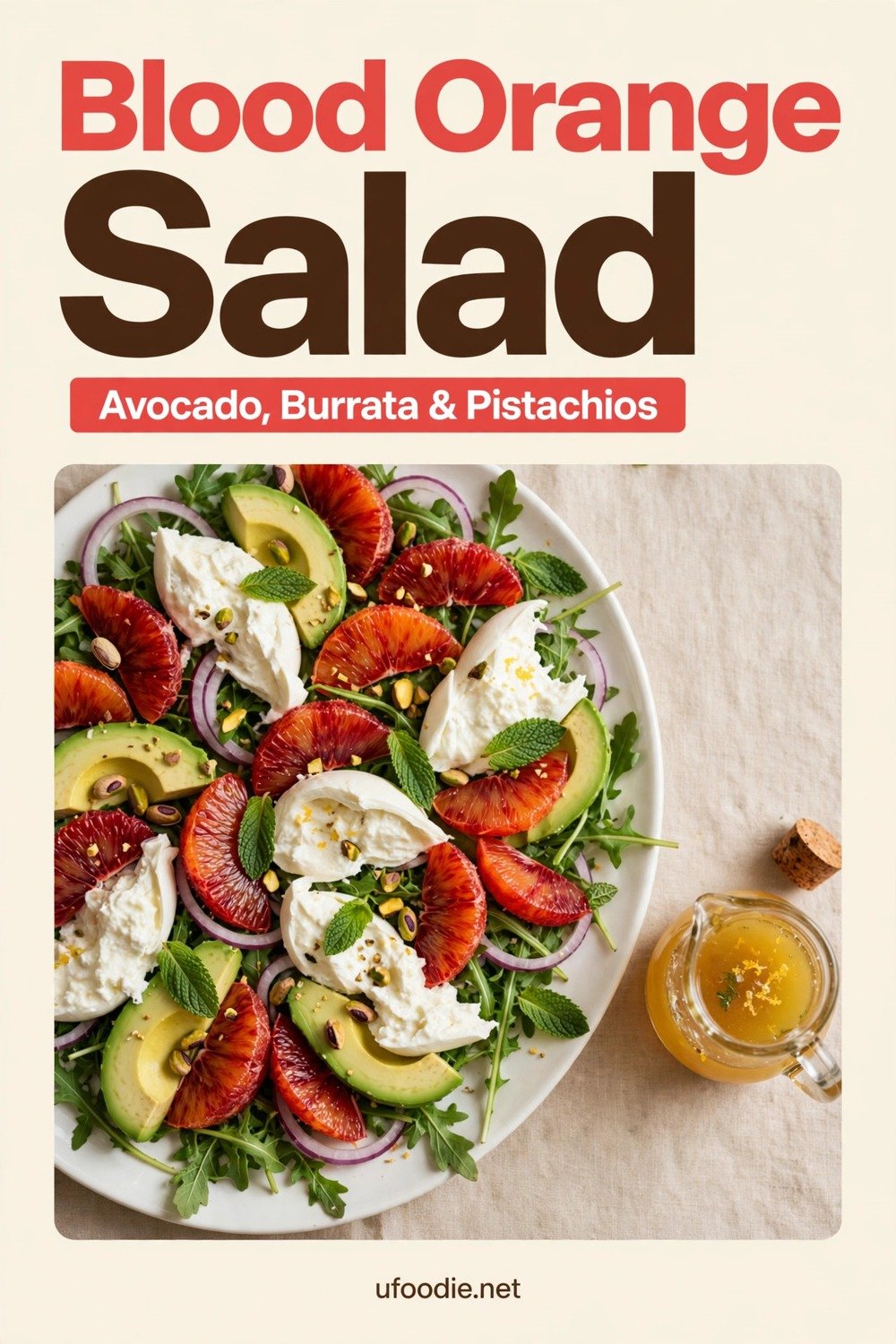

Blood Orange Salad
Ingredients
Equipment
Method
- Toast the pistachios in a dry skillet over medium heat for 3 to 4 minutes, shaking the pan often, until fragrant and lightly golden at the edges. Tip onto a plate straight away, let cool, then chop roughly.
- Supreme the blood oranges: slice a thin piece off the top and bottom of each orange so it stands flat, then cut away the peel and all the white pith in strips, following the curve of the fruit. Hold the peeled orange over a bowl and slide a paring knife along both sides of each segment, right next to the membrane, until the segment drops free. Squeeze the leftover membranes over the bowl to collect the juice.
- Whisk the dressing: measure 3 tablespoons of the blood orange juice into a small bowl, add the lemon juice, honey, Dijon mustard, salt, and pepper, then pour in the olive oil in a slow stream, whisking constantly, until slightly thickened and emulsified. Taste and add another 1/2 teaspoon of honey if the oranges were very tart.
- Soak the sliced red onion in cold water for 10 minutes, then drain and pat dry. Cut the avocado in half, remove the pit, and slice just before assembling; squeeze a little lemon juice over the slices.
- Spread the arugula in an even layer on a large platter or in a wide shallow bowl. Season very lightly with flaky salt and pepper.
- Arrange the blood orange segments over the arugula in a single layer, overlapping slightly. Tuck the avocado slices between the orange segments.
- Tear the burrata into rough pieces and scatter over the salad, then scatter the drained red onion, chopped pistachios, and torn mint on top. Finish with flaky sea salt and black pepper.
- Drizzle about two-thirds of the dressing over the salad just before serving, passing the rest separately. Serve immediately.
Notes
Frequently asked questions
What does a blood orange taste like?
Sweet and tart like an orange, but with a distinct berry — almost raspberry — note and a little less acidity than a navel orange. The flavour varies by variety: Moro is the boldest and most berry-like, Tarocco is the sweetest and mildest, and Sanguinello sits in between.
When are blood oranges in season?
From December to April in the Northern Hemisphere, with January and February the peak months. Their red colour comes from anthocyanins, pigments that only develop when warm days are followed by cool nights — which is why the colour is strongest in mid-winter and varies from year to year.
Can I use regular oranges instead of blood oranges?
Yes. Navel oranges are the easiest substitute and supreme cleanly, and Cara Cara oranges give a similar pink colour. The salad will taste good either way, but it will not have the ruby colour or the berry note that makes blood oranges special.
How do I supreme a blood orange?
Chill the fruit first, slice off the top and bottom so it stands flat, then cut away the peel and all the white pith in strips, following the curve of the fruit. Hold the peeled orange over a bowl and slide a sharp paring knife along both sides of each segment, right next to the membrane, until the segment drops free. Squeeze the leftover membranes for juice.
How do I keep the avocado from browning?
Slice it last, just before assembling, and squeeze a little lemon juice over the slices. Even then, you have about an hour before it starts to brown, so assemble the salad and serve it straight away.
Can I make blood orange salad ahead of time?
Partly. You can supreme the oranges, make the dressing, slice the onion, and toast the pistachios up to a day ahead and keep them separately in the fridge. Assemble and dress the salad no more than an hour before serving, and cut the avocado at the last minute — a dressed salad wilts and the oranges bleed colour into the burrata.
What can I use instead of burrata?
Fresh mozzarella is the closest swap, though it lacks the creamy centre. Goat cheese gives a tangier result, and crumbled feta works if you want something saltier. For a dairy-free version, leave the cheese out and add an extra half avocado for creaminess.
Is blood orange salad gluten-free and vegan?
It is gluten-free as written — nothing in it contains wheat. It is not vegan as written because of the burrata and the honey. To make it vegan, skip the burrata and swap the honey for maple syrup; everything else is already plant-based.
