

Jump to recipe ↓
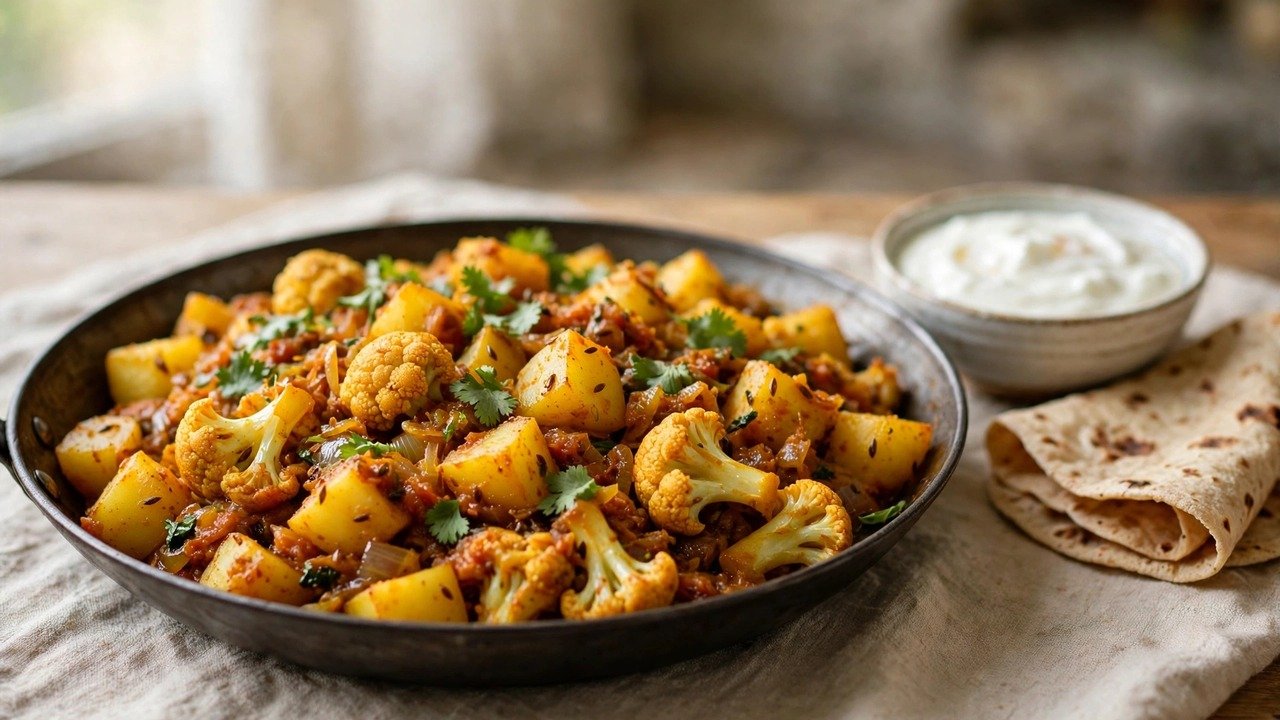
Two vegetables, one pan, and a spice tin — that is all this aloo gobi asks of you. I love how potatoes and cauliflower, cooked dry in a spiced onion-tomato masala, turn into the kind of dinner that smells like the best Indian takeaway and tastes even better the next day.
The classic Punjabi method: cumin seeds bloomed in hot oil, onions cooked down to golden, tomatoes broken into a thick masala, then the potatoes and cauliflower cooked covered on a low heat until tender but still holding their shape. No sauce to babysit, no cream, no long simmer — dinner is on the table in 45 minutes, and it is naturally vegan and gluten-free.
At a glance
- Servings: 4 as a main with bread or rice, or 6 as a side
- Prep time: 15 minutes
- Cook time: 30 minutes
- Total time: 45 minutes, plus 5 minutes resting
- Method: one pan, stovetop, cooked dry in a spiced masala
- Why this recipe: a classic Punjabi sabzi, naturally vegan and gluten-free, with golden edges and no sauce to babysit
- Storage: 3–4 days in the fridge, better the next day; freezes up to 2 months, though the cauliflower softens
Pin this recipe for later.
Why you’ll love this recipe
- Dinner in 45 minutes, in one pan. Potatoes and cauliflower cook together in a single skillet, with no sauce to watch over.
- Naturally vegan and gluten-free. Oil, vegetables and spices — nothing to swap out, nothing to leave off.
- It tastes better the next day. The spices settle into the vegetables overnight, so leftovers are something to look forward to.
- Easy to make your own. Stir in peas or chickpeas, roast it instead, or finish it with coconut milk — the base recipe takes all of it.
Notes on ingredients
Waxy potatoes. Yukon Golds hold their shape best; floury potatoes such as russets break apart more easily, so cut them larger and stir gently. Sweet potatoes are a tasty swap — they cook faster, so add them with the cauliflower.
Cauliflower. A fresh, firm head with tight white florets, cut into even pieces so everything cooks at the same rate. Oversized florets stay raw in the middle while the potatoes fall apart.
Mustard oil. The traditional Punjabi choice, adding a sharp, peppery note. Heat it until it just begins to smoke, then let it cool for 30 seconds before adding the cumin to tame its raw pungency. With a mustard allergy at the table, use sunflower or vegetable oil instead.
Onion, garlic, ginger and green chillies. Give the onion time to turn properly golden — that is where the sweetness comes from. Garlic and ginger need only a minute until fragrant, and the chillies set the heat: fewer for mild, more for medium.
Tomatoes. Fresh tomatoes give the brightest flavour, but canned crushed tomatoes work in a pinch. Skip the tomato altogether for a drier, dhaba-style version.
Ground spices. Turmeric, ground coriander, ground cumin and Kashmiri chilli powder build the masala. Kashmiri chilli is mild and mostly for colour; hot chilli powder will make the dish noticeably hotter, so use half as much.
Garam masala. Added at the end, off the heat, so its aroma stays bright — ground spices added early lose their fragrance.
Kasuri methi (dried fenugreek leaves). Optional, but crushed between your palms and stirred in with the garam masala it adds a savoury, slightly bitter depth. Most Indian grocers stock it.
Lemon juice and cilantro. The finishing lift: lemon brightens the spices, cilantro adds freshness. Add both off the heat.
Water. Only if the pan looks dry — the vegetables usually release enough moisture on their own.
Find the complete recipe with measurements below.
How to make aloo gobi
Stage 1 — Prep the vegetables
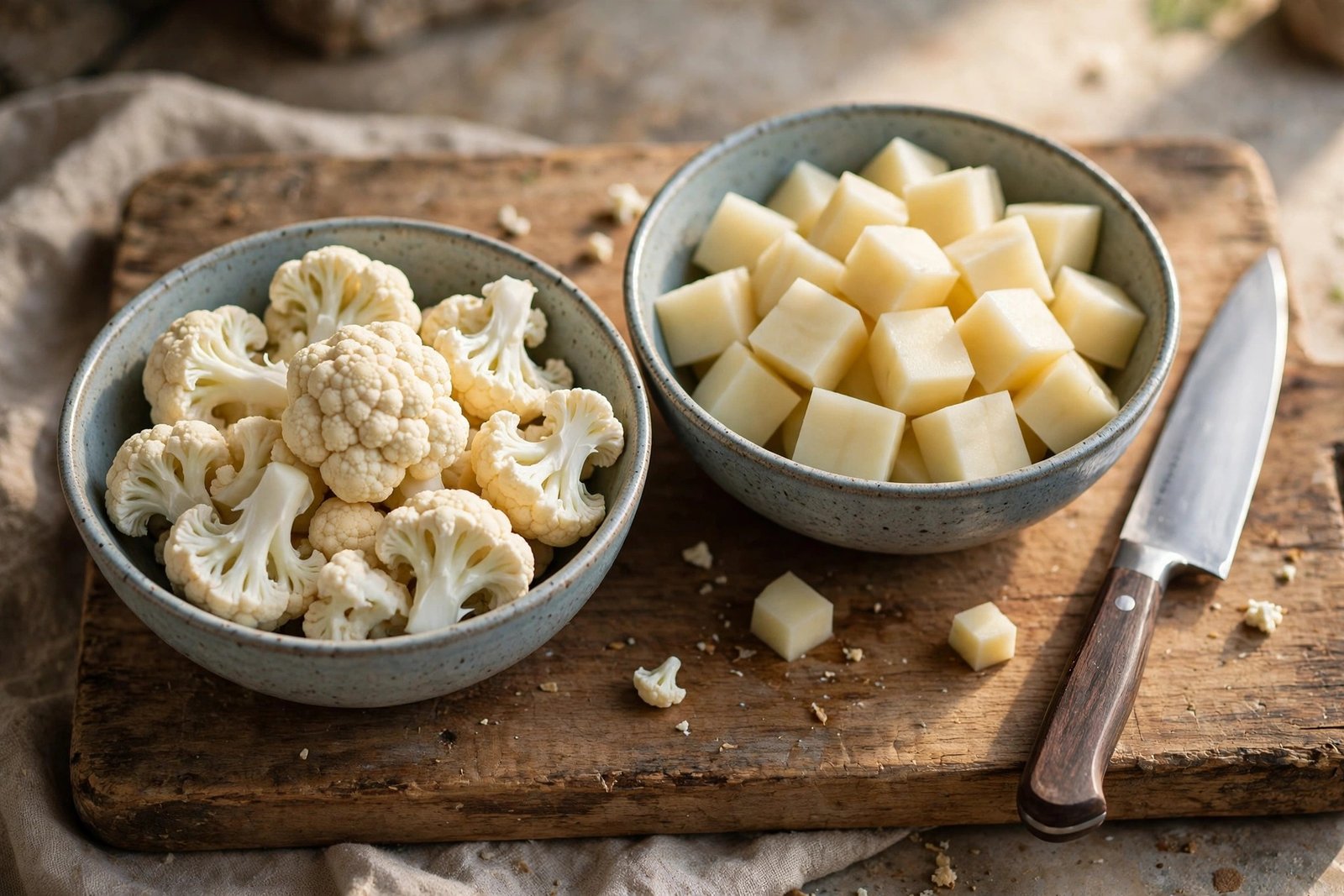
Cut the cauliflower into even florets, keeping a little stem on each piece so they do not fall apart. Rinse in a colander, drain well and pat dry — wet florets steam instead of browning, the single biggest cause of soggy aloo gobi.
Peel the potatoes, cut them into even cubes and drop them into cold water so they do not discolour; drain just before cooking.
Stage 2 — Bloom the cumin and build the masala
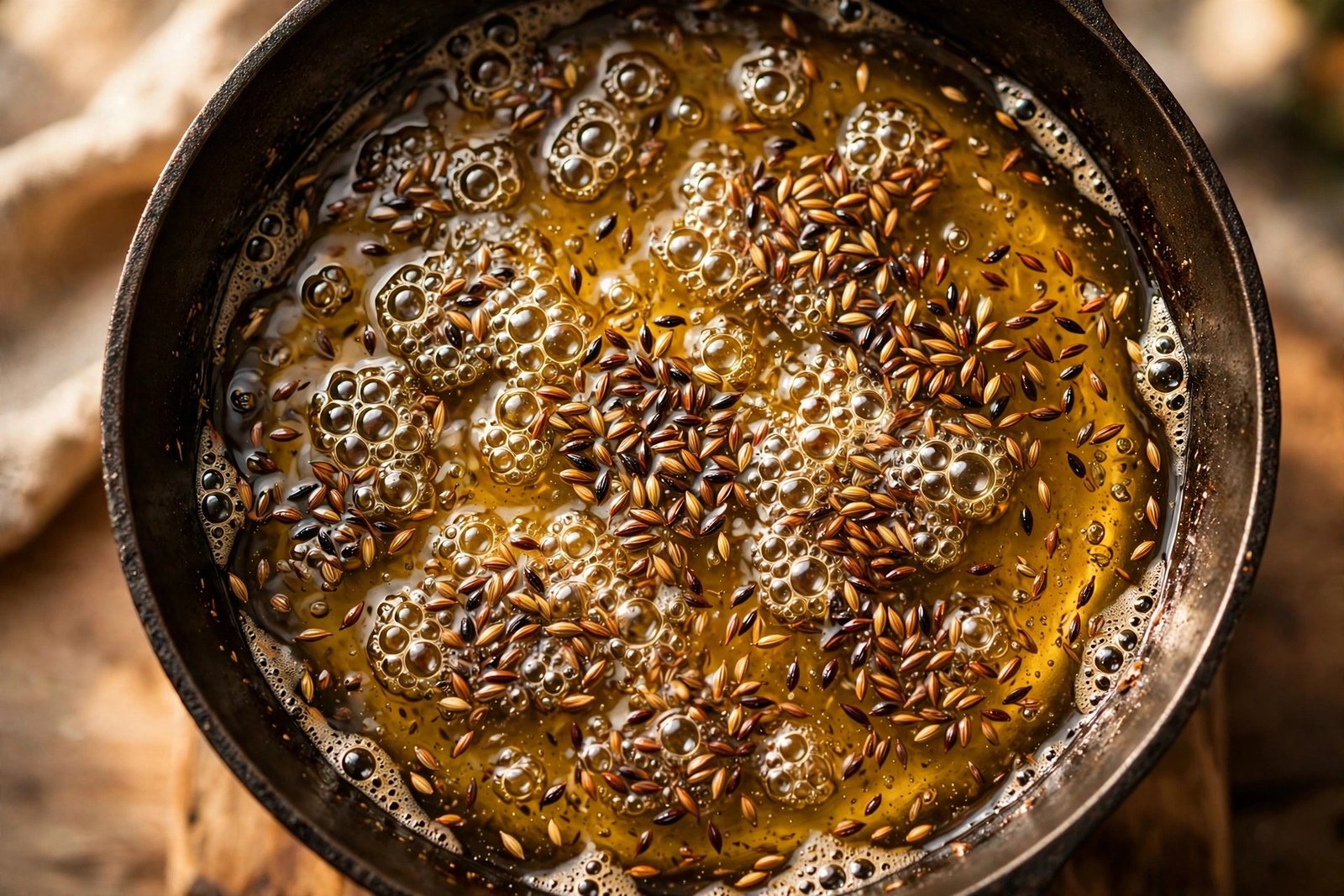
Heat the oil in a wide pan over medium heat. Fry the cumin seeds for 20–30 seconds, until they sizzle and darken a shade — warm and nutty. If they go black and smell bitter, the oil is too hot; tip them out and start again with fresh oil and seeds.
Cook the onion, stirring often, for 6–8 minutes, until soft and golden at the edges. Stir in the garlic, ginger and green chillies and cook for 1 minute more, until fragrant — if the garlic starts to brown, move on straight away.
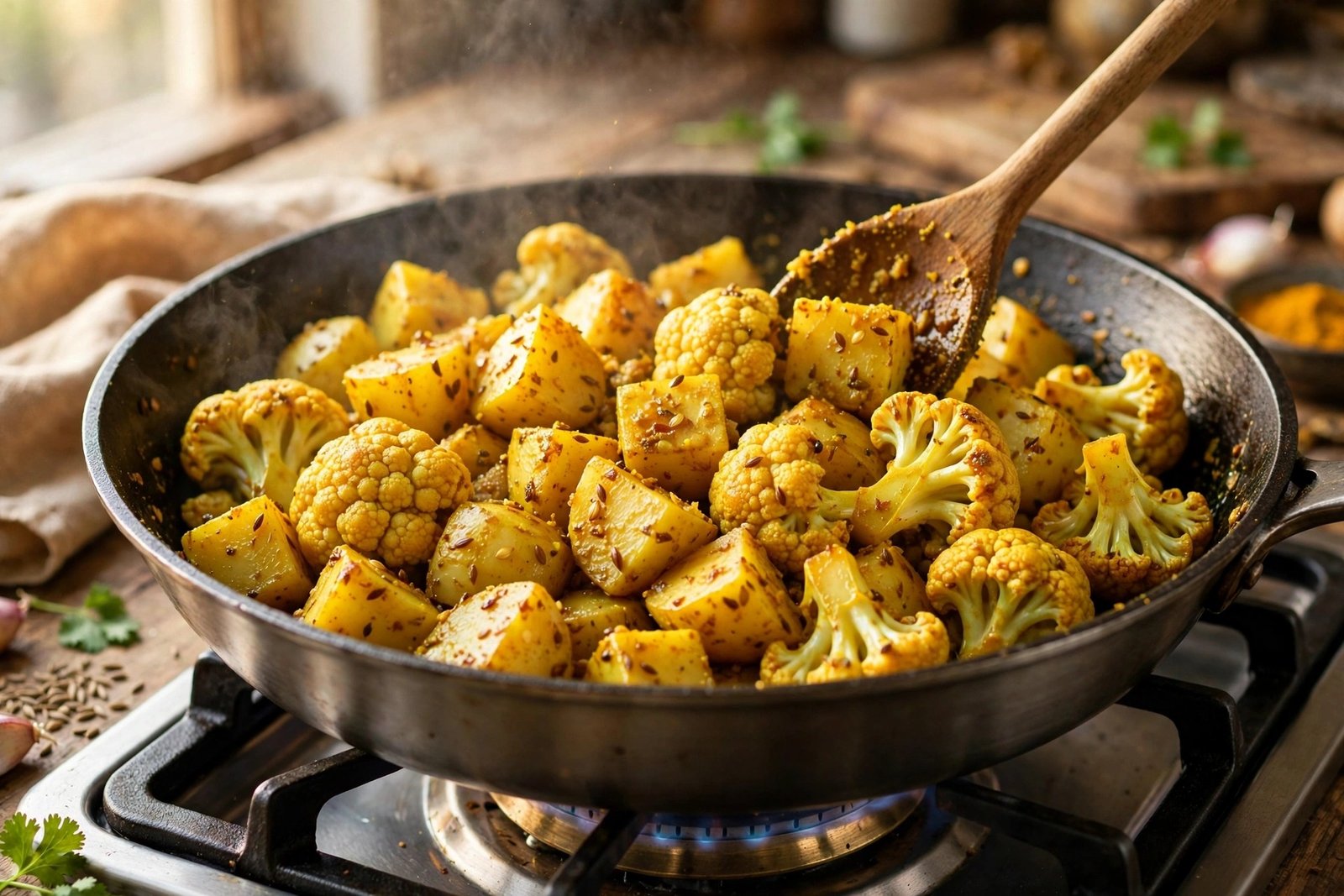
Add the tomatoes, turmeric, ground coriander, ground cumin, Kashmiri chilli powder and salt. Cook for 4–5 minutes, stirring and mashing the tomatoes against the side of the pan, until they break down into a thick, jammy paste and the oil starts to separate at the edges. Look for glossy and deep orange-yellow, not watery — a thin, runny masala means a bland aloo gobi.

Stage 3 — Add the vegetables and cook covered
Drain the potatoes, add them to the pan and stir for 2 minutes to coat every cube. They go in first because they take longer than the cauliflower — this head start keeps both finishing together.
Add the cauliflower and toss gently until everything is coated yellow. Add a splash of water only if the pan looks very dry — the vegetables usually release enough moisture on their own.
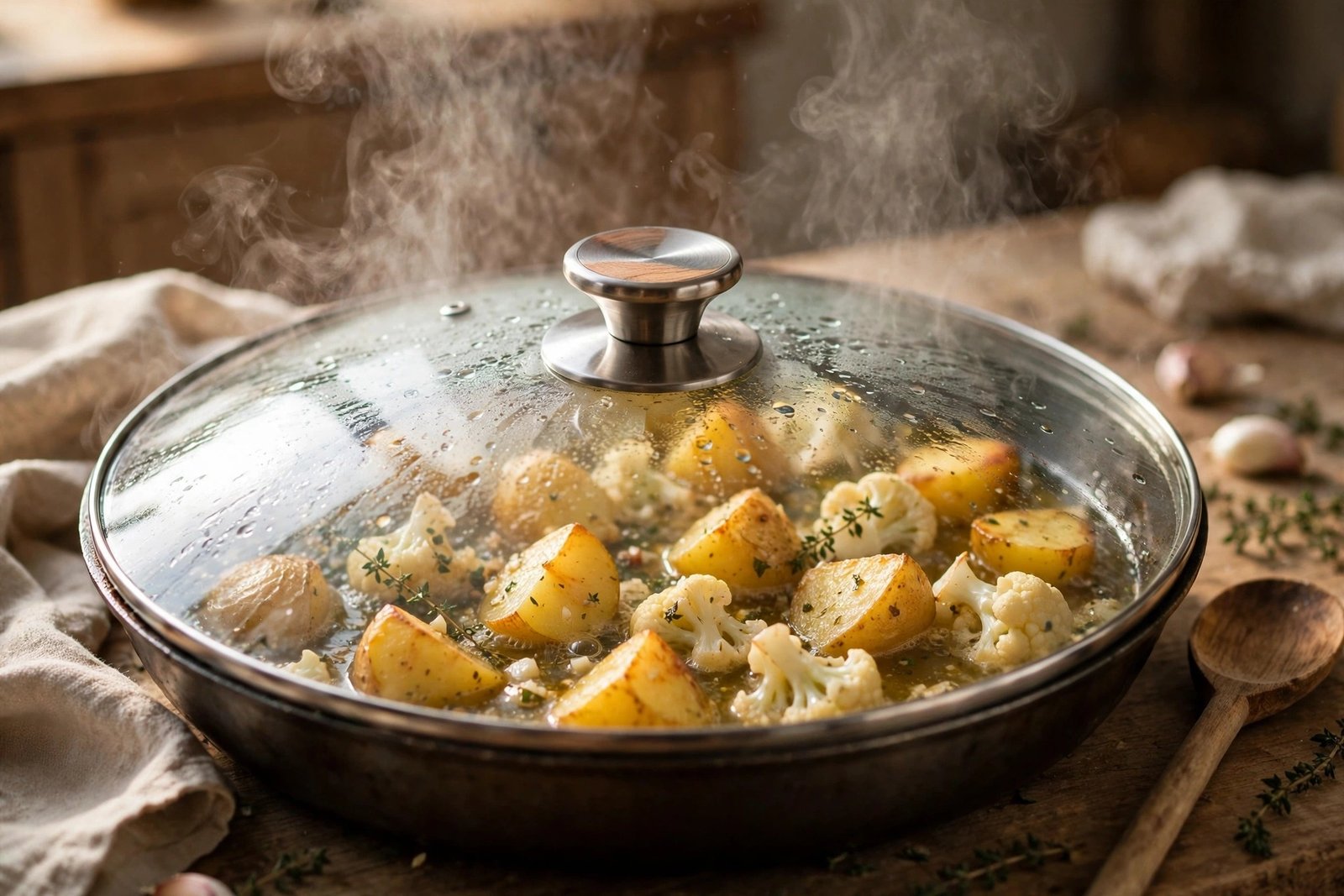
Cover, turn the heat down to medium-low, and cook for 15–18 minutes, stirring gently every 5 minutes, until a knife slides easily into a potato and the cauliflower is tender but still holds its shape. Fold with a wide spatula rather than churning — vigorous stirring breaks the cauliflower into crumbs. If the pan starts to catch, add a little more water, not a flood.
Take the lid off and cook for 2–3 minutes more, stirring gently, to let extra liquid evaporate. This makes it a dry sabzi rather than a wet curry: the vegetables should be coated in spices, not sitting in sauce, with a few edges catching a little golden colour.
Stage 4 — Finish and rest
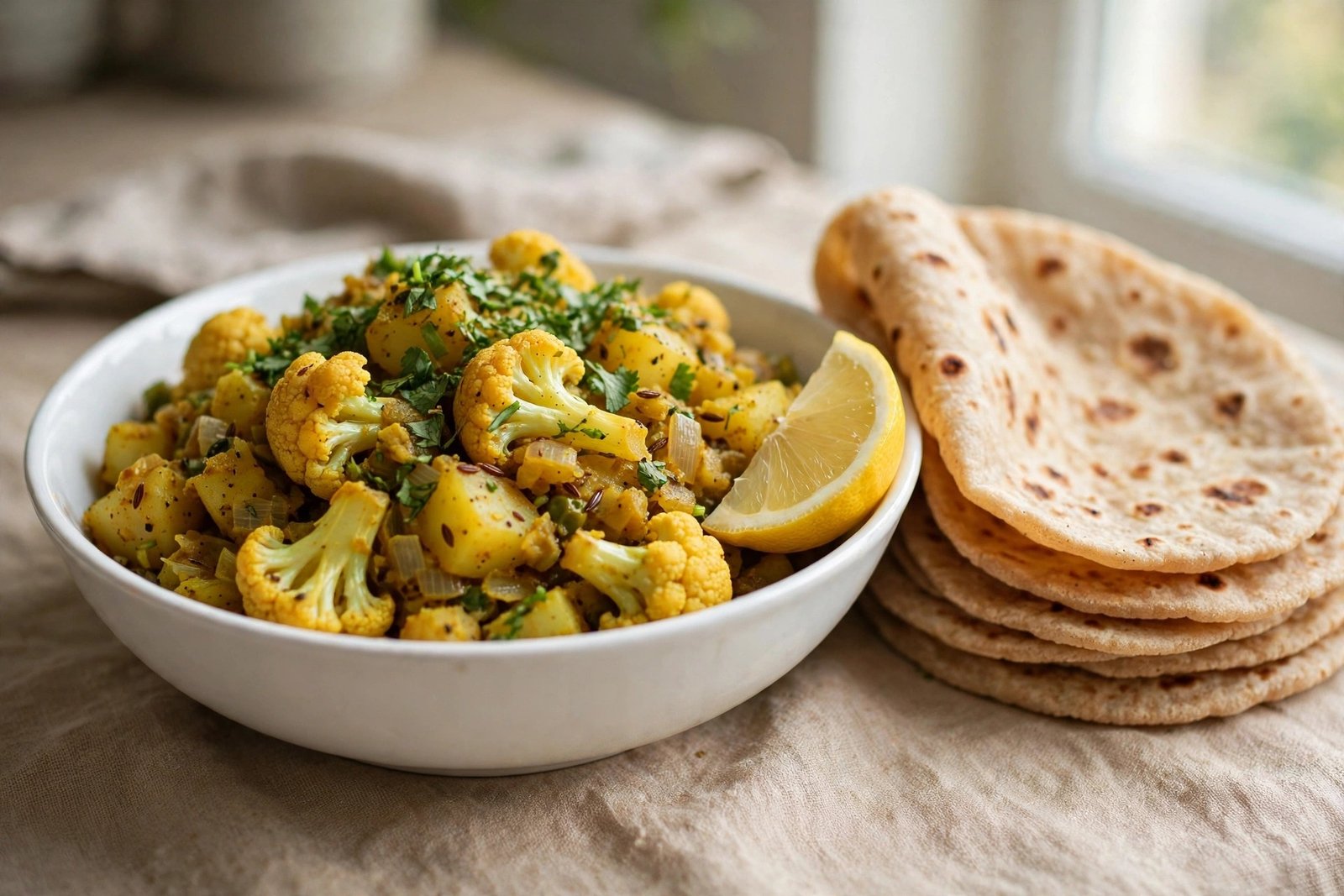
Turn off the heat, sprinkle over the garam masala, lemon juice and chopped cilantro and toss gently to coat. Let the pan sit, covered, for 5 minutes — the flavours settle and the spices bloom a little more. Taste, adjust the salt, and serve hot with roti, paratha, naan or basmati rice.
Storage and reheating
Cool within 2 hours and store in an airtight container in the fridge for 3–4 days. It genuinely tastes better the next day, once the spices have settled into the vegetables. The FoodSafety.gov cold food storage chart and the Mayo Clinic food safety FAQ both confirm the 3–4 day fridge limit for cooked vegetables: https://www.foodsafety.gov/food-safety-charts/cold-food-storage-charts and https://www.mayoclinic.org/healthy-lifestyle/nutrition-and-healthy-eating/expert-answers/food-safety/faq-20058500?p=1
Reheat in a skillet over medium heat with a splash of water, stirring gently, until steaming hot throughout — 165°F (74°C) if you are checking with a thermometer. The microwave works too, in 1-minute bursts, but the skillet keeps the edges from going soft.
It freezes for up to 2 months in a freezer-safe container, but be honest about the texture — cauliflower softens noticeably and the potatoes can turn grainy. Still perfectly edible, just not as good as fresh. Thaw overnight in the fridge and reheat in a skillet with a splash of water until steaming hot. From frozen, reheat straight from the freezer in a covered skillet over low-medium heat with a splash of water, stirring occasionally, until steaming hot throughout — about 12–15 minutes.
For meal prep, make a double batch and portion it with rice or flatbread for weekday lunches.
Variations
- Dhaba-style (no tomato): skip the tomatoes and onion, bloom the cumin with a pinch of asafoetida (hing), and cook the vegetables with the ground spices only — drier, punchier, closer to the roadside version.
- With peas: stir in ½ cup of frozen peas with the cauliflower — a classic addition that needs no extra cooking time.
- With chickpeas: add 1 can (400 g) of drained chickpeas with the cauliflower for a heartier main — protein jumps to about 11 g per serving.
- Roasted aloo gobi: toss the vegetables with the oil and all the spices, spread on a sheet pan and roast at 425°F (220°C) for 35–40 minutes, turning once, for deeper, nuttier flavour and crisper edges.
- Creamy version: stir in ¼ cup of coconut milk or 2 tablespoons of cream with the garam masala at the end, for a softer, saucier curry.
- Ghee instead of oil: use 2 tablespoons of ghee for a richer, restaurant-style flavour — vegetarian rather than vegan, and it adds dairy.
- Extra heat: add ½ tsp of red chilli flakes with the ground spices, or leave the seeds in the green chillies.
- Amchur finish: ½ tsp of amchur (dried mango powder) stirred in with the garam masala adds a tangy lift with the lemon.
- No garam masala? Use ½ tsp extra ground cumin and a pinch of cinnamon instead.
Allergens and dietary information
- Naturally vegan, gluten-free and dairy-free as written. No wheat, egg, milk, soy, nuts or fish in the recipe.
- Mustard: only if you cook with mustard oil or add mustard seeds — mustard is a major allergen in the UK and EU, so use sunflower or vegetable oil instead.
- Asafoetida (hing): if you use it in the dhaba variation, check the label — some brands are compounded with wheat flour. Use a gluten-free brand if that matters.
- Garam masala: spice blends are occasionally processed in facilities that handle nuts — check the label if you have a severe nut allergy.
- Low-carb: about 32 g of carbohydrates per serving, so not low-carb — but swapping half the potatoes for extra cauliflower brings it to roughly 20 g.
You may also like
If you like a hearty one-pan dinner that feeds four, try the Pot Roast with Mashed Potatoes. And if it is the potatoes you are here for, the Honey BBQ Chicken and Garlic Parmesan Potatoes is another easy weeknight dinner built around them.


Aloo Gobi
Ingredients
Equipment
Method
- Cut the cauliflower into even 1 1/2-inch florets, keeping a little stem on each piece. Rinse in a colander, drain well and pat dry. Peel the potatoes, cut into 3/4-inch cubes and drop into a bowl of cold water so they do not discolour; drain just before cooking.
- Heat the oil in a large wide skillet over medium heat. Add the cumin seeds and fry for 20 to 30 seconds, until they sizzle and darken a shade. If they go black and smell bitter, the oil is too hot — start again with fresh oil and seeds.
- Add the onion and cook, stirring often, for 6 to 8 minutes, until soft and golden at the edges. Stir in the garlic, ginger and green chillies and cook for 1 minute more, until fragrant.
- Add the tomatoes, turmeric, ground coriander, ground cumin, Kashmiri chilli powder and salt. Cook for 4 to 5 minutes, stirring and mashing the tomatoes against the side of the pan, until they break down into a thick, jammy paste and the oil starts to separate at the edges.
- Drain the potatoes and add them to the pan. Stir for 2 minutes to coat every cube in the masala.
- Add the cauliflower florets and toss gently until everything is coated yellow with spices. Add 2 tablespoons of water only if the pan looks very dry. Cover, turn the heat down to medium-low, and cook for 15 to 18 minutes, stirring gently every 5 minutes, until a knife slides easily into a potato and the cauliflower is tender but still holds its shape.
- Take the lid off and cook for 2 to 3 minutes more, stirring gently, to let any extra liquid evaporate and let a few edges catch a little golden colour.
- Turn off the heat. Sprinkle over the garam masala, lemon juice and chopped cilantro and toss gently to coat. Let the pan sit, covered, for 5 minutes before serving. Taste and adjust the salt. Serve hot with roti, paratha, naan or basmati rice.
Notes
Frequently asked questions
What does aloo gobi mean?
Aloo means potato and gobi means cauliflower in Hindi. Together they name a classic dry vegetable curry — a sabzi — from Punjab in North India, cooked with turmeric, cumin and other warm spices.
Is aloo gobi vegan?
Yes, as written. The recipe uses oil, vegetables and spices, with no dairy, egg or animal products. Some restaurant versions finish with ghee or butter, which makes them vegetarian rather than vegan — this home-style version stays vegan.
Why is my aloo gobi mushy?
Usually one of three things: the cauliflower went in wet, too much water was added, or it was stirred too often and cooked too long. Pat the florets dry, add water a tablespoon at a time only if the pan looks dry, stir gently every 5 minutes, and take the lid off for the last 2–3 minutes so the excess moisture evaporates.
Can I use frozen cauliflower?
Yes. Thaw it completely and pat it very dry first — frozen cauliflower holds a lot of water. Add it a few minutes later than fresh cauliflower and expect it to cook in 10–12 minutes. The texture will be softer than fresh, but the flavour is still good.
How spicy is aloo gobi?
Mild to medium as written. Kashmiri chilli powder is mild and mostly adds colour, and one green chilli gives a gentle warmth. For a mild version, use one chilli with the seeds removed and skip the chilli powder. For hotter, keep the seeds in and add ½ tsp of red chilli flakes.
What do you serve with aloo gobi?
Roti, paratha or naan are the classic partners — it is a dry sabzi, made to be scooped up with bread. Basmati rice works well too, and it sits happily alongside dal and a yoghurt raita as part of a bigger Indian meal.
Can I make aloo gobi ahead of time?
Yes, and it is one of those dishes that improves overnight. Make it a day ahead, cool and refrigerate, then reheat gently in a skillet with a splash of water. The spices settle into the vegetables and the flavour deepens.
How long does leftover aloo gobi keep?
3–4 days in the fridge in an airtight container, or up to 2 months in the freezer (with some softening of the cauliflower). Always reheat until steaming hot throughout — 165°F (74°C) if you are checking with a thermometer — and do not leave it sitting out at room temperature for more than 2 hours.
