

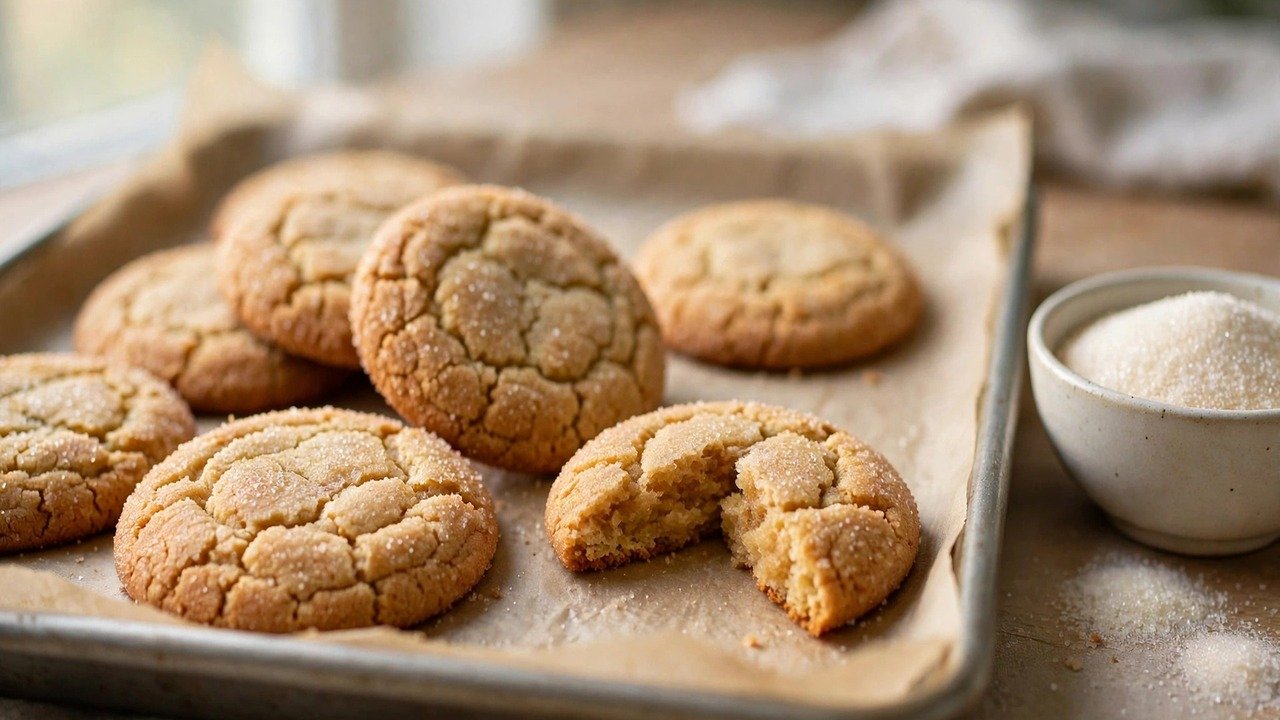
A plain sugar cookie is a nice thing. A brown butter sugar cookie is a different thing entirely. The butter goes into the pan pale and ordinary and comes out smelling like toasted hazelnuts and toffee, and that one change — ten minutes at the stove, nothing else — turns a simple cookie into one that tastes like it came from a bakery. Crisp sugar edges, a soft centre that stays soft for days, and a nutty depth that makes people ask what is in them.
At a glance
- Makes: 24 cookies
- Time: 25 minutes prep (includes browning the butter), 60 minutes chilling, 10 to 12 minutes baking per batch — 97 minutes total
- Oven: 350°F (175°C), centre rack, one sheet at a time
- Why this recipe: one extra step up front — browning the butter — gives a plain sugar cookie a nutty, toffee-like depth no amount of vanilla can fake
- Storage: up to 4 days in an airtight container at room temperature; baked cookies and raw dough both freeze for up to 3 months
Why you’ll love this recipe
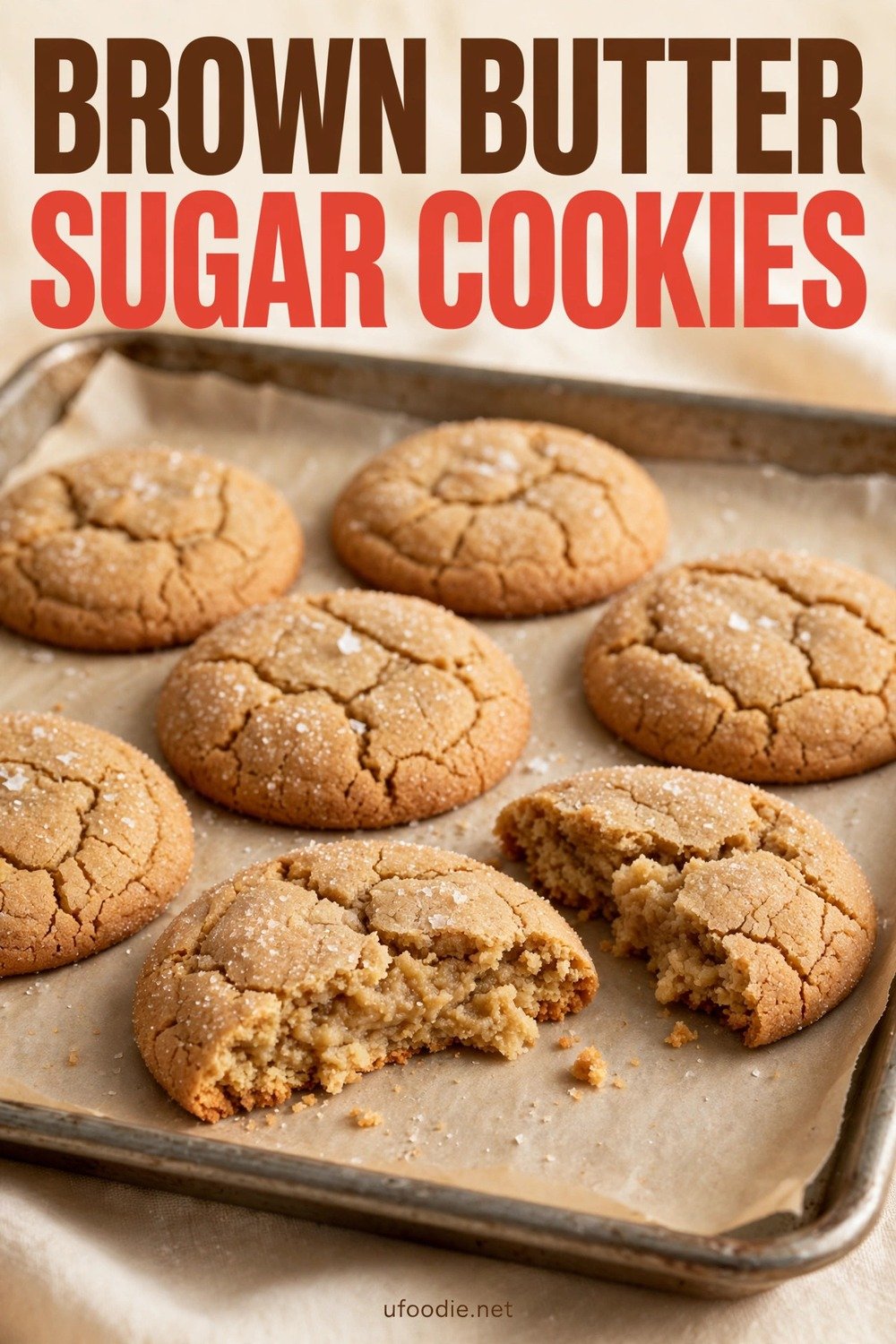
- Bakery flavour from one extra step. Browning the butter toasts its milk solids into something nutty and caramel-like — the whole recipe is a plain sugar cookie plus ten minutes at the stove.
- Chewy centres that stay soft for days. The brown sugar and the short bake keep the middle soft, and pulling the cookies early is what keeps them that way.
- Crisp sugar edges. Each dough ball is rolled in sugar before baking, which gives it a fine, crackled coating against the soft centre.
- Freezer-friendly dough. Scoop the dough balls, freeze them, and bake straight from frozen — warm cookies on demand, with two or three extra minutes in the oven.
Notes on ingredients
- Unsalted butter — the star of the recipe, and the only ingredient that gets cooked before it goes into the dough. Butter is about 80% fat, 16% water, and a small amount of milk solids. Cooked past melting, the water boils off first — that is the loud foaming — then the milk solids toast through the same Maillard reaction that browns bread crust. Those toasted solids are where the nutty, toffee-like flavour lives, and browning drives off a good share of the butter’s weight as steam, which is why a spoonful of water goes back in. Salted butter works too, but reduce the added salt by half — it varies by brand, and it is easy to overshoot with the brown butter flavour already in play. For a dairy-free version, brown butter does not work with most plant butters (they have no milk solids to toast), so use a standard dairy-free sugar cookie recipe instead of swapping the butter here.
- Light brown sugar — the molasses in brown sugar is doing real work here: it makes the cookies chewier and adds a caramel note that plays well with the brown butter. No light brown sugar? Use all granulated sugar — the cookies will be a little less chewy and a little less caramel-flavoured. Dark brown sugar works too and makes the flavour deeper still.
- Granulated sugar — creamed with the brown sugar for structure and sweetness, and used again for rolling the dough balls into their crisp sugar coating.
- Eggs — at room temperature, so they blend smoothly into the creamed butter. Cold eggs can make the mixture look curdled — it still bakes fine, but room temperature is better.
- Vanilla extract — the background note that ties the brown butter and sugars together.
- All-purpose flour — spooned into the measuring cup and levelled off, rather than scooped straight from the bag. A packed cup adds a lot of extra flour, and that is the difference between chewy and dry.
- Baking soda and baking powder — the leavening pair — baking soda gives the cookies their spread and chew, baking powder gives them a little lift so they stay thick.
- Fine salt — it sharpens the brown butter flavour and keeps the sweetness from going flat.
Find the complete recipe with measurements below, in the recipe card.
How to make brown butter sugar cookies
Stage one: Brown the butter
Cut the butter into even pieces so it melts at the same rate, and put it in a light-coloured pan over medium heat, so you can see the colour change. Let it melt, then keep swirling or stirring as it bubbles and foams. This is the water boiling off, and it crackles loudly at first. After 5 to 8 minutes the foam quiets and thins, and you will see amber flecks at the bottom of the pan and smell something nutty, like hazelnuts and caramel. The smell arrives a few seconds before the colour does, so trust your nose. Pull the pan off the heat the moment the flecks are hazelnut brown and pour the butter immediately, specks and all, into a heatproof bowl — the hot pan keeps cooking it, and that is the difference between brown and burnt. Stir in the tablespoon of water. Love and Lemons walks through the same steps if you want a second opinion before your first try.

Stage two: Cool the butter and mix the dough
Let the browned butter cool for about 20 minutes, until it is no longer hot and has thickened slightly, then refrigerate it for about 30 minutes, until it is soft and pliable but holds its shape — the texture of softened butter, not melted butter. This step matters: brown butter is liquid when warm, and you cannot cream liquid butter with sugar. The Kitchn’s version chills the brown butter until solid for the same reason. While it cools, whisk together the flour, baking soda, baking powder and salt in a medium bowl and set aside.
Beat the cooled brown butter with the granulated sugar and brown sugar on medium speed for 2 to 3 minutes, until light, fluffy, and pale. Add the eggs one at a time, beating well after each, then beat in the vanilla. It should look smooth and creamy, with brown flecks throughout. Add the dry ingredients to the butter mixture in two additions, mixing on low speed just until no dry flour remains. Stop as soon as the flour disappears — working the dough after that point develops gluten and makes the cookies tough. The dough will feel soft and a little sticky; that is normal.


Stage three: Chill, scoop and roll
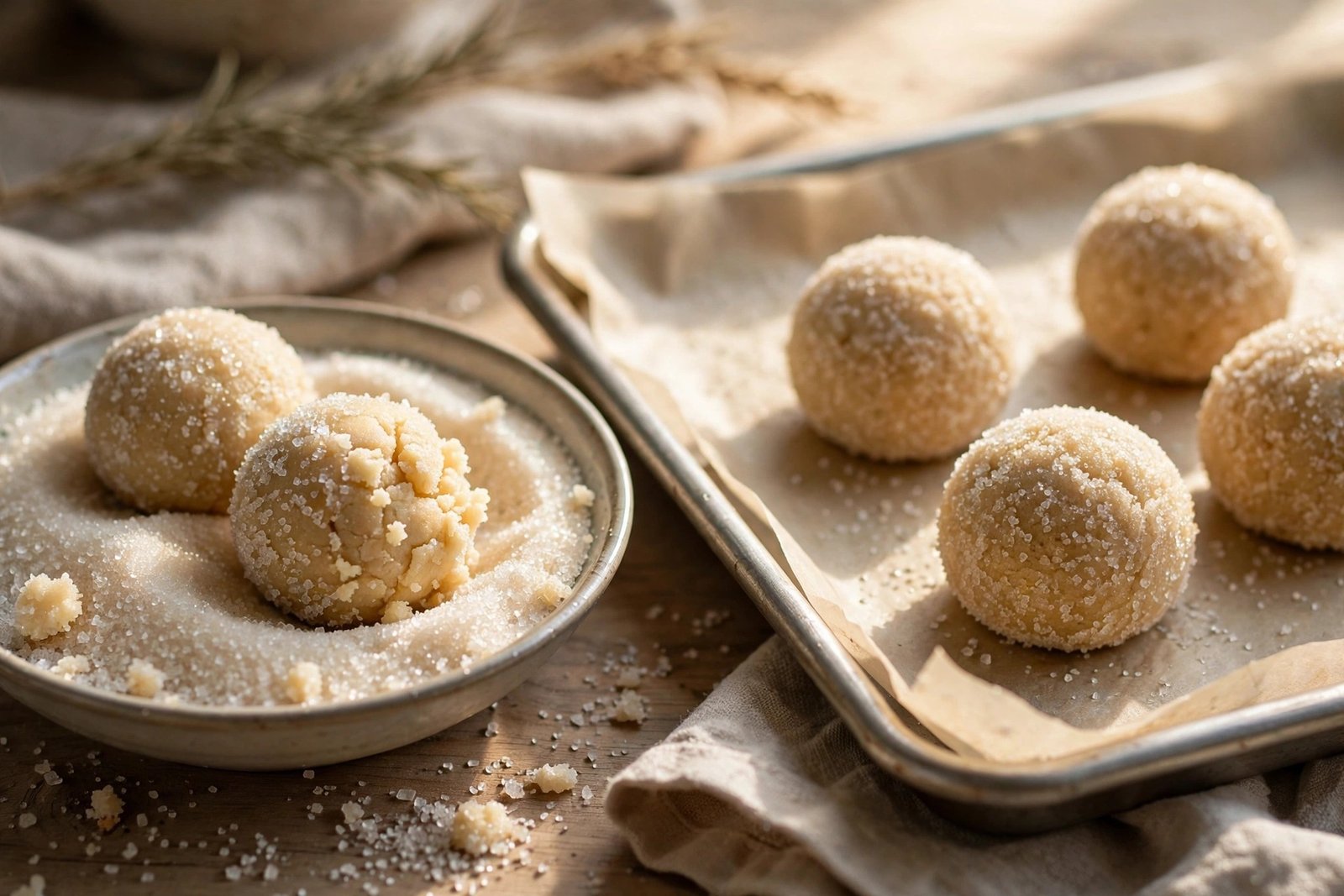
Cover the bowl and refrigerate for at least 60 minutes, until the dough is firm enough to scoop. An overnight chill works too, and it deepens the flavour — warm dough spreads fast in a hot oven, while chilled dough holds its shape, bakes up thicker, and gives the flour time to hydrate. Heat the oven to 350°F (175°C) and line two baking sheets with parchment paper. Put the rolling sugar in a small bowl. Scoop the chilled dough into 2-tablespoon balls — a cookie scoop keeps them the same size — roll each ball between your palms until smooth, then roll it in the sugar until coated all over. Place 6 balls on each sheet, about 2 inches apart, and keep the second sheet in the fridge while the first one bakes.
Stage four: Bake and cool
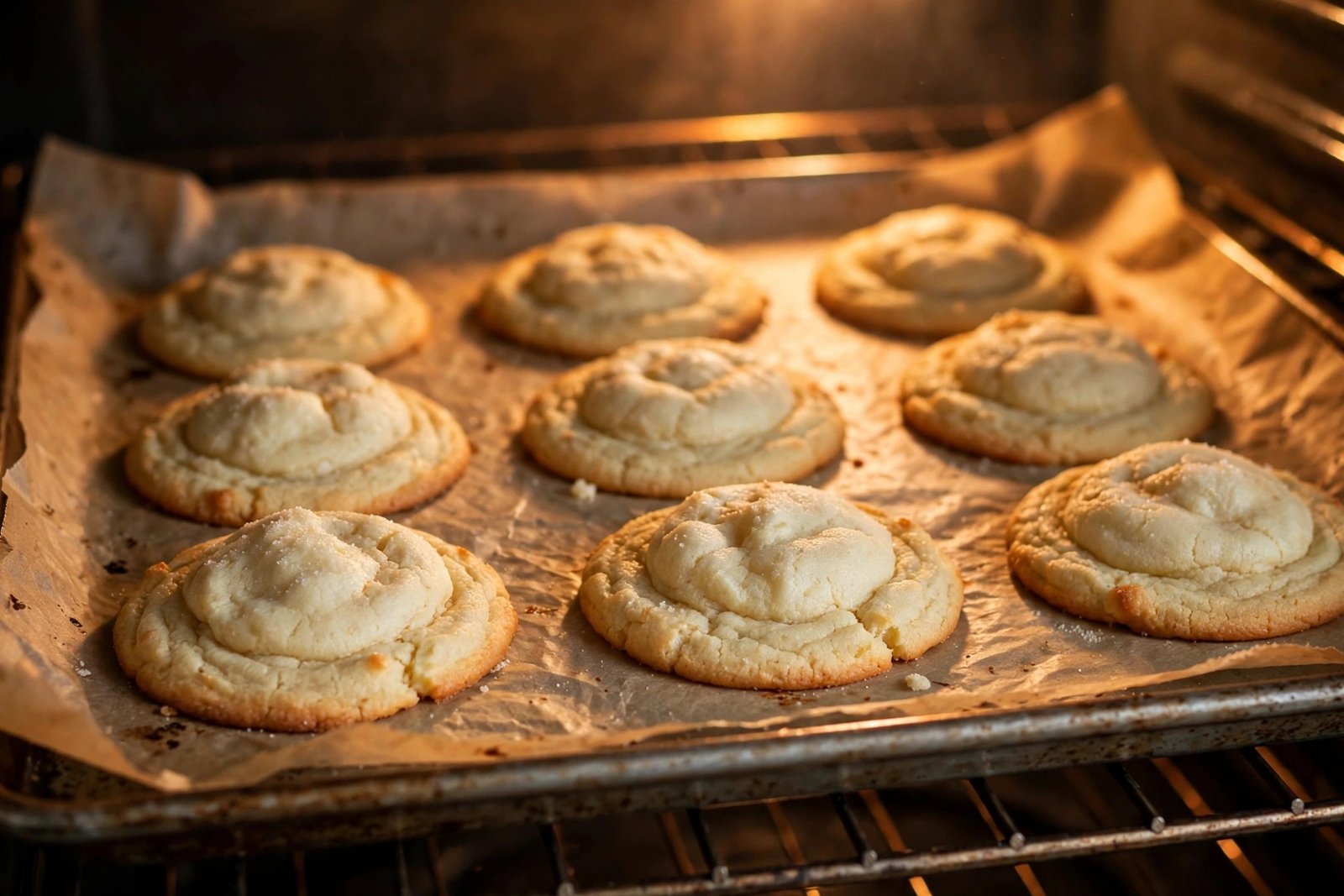
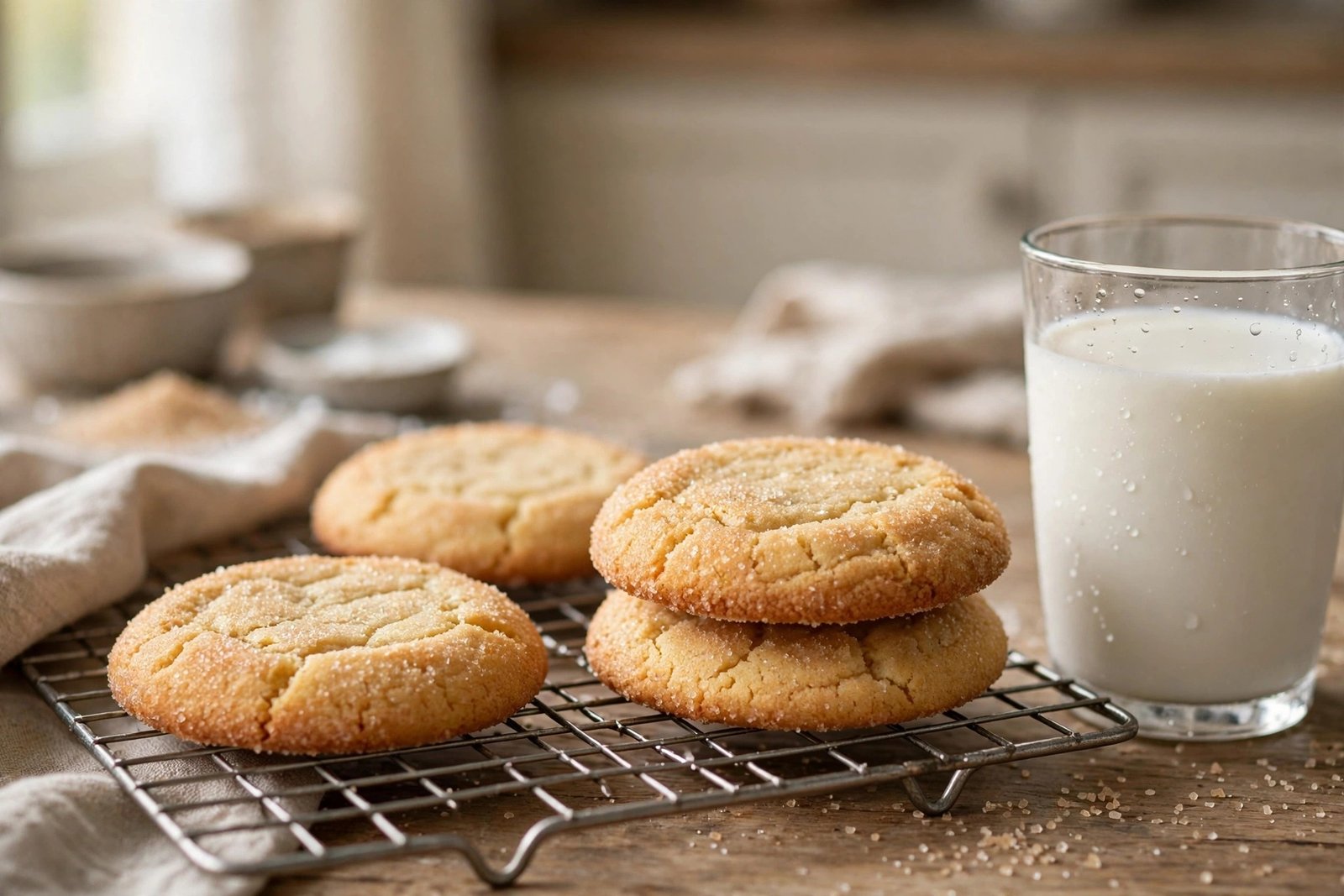
Bake one sheet on the centre rack for 10 to 12 minutes, until the edges are set and lightly golden and the centres still look soft and puffy. Do not wait for the centres to look dry — they set as the cookies cool, and waiting for them to look done in the oven is how chewy cookies turn crisp. It will look under-baked in the middle; that is correct. Let the cookies rest on the baking sheet for 5 minutes — they are delicate while hot, and moving them too soon can break them — then transfer them to a wire rack to cool completely. The edges will firm up and the centres will settle into a soft, chewy middle with a crisp sugar coating.
Tips that make the difference
- Chill the dough, every time. Warm dough spreads fast in a hot oven; chilled dough holds its shape, bakes up thicker, and gives the flour time to hydrate.
- Pull the cookies early. Slightly under-baked centres are the whole point of a chewy sugar cookie — if the edges are set and golden, they are done.
Storage and reheating
Cool the cookies completely before storing them — trapped heat makes them soggy. Keep them in an airtight container at room temperature for up to 4 days, with a slice of bread tucked in to help keep them soft.
These cookies do not need reheating — they are best at room temperature, and the centres stay soft for days. For longer storage, freeze the baked cookies in a single layer, then stack them between sheets of parchment in a freezer bag for up to 3 months. Thaw frozen baked cookies at room temperature for about 20 minutes.
The raw dough keeps even better: wrap it tightly in plastic wrap and refrigerate for up to 3 days, or freeze it for up to 3 months. Scooped dough balls freeze well too — freeze them on a tray until solid, then bag them, and bake straight from frozen, adding 2 to 3 minutes to the bake time. Do not leave raw dough at room temperature for more than 2 hours; it contains eggs, and the butter will soften and spread the cookies.
Variations
- Chocolate chip version: Fold chocolate chips into the dough after the flour — the brown butter makes these taste noticeably more expensive than a standard chocolate chip cookie.
- Spiced version: Add ground cinnamon and a little nutmeg to the dry ingredients for a warm, snickerdoodle-adjacent cookie.
- Sprinkle version: Roll the dough balls in coloured sanding sugar instead of plain granulated sugar for a festive finish.
- Salty-sweet version: Sprinkle a little flaky sea salt over each cookie right after it comes out of the oven.
- Gluten-free: Use a cup-for-cup gluten-free flour blend that contains xanthan gum, in the same amounts — the dough may need an extra 15 minutes of chilling to firm up.
Allergens and dietary information
Contains milk/dairy (butter), wheat/gluten (all-purpose flour), and egg. It is vegetarian as written, but not vegan, dairy-free, or gluten-free as written — see the variations above for a gluten-free swap. The recipe contains no nuts as written; check your vanilla extract and baking powder labels if you are baking for someone with a nut allergy.
You may also like
- Pumpkin Cream Cheese Muffins — another bake from the Baking collection, with the same warm-spice, make-ahead spirit.
Pin this recipe for later.

Brown Butter Sugar Cookies
Ingredients
Equipment
Method
- Cut the butter into even tablespoon-sized pieces and put it in a light-coloured pan over medium heat. Let it melt, then keep swirling or stirring as it bubbles and foams. After 5 to 8 minutes the foam quiets and thins, and you will see amber flecks at the bottom of the pan and smell something nutty, like hazelnuts and caramel. Pull the pan off the heat the moment the flecks are hazelnut brown and pour the butter immediately, specks and all, into a heatproof bowl. Stir in the tablespoon of water.
- Let the browned butter cool for about 20 minutes, until it is no longer hot and has thickened slightly, then refrigerate for about 30 minutes, until it is soft and pliable but holds its shape — the texture of softened butter, not melted butter. If it firms up too much, let it sit on the counter for 10 minutes before using it.
- In a medium bowl, whisk together the flour, baking soda, baking powder, and salt. Set aside.
- Beat the cooled brown butter with the granulated sugar and brown sugar on medium speed for 2 to 3 minutes, until light, fluffy, and pale. Scrape the bowl down once halfway through. Add the eggs one at a time, beating well after each, then beat in the vanilla.
- Add the dry ingredients to the butter mixture in two additions, mixing on low speed just until no dry flour remains. Stop as soon as the flour disappears. Cover the bowl and refrigerate for at least 60 minutes, until the dough is firm enough to scoop. An overnight chill works too.
- Heat the oven to 350°F (175°C) and line two baking sheets with parchment paper. Put the 1/4 cup of granulated sugar in a small bowl. Scoop the chilled dough into 2-tablespoon balls and roll each ball between your palms until smooth. Roll each ball in the sugar until coated all over, and place 6 balls on each sheet, about 2 inches apart. Keep the second sheet in the fridge while the first one bakes.
- Bake one sheet on the centre rack for 10 to 12 minutes, until the edges are set and lightly golden and the centres still look soft and puffy. Do not wait for the centres to look dry — they set as the cookies cool. If baking two sheets, rotate them between racks and front to back halfway through.
- Let the cookies rest on the baking sheet for 5 minutes, then transfer them to a wire rack to cool completely. The edges will firm up and the centres will settle into a soft, chewy middle with a crisp sugar coating.
Notes
Frequently asked questions
What does brown butter actually do to a sugar cookie?
It changes the flavour, not the structure. Browning toasts the milk solids in the butter, creating hundreds of new aroma compounds that taste nutty, caramel-like, and faintly like toffee. The cookie itself bakes the same way — the difference is entirely in how deep and interesting it tastes.
Do I really have to chill the dough?
Yes, and it is the step most often skipped. Warm dough spreads fast in a hot oven, so unchilled cookies bake up thin and crisp instead of thick and chewy. Chilling also firms the butter back up after browning and gives the flour time to hydrate, which improves both texture and flavour. One hour is the minimum; overnight is better.
Can I use salted butter instead of unsalted?
You can, but reduce the added salt from 1 teaspoon to ½ teaspoon. Salted butter varies in how much salt it contains, and with the brown butter flavour already in play, it is easy to overshoot. Unsalted butter gives you control.
Why did my cookies spread flat?
Three usual causes: the dough was not chilled long enough, the brown butter was still warm or liquid when it went into the dough, or too little flour was measured. Check that the dough is properly firm before scooping, and that the butter was cooled to a soft solid before creaming.
Can I make the dough ahead of time?
Yes. Wrap the dough tightly in plastic wrap and refrigerate for up to 3 days, or freeze it for up to 3 months. Scooped dough balls freeze well too — bake them straight from frozen and add 2 to 3 minutes to the bake time.
Why are my cookies hard instead of chewy?
They were almost certainly over-baked, or the flour was over-measured. Pull the cookies when the edges are set and golden but the centres still look soft — they finish on the hot sheet. And spoon the flour into the measuring cup rather than scooping from the bag, which packs in extra flour.
Can I add chocolate chips or sprinkles?
Yes. Fold in 1 cup of chocolate chips after the flour, or roll the dough balls in coloured sanding sugar instead of plain sugar. Both work with the same bake time and temperature.
How long do brown butter sugar cookies keep?
Up to 4 days in an airtight container at room temperature, and up to 3 months in the freezer. A slice of bread in the container helps keep them soft. Thaw frozen cookies at room temperature for about 20 minutes before serving.
