

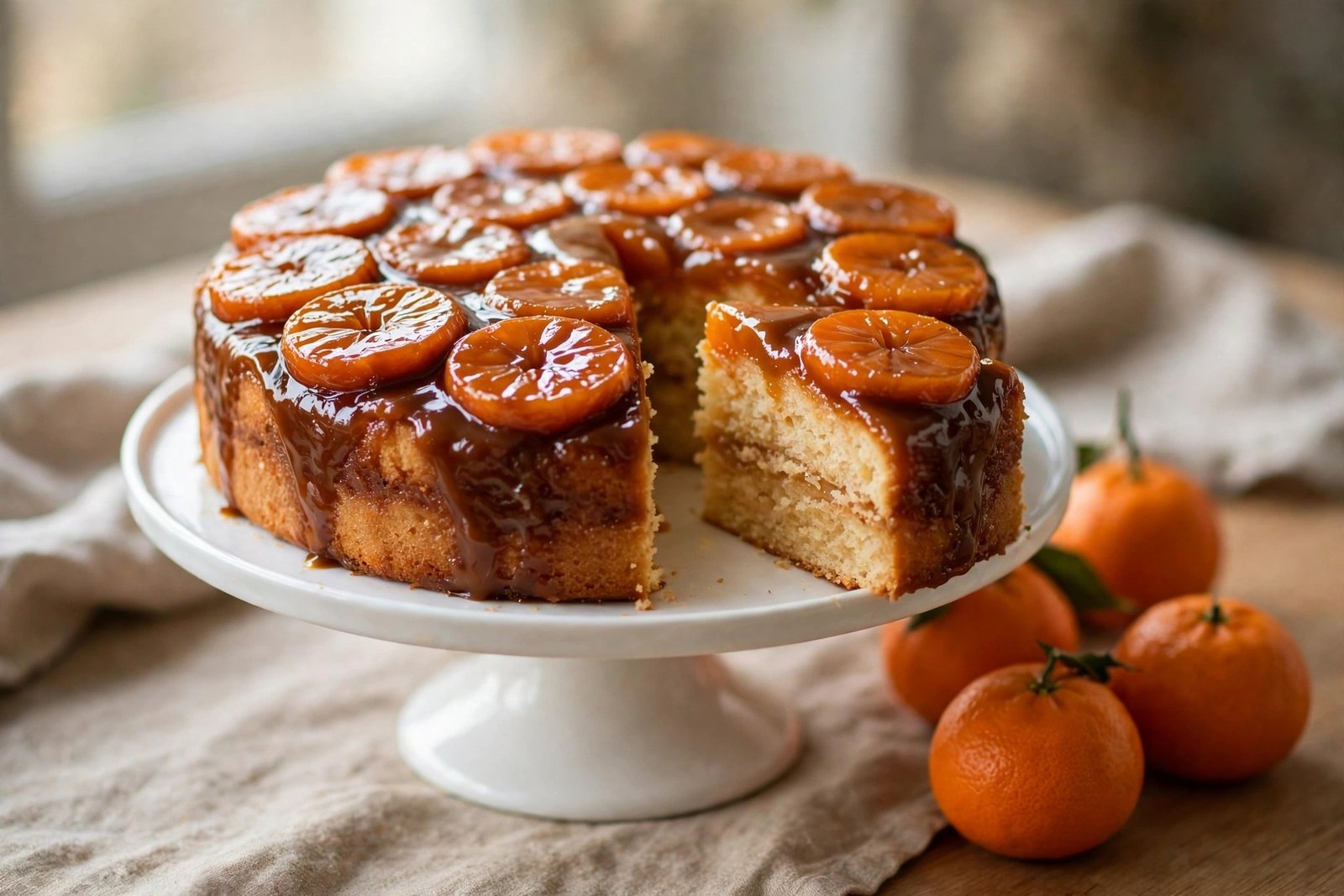
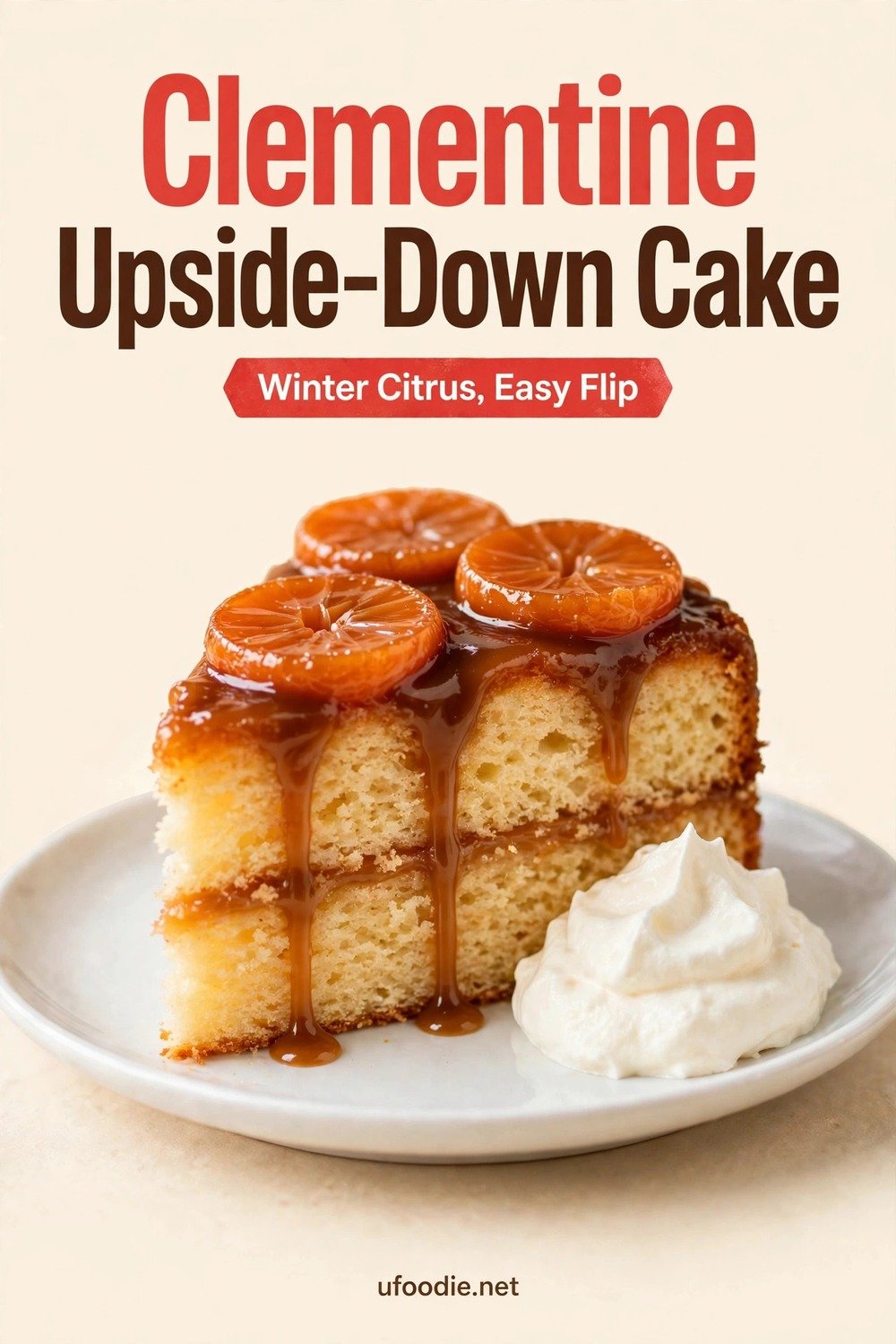
An upside-down cake is one of the few bakes where the decoration takes care of itself. I arrange glossy clementine rounds in a buttery brown-sugar caramel, pour a soft buttermilk batter over the top, and let the oven do the rest — flip the pan, and the fruit is the garnish, jewel-bright, sticky, and already in place.
Clementines are the right fruit for this. They are smaller and sweeter than oranges, they peel easily, and their thin slices soften into the caramel without turning to mush. They do turn a little tart once cooked — exactly what you want against the toffee-like caramel and the rich butter cake.
This is a winter cake at heart — clementines are at their best from late autumn through early spring — but I make it any time I can find good fruit.
At a glance
- Servings: 10 slices
- Prep time: 20 minutes
- Cook time: 40–45 minutes
- Cooling in the pan: 10 minutes
- Total time: 65 minutes
- Pan: 9-inch round cake pan
- Oven: 350°F (175°C)
- Why this recipe: glossy caramelised clementines over a soft buttermilk crumb — the fruit is the decoration
- Storage: covered at room temperature for up to 2 days; refrigerated for up to 4–5 days; frozen in wrapped slices for up to 2 months
- Done when: the top is golden, the edges pull away, and the centre springs back — a toothpick comes out with a few moist crumbs, or a thermometer reads 200–205°F (93–96°C)
Pin this recipe for later.
Why you’ll love this recipe
- The flip is the showstopper. The caramelised fruit is the garnish, already in place — no decorating skill needed.
- Tart fruit against toffee caramel. The clementines turn a little sour as they cook — exactly the contrast the brown-sugar caramel wants.
- A tender buttermilk crumb. The acid in the buttermilk works with the baking soda to keep the cake soft, not dense.
- Make-ahead friendly. Bake it a day ahead and keep it covered — the flavours actually settle overnight.
Notes on ingredients
Clementines. Pick fruit that feels heavy for its size — that means juice. Peel carefully and pick off as much white pith as you can; it is bitter, and cooking concentrates it. Mandarins work the same way, and small navel oranges will do in a pinch, though the slices will be larger. Do not use canned mandarin segments — they are too soft and will fall apart under the batter.
Light brown sugar. It gives a mellow, toffee-like caramel. Dark brown sugar works too and makes a deeper, almost molasses-like topping. Granulated sugar caramelises too, but the topping is thinner and less flavourful.
Unsalted butter. It does two jobs: melted with the brown sugar for the caramel, and creamed with the citrus sugar for the batter — for that it must be properly softened, or it will not beat pale and fluffy.
Buttermilk. The acid in buttermilk reacts with the baking soda and keeps the crumb tender. No buttermilk? Soured milk works — stir a little lemon juice or white vinegar into whole milk and let it sit until it thickens slightly.
All-purpose flour. All-purpose flour is right here. Cake flour makes a slightly more delicate crumb, and a cup-for-cup gluten-free blend also works — just let a gluten-free cake cool fully before flipping.
Baking powder and baking soda. The two work as a pair: the soda needs the buttermilk’s acid to do its job, and the powder gives the lift.
Clementine zest and juice. The zest carries the clementine flavour right through the cake, especially once it is rubbed into the sugar, which releases its oils. Zest the clementines before you peel them.
Eggs. At room temperature, beaten in one at a time. A slightly curdled look after the eggs is fine — it comes back together once the flour goes in.
Vanilla extract. A small amount rounds out the butter and citrus so the cake tastes complete, not just fruity.
Whipped cream or vanilla ice cream, to serve (optional). Either is lovely with a warm slice.
Find the complete recipe with measurements below.
How to make clementine upside-down cake
Stage 1 — Make the caramel and arrange the fruit
Heat the oven to 350°F (175°C). Butter the sides of a 9-inch round cake pan, line the bottom with a round of parchment, and butter the parchment lightly too — your insurance against a stuck cake. A light-coloured metal pan is best; a dark pan browns the caramel faster.
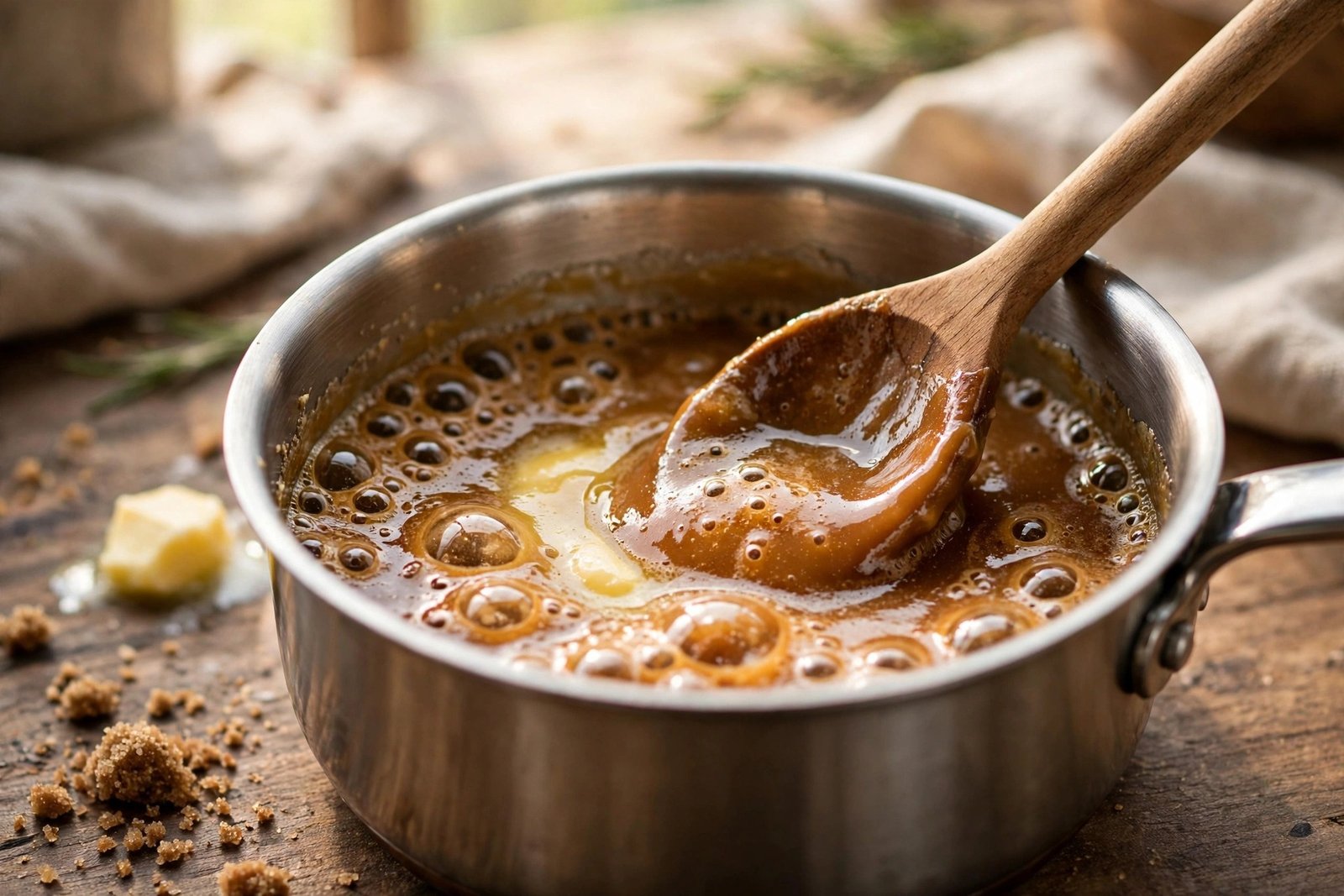
Melt the butter and brown sugar in a small saucepan over medium heat, stirring until smooth and bubbling, about 2–3 minutes. It does not need to boil hard or darken much — this is a soft caramel, not a hard one. Pour it into the pan and tilt to coat the bottom evenly.
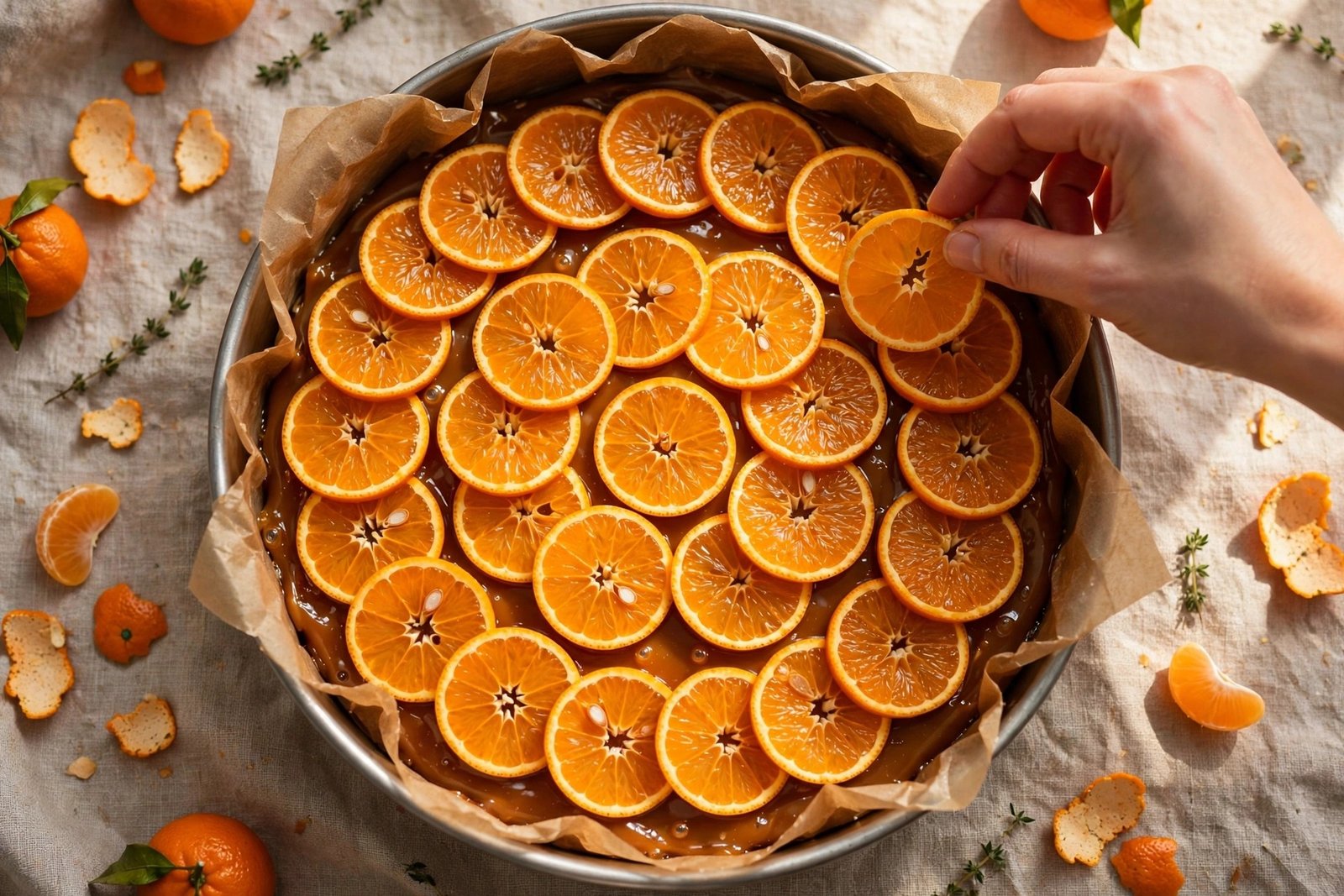
Lay the rounds in a single layer over the caramel, overlapping slightly like roof tiles, working from the outside in and tucking smaller pieces into the gaps. Aim for full coverage — any bare caramel will show on the finished cake. Set the pan aside while you make the batter.
Stage 2 — Rub the zest and cream the butter
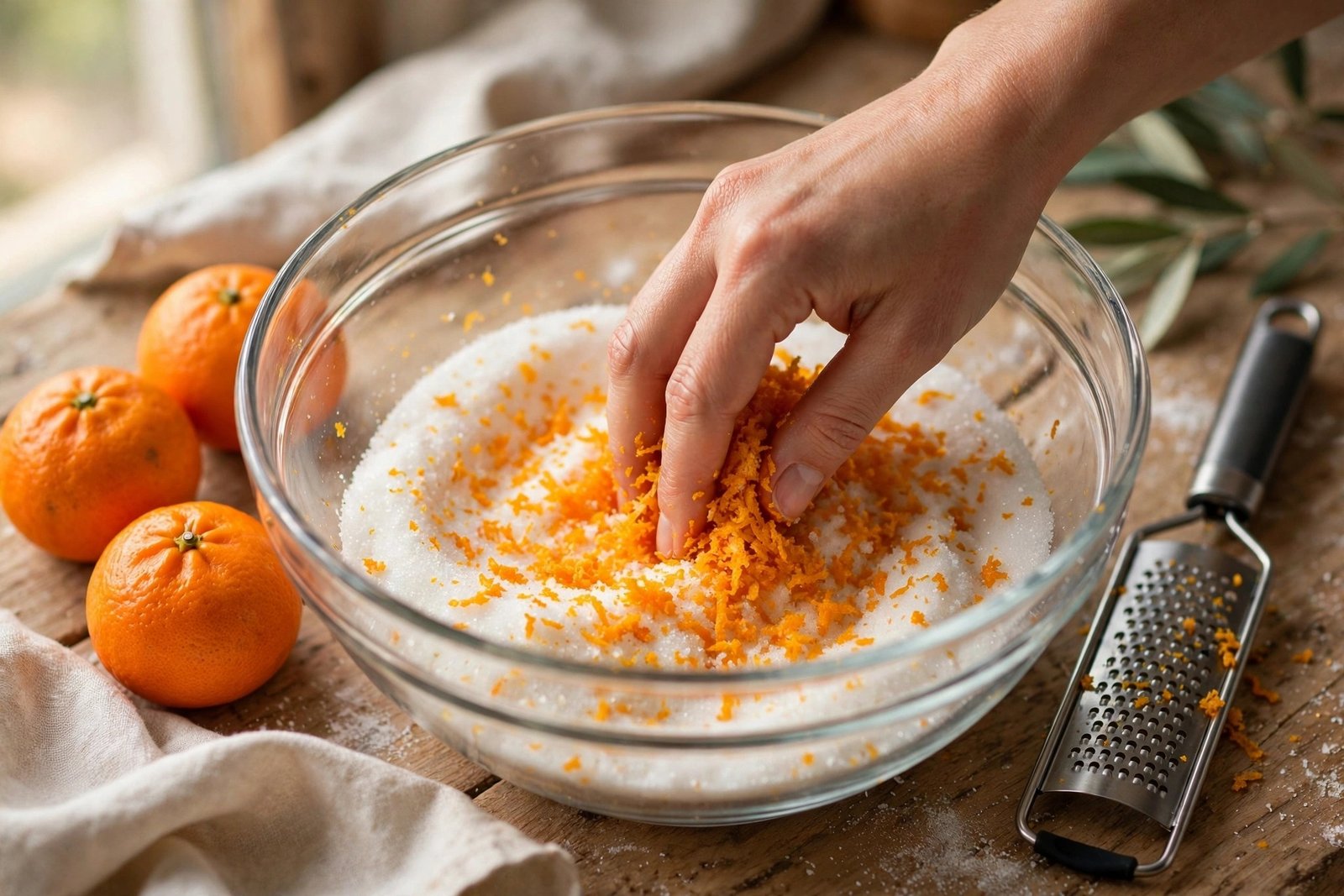
Rub the sugar and zest together with your fingertips for about 30 seconds, until the sugar feels damp and smells strongly of citrus. In a second bowl, whisk together the flour, baking powder, baking soda and salt. (Cake flour instead of all-purpose? Use 1¾ cups / 200 g.)
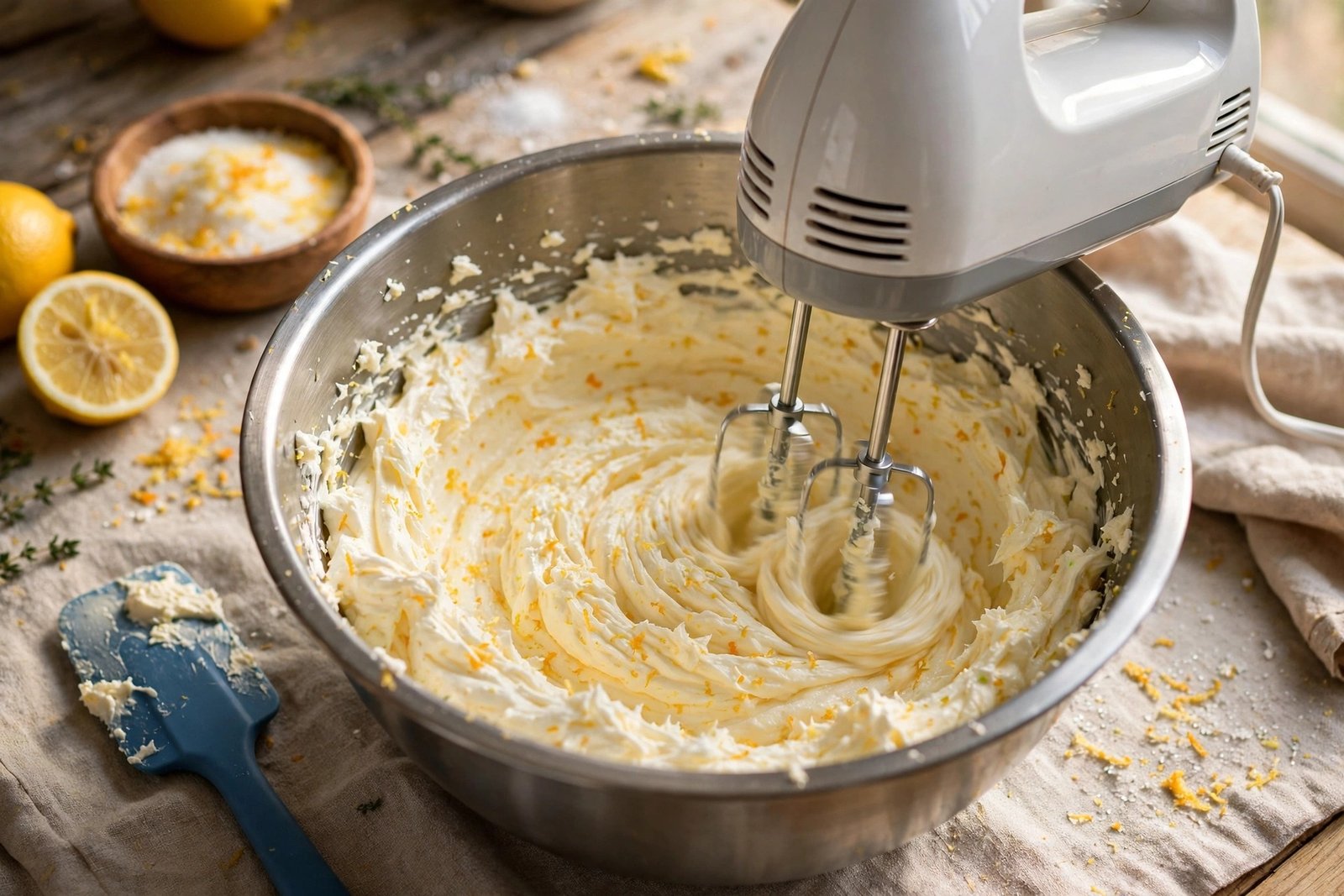
Beat the softened butter into the citrus sugar on medium speed for 2–3 minutes, until pale and fluffy, then beat in the eggs one at a time and the vanilla.
Stage 3 — Finish the batter and bake
Add the flour mixture in three parts, alternating with the buttermilk and clementine juice in two parts, mixing on low speed just until each addition disappears. Stop at the last streaks of flour — over-mixing now is the fastest way to a tough cake, so finish with a few gentle spatula folds. (No buttermilk? Stir 1½ tsp of lemon juice or white vinegar into ½ cup of whole milk and leave it for 5 minutes first.)
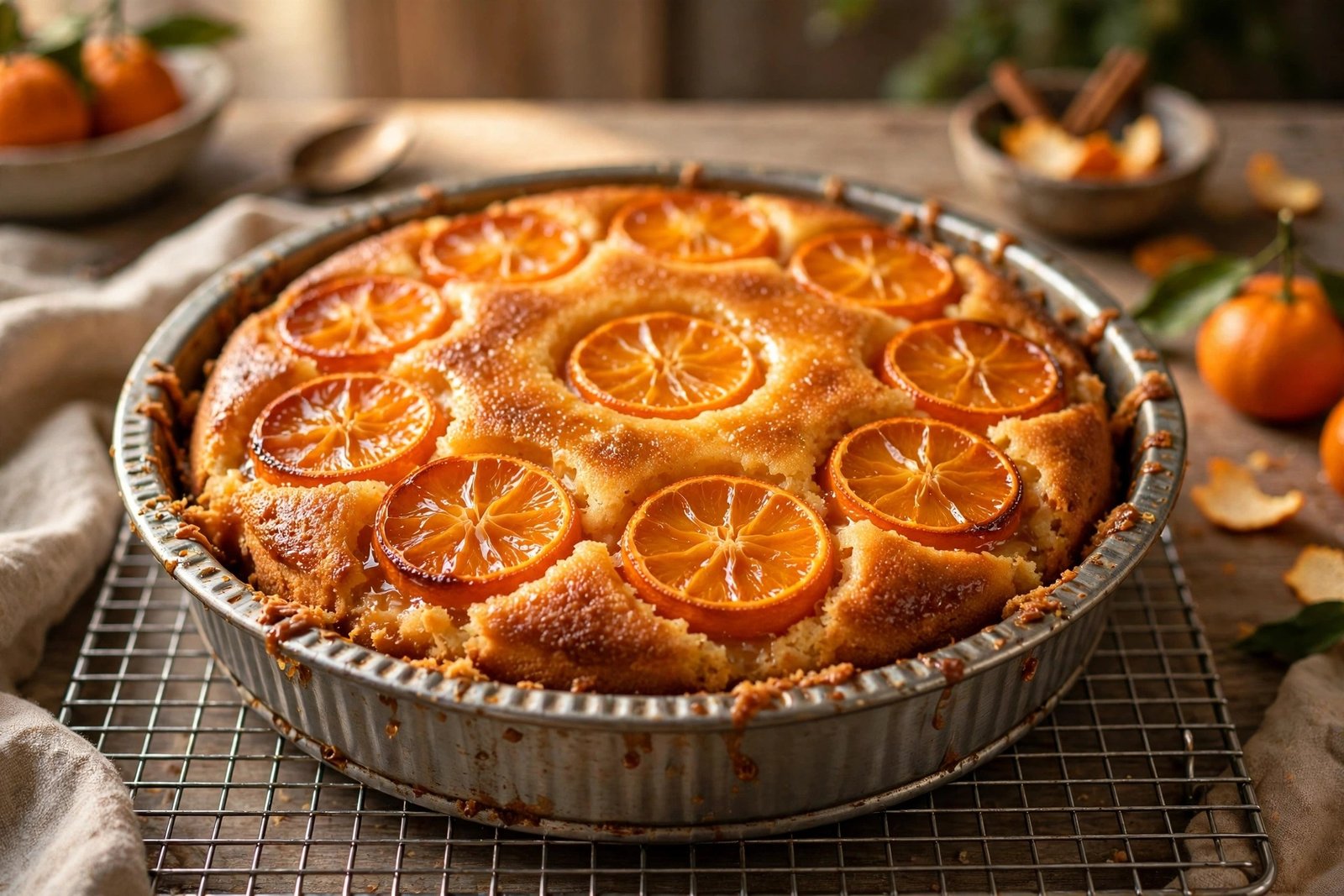
Spoon the batter gently over the clementines, starting around the edges and working towards the centre, then smooth the top — do not push the fruit around. Bake for 40–45 minutes at 350°F (175°C), until the top is golden, the edges pull slightly away, and the centre springs back when pressed. A toothpick in the centre should come out with a few moist crumbs — not wet batter, and not bone dry; a completely clean toothpick usually means the cake has gone past its best. A thermometer should read 200–205°F (93–96°C) — see the ThermoWorks baked goods doneness guide. If the top browns too fast, lay a loose sheet of foil over the pan for the last 10 minutes.
Stage 4 — Rest, flip, and serve
Let the cake cool in the pan for exactly 10 minutes — long enough for the crumb to set, short enough that the caramel is still liquid. Flip too soon and it can break apart; wait much longer and the caramel sets like glue.
Run a thin knife around the edge, place a serving plate over the pan, and flip the whole thing in one confident motion. Lift the pan away slowly; if a slice sticks, lift it off the pan and press it back into place. Peel off the parchment if it came along. If the cake will not release, set the pan over low heat for 30 seconds to loosen the caramel, then try again. Serve warm or at room temperature, with whipped cream or vanilla ice cream if you like. Slice with a hot knife — run under hot water and dried, it cuts the sticky topping without dragging the fruit.

Storage and reheating
Covered, the cake keeps at room temperature for up to 2 days — the caramel’s sugar helps it hold moisture. For longer storage, refrigerate it covered for up to 4–5 days, and bring it back to room temperature for 30 minutes before serving, or warm a slice in the microwave for 10–15 seconds to wake the caramel up again.
To freeze, wrap individual slices tightly in plastic wrap and then foil, and freeze for up to 2 months. Thaw frozen slices overnight in the fridge, then bring them to room temperature before serving — or warm a thawed slice in the microwave for 10–15 seconds. As with any cake, do not leave slices out at room temperature for more than 2 hours.
Variations
- Spiced clementine cake: Add ½ tsp of ground cardamom and ¼ tsp of cinnamon to the dry ingredients.
- Almond clementine cake: Replace ½ cup of the flour with ½ cup of fine almond flour and add ¼ tsp of almond extract with the vanilla — the crumb stays moist a day longer. This adds nuts — flag it clearly for guests.
- Orange and cranberry: Swap half the clementine rounds for fresh cranberries scattered over the caramel — sharp pops of colour and tartness.
- Skillet version: Make the whole cake in a 10-inch cast-iron skillet: melt the butter and sugar in the skillet on the stove, arrange the fruit, pour the batter over, and bake at the same temperature, checking 5 minutes earlier — cast iron holds heat and bakes a little faster.
- Mini cakes: Divide the topping and batter between 6 buttered ramekins, bake for 22–26 minutes, and invert each onto a small plate.
Allergens and dietary information
- Contains: wheat/gluten, milk/dairy, egg.
- Gluten-free: Use a cup-for-cup gluten-free flour blend, and let the cake cool the full 10 minutes before flipping — the crumb is more delicate.
- Dairy-free: Swap the butter for a firm plant-based butter and the buttermilk for oat milk soured with lemon juice. The topping will still caramelise, though it may be slightly less rich.
- Egg-free: Two flax eggs (2 tbsp ground flaxseed mixed with 5 tbsp water, rested 10 minutes) will hold the cake together, but the crumb will be denser and less airy.
- Nuts: The cake itself contains no nuts; the almond variation adds almond flour — flag it for guests.
You may also like
For another baked treat, the Pumpkin Cream Cheese Muffins are a good next bake. And if this cake is part of a weekend brunch spread, the High-Protein Breakfast Burritos round out the table.
Pin this recipe for later.

Clementine Upside-Down Cake
Ingredients
Equipment
Method
- Heat the oven to 350°F (175°C). Butter the sides of a 9-inch round cake pan and line the bottom with a round of parchment paper. Butter the parchment lightly too.
- Put the 4 tbsp of butter and the 2/3 cup of brown sugar in a small saucepan over medium heat. Stir until the butter melts and the sugar dissolves into a smooth, bubbling sauce, about 2 to 3 minutes. Pour it into the prepared pan and tilt the pan so it coats the bottom evenly.
- Lay the clementine rounds in a single layer over the caramel, overlapping them slightly like roof tiles. Start at the outside edge and work inwards, tucking smaller pieces into the gaps so the caramel is fully covered.
- Rub the 3/4 cup of granulated sugar and the 2 tbsp of clementine zest together with your fingertips for about 30 seconds until fragrant. In a second bowl, whisk together the flour, baking powder, baking soda and salt.
- Add the 1/2 cup of softened butter to the citrus sugar and beat on medium speed for 2 to 3 minutes, until pale and fluffy. Beat in the eggs one at a time, mixing well after each, then beat in the vanilla.
- Add the flour mixture in three parts, alternating with the buttermilk and clementine juice in two parts, mixing on low speed just until each addition disappears. Stop as soon as the last streaks of flour are gone.
- Spoon the batter gently over the clementines, starting around the edges and working towards the centre, then smooth the top. Bake for 40 to 45 minutes at 350°F (175°C), until the top is golden, the edges pull away from the pan, and the centre springs back when pressed. A toothpick in the centre should come out with a few moist crumbs, or the centre should read 200 to 205°F (93 to 96°C) on a thermometer.
- Let the cake cool in the pan for 10 minutes. Run a thin knife around the edge, place a serving plate over the pan, and flip the whole thing in one confident motion. Lift the pan away slowly and peel off the parchment if it came along. Serve warm or at room temperature, with whipped cream or vanilla ice cream if you like.
Notes
Frequently asked questions
Can I use oranges or mandarins instead of clementines?
Yes. Mandarins behave exactly like clementines. Small navel oranges work too — you will need only 2–3, and the slices will be bigger, so overlap them well. Avoid canned mandarin segments; they are too soft and fall apart under the batter.
Do I really need to peel the clementines?
Yes. The peel and the white pith underneath it turn bitter when cooked, and the bitterness concentrates in the caramel. Peel each clementine fully and pick off as much pith as you can before slicing.
Why did my cake stick to the pan?
Usually one of three things: the pan was not lined with parchment, the cake sat in the pan too long after baking, or the caramel cooled and set before you flipped. Line the bottom with parchment, flip at 10 minutes, and if it still will not release, warm the pan over low heat for 30 seconds to loosen the caramel.
Can I make this cake in a cast-iron skillet?
Yes — a 10-inch skillet works well. Melt the butter and sugar right in the skillet, arrange the fruit, pour the batter over and bake at the same temperature. Start checking 5 minutes earlier, because cast iron holds heat and bakes a little faster.
How do I know when the cake is done?
Three signs together: the top is golden and springs back when pressed, the edges pull slightly away from the pan, and a toothpick in the centre comes out with a few moist crumbs. The most precise check is a thermometer — the centre should read 200–205°F (93–96°C).
Can I make the cake ahead of time?
Yes. Bake it a day ahead and keep it covered at room temperature. The flavours actually settle overnight. Warm it gently in a low oven (300°F / 150°C) for about 10 minutes before serving if you want the caramel soft again.
How long does it keep?
Covered at room temperature for up to 2 days, refrigerated for up to 4–5 days, or frozen in wrapped slices for up to 2 months. Thaw frozen slices overnight in the fridge and bring them to room temperature before serving.
Can I make this cake gluten-free or dairy-free?
Yes to both. A cup-for-cup gluten-free flour blend works — just let the cake cool the full 10 minutes before flipping, as the crumb is more delicate. For dairy-free, use firm plant-based butter and oat milk soured with lemon juice in place of the buttermilk. The topping still caramelises, though it is slightly less rich.
