

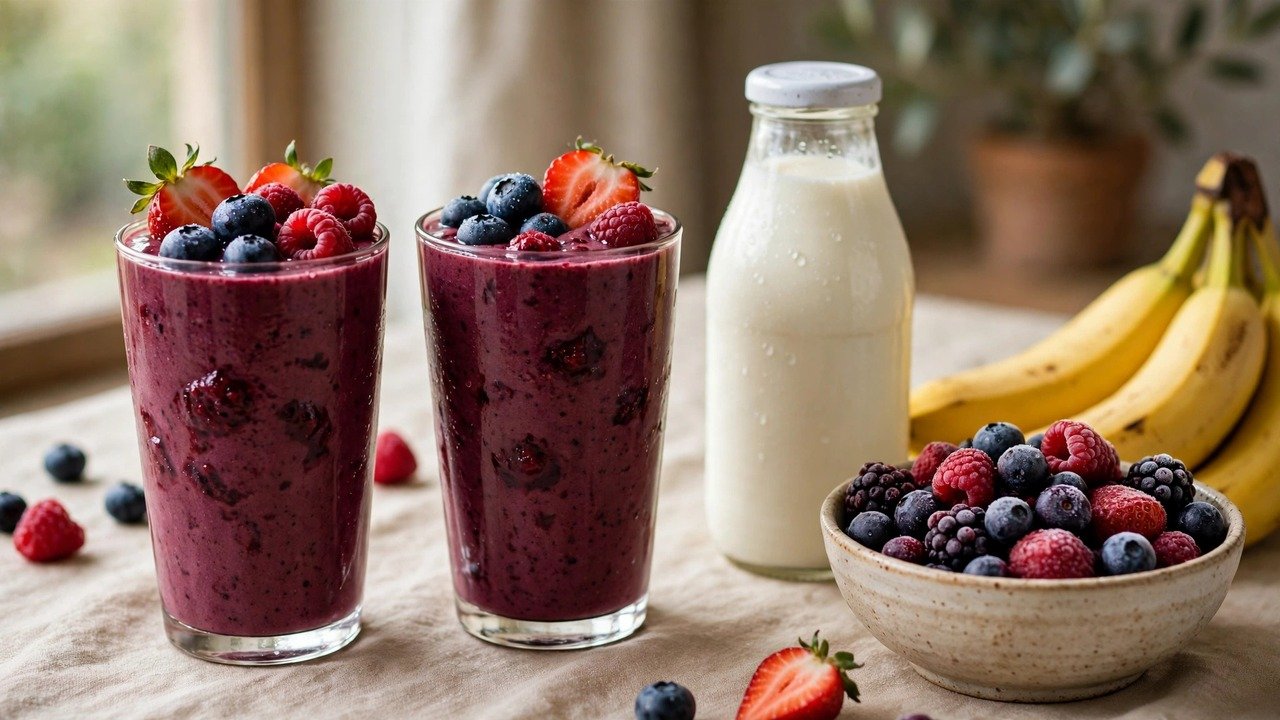
Kefir is the ingredient that finally fixed my smoothie habit. Yogurt smoothies never came out quite thick enough, and milk smoothies went watery the moment the ice melted. Kefir is different — already tangy and pourable, it thickens as it blends and turns a bag of frozen berries into something that drinks like a milkshake, without any ice cream in sight.
This one takes five minutes and a blender. Frozen berries do the chilling and the thickening, a frozen banana brings the sweetness and the body, and a spoonful of honey is there only if your berries are on the tart side. There is nothing to cook and nothing to chop — the only skill is the order things go into the blender.
It is also the rare breakfast that is ready before the kettle boils — two glasses, one blender to rinse, and a drink that keeps you going until lunch.
At a glance
- Servings: 2 smoothies (about 12 ounces each)
- Prep time: 5 minutes (plus freezing the banana ahead — at least 2 hours, or overnight)
- Cook time: 0 minutes — no cooking
- Total time: 5 minutes
- Why this recipe: thick and creamy like a milkshake, tangy-sweet from real fruit, and genuinely filling
- Storage: best drunk fresh; keeps up to 24 hours in the fridge in an airtight jar — never leave it at room temperature for more than 2 hours
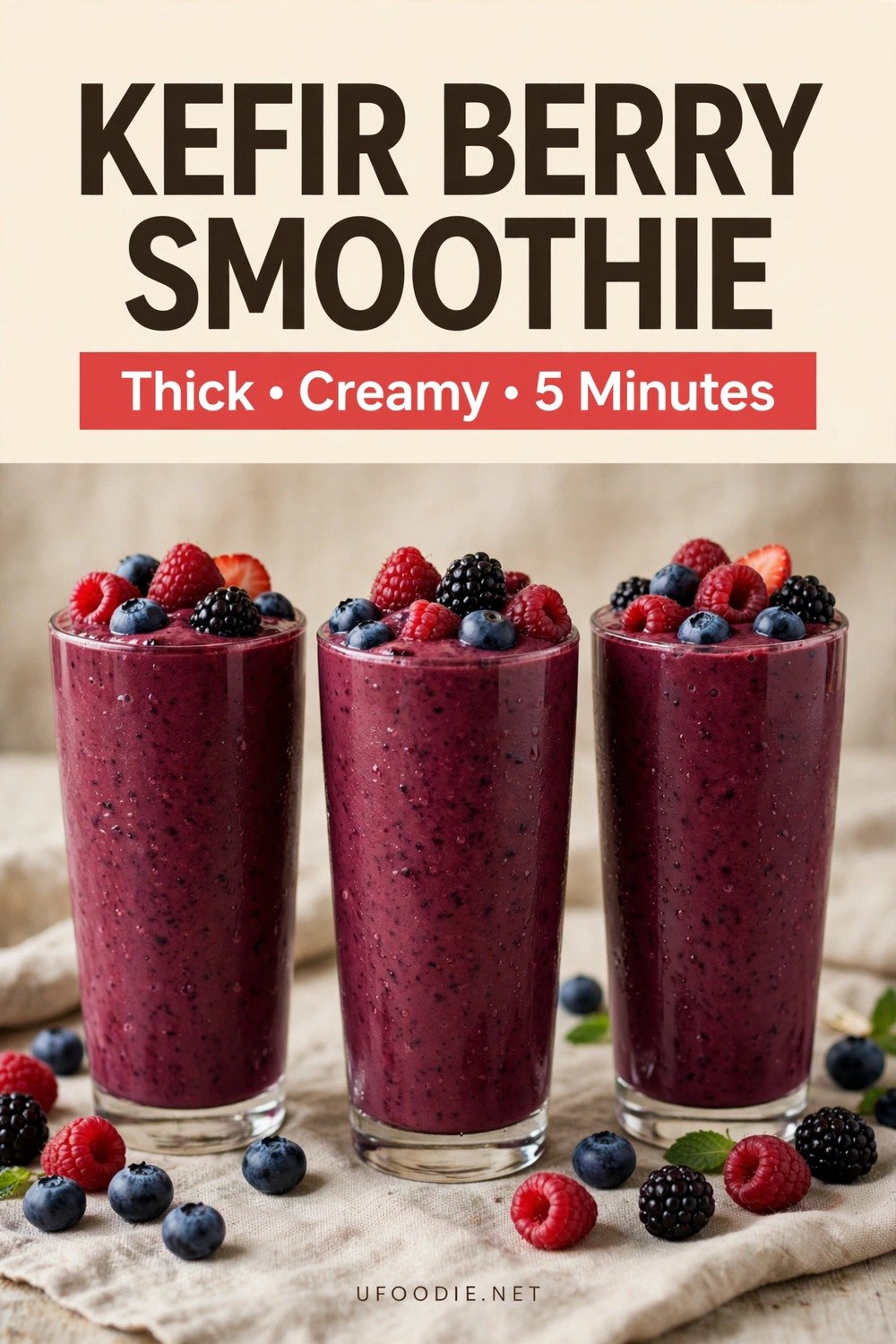
Why you’ll love this recipe
- It’s thick without ice cream or yogurt. Frozen fruit and a frozen banana do all the thickening — no ice cubes watering it down.
- Five minutes, one blender. Everything goes in, the blender runs for about a minute, and the washing up is the jar and two glasses.
- It actually keeps you full. Around 13 g of protein and 11 g of fibre per glass — this is a breakfast, not a snack in a glass.
- It’s easy to make your own. Swap the berries, add spinach, stir in protein powder, or make it dairy-free with coconut kefir. The base ratio stays the same.
Notes on ingredients
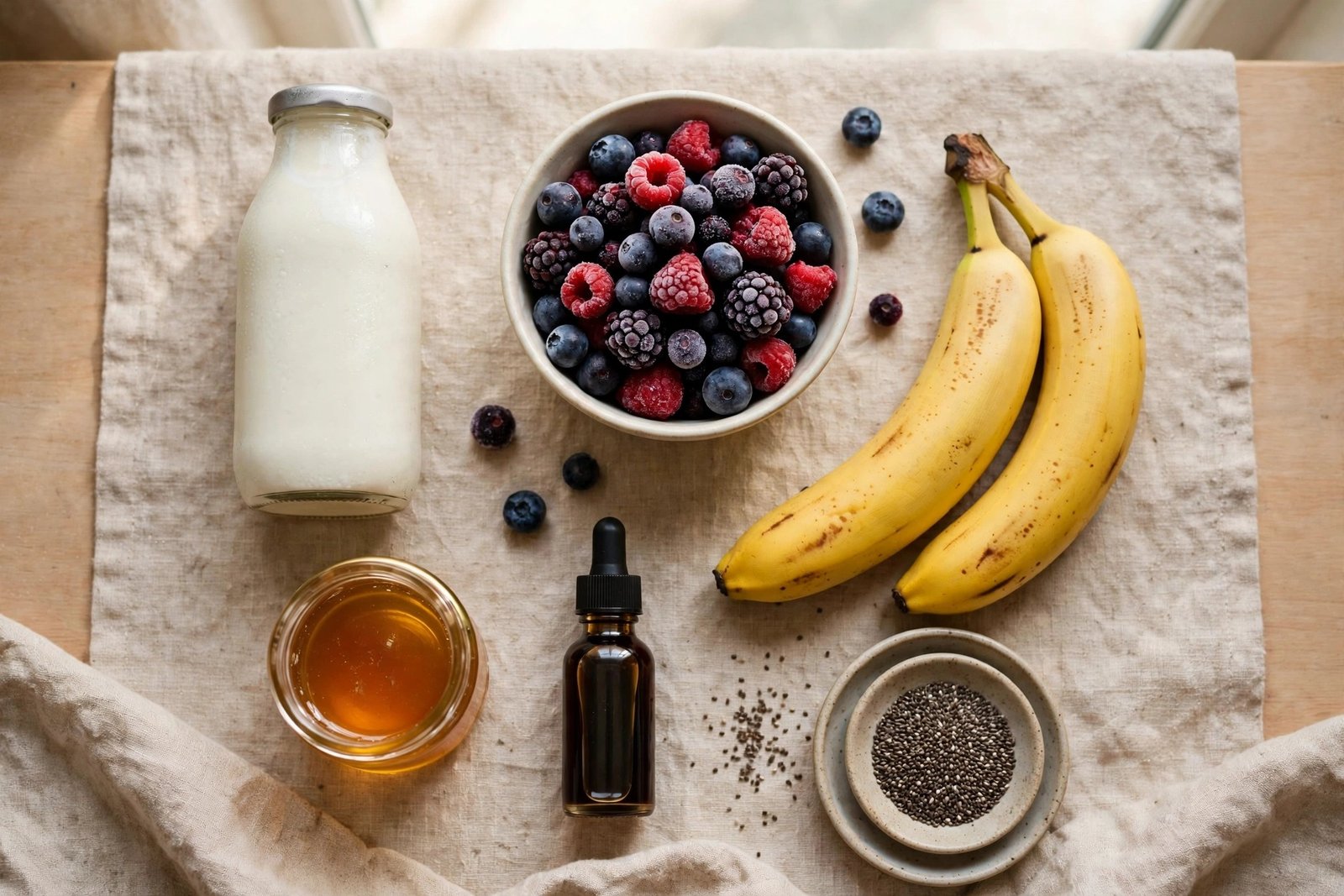
Plain kefir. This is the whole recipe, so buy the good stuff: plain and unsweetened, with “live and active cultures” on the label. Kefir is not the same as yogurt — it is made with kefir grains, a mix of bacteria and yeast, and goes through more than one fermentation, which is why it is tangier and thinner. Low-fat kefir keeps it light; whole-milk kefir makes it richer. Flavoured kefir adds sugar you do not need, so taste before adding honey.
Frozen mixed berries. A mix of blueberries, strawberries and raspberries gives the best colour and flavour, but any single berry works too. Frozen beats fresh here: the berries are washed before freezing, so there is nothing to rinse, and they chill and thicken the smoothie the way ice would — without watering it down. If a bag says to cook before eating, do not use it raw in a smoothie; follow the packet.
Banana. Use a ripe one, with brown speckles on the peel, and freeze it in slices. Ripe banana is the sweetness in this recipe, and freezing it is what gives the smoothie its body. A fresh banana works, but the drink comes out thinner and warmer.
Honey. Optional, and only a little. Taste first — if your berries are sweet, you may not need it at all; if they are tart, honey rounds the edges off. Honey is never for babies under twelve months, so leave it out entirely if you are serving a little one.
Vanilla extract. A small amount makes a real difference, softening the tang of the kefir and pulling the berry flavour forward. Use pure extract rather than imitation if you can — the imitation kind tastes thin next to real fruit.
Chia seeds. Also optional, and worth it if you like a thicker smoothie. Chia seeds drink up liquid and swell as they sit, so a smoothie with chia turns almost spoonable after a few minutes — and you will not taste them at all once blended.
Find the complete recipe with measurements below.
How to make kefir berry smoothie
Stage 1 — Freeze the banana
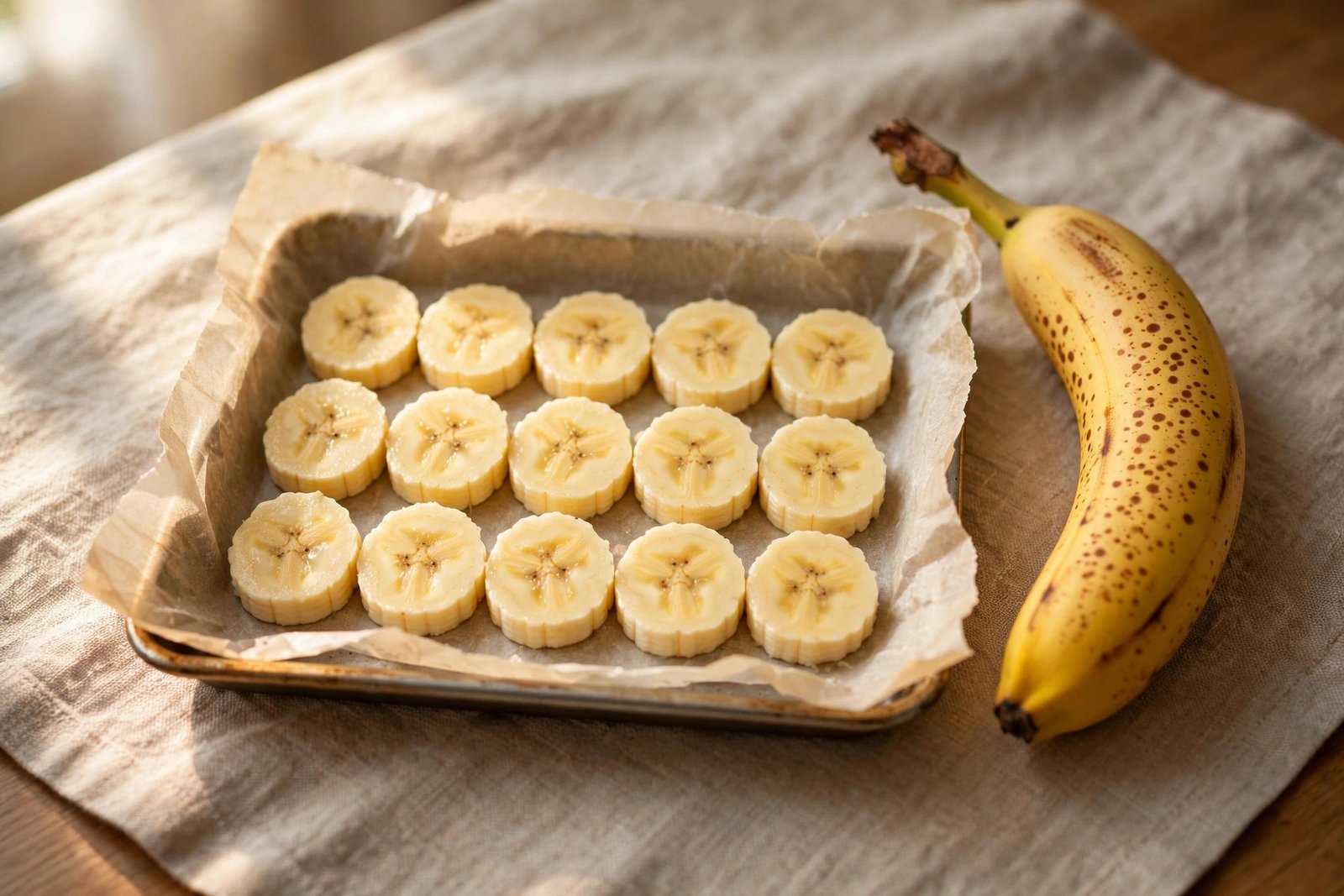
Peel a ripe banana, slice it into coins, and spread them in a single layer on a tray lined with baking paper. Freeze for at least two hours, or overnight, then tip the slices into a bag. I keep a bag in the freezer — two minutes of prep means a smoothie is never more than five minutes away. If you forgot, a fresh banana plus a handful of ice cubes will do, but the texture will be a little thinner.
Stage 2 — Layer the blender
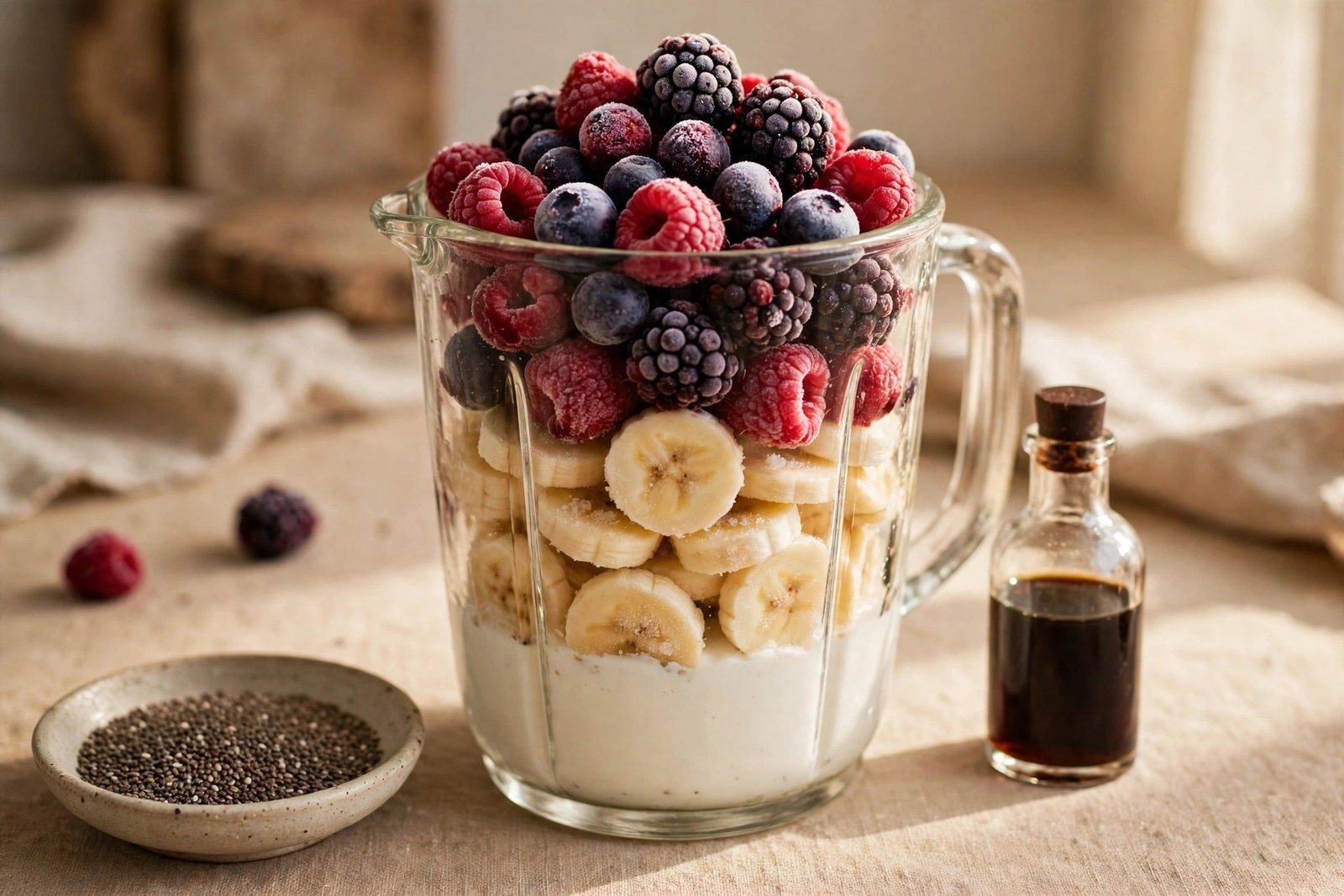
Pour the kefir in first, then the vanilla and honey. Liquid at the base creates the vortex that pulls everything else down toward the blades. Next add the frozen banana and the chia seeds, if you are using them, and tip the frozen berries in last so they sit on top. This order matters — frozen fruit piled straight onto the blades is the most common reason a blender strains and stalls.
Stage 3 — Blend until silky
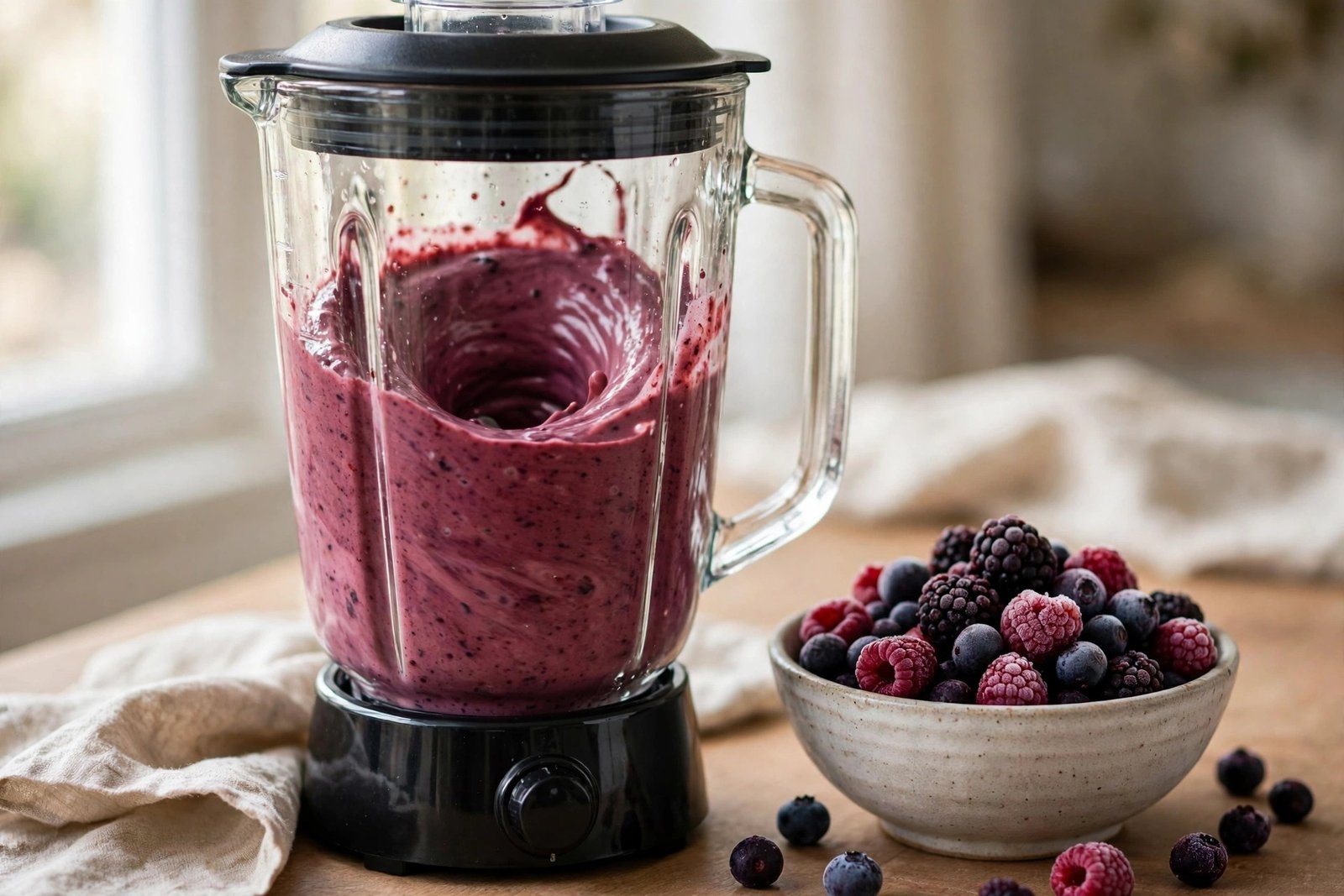
Start on low for about ten seconds, until the big frozen chunks break down and the sound changes from a loud chatter to a steadier hum. Then push the blender to high for forty-five seconds to a minute, until the smoothie is completely smooth and deep purple-red, with no lumps and no visible berry skins. Stop once to scrape down the sides if anything clings above the blades. If the blender struggles, add a small splash of kefir or water — a little at a time, because too much turns a thick smoothie thin fast.
Stage 4 — Taste, pour and serve
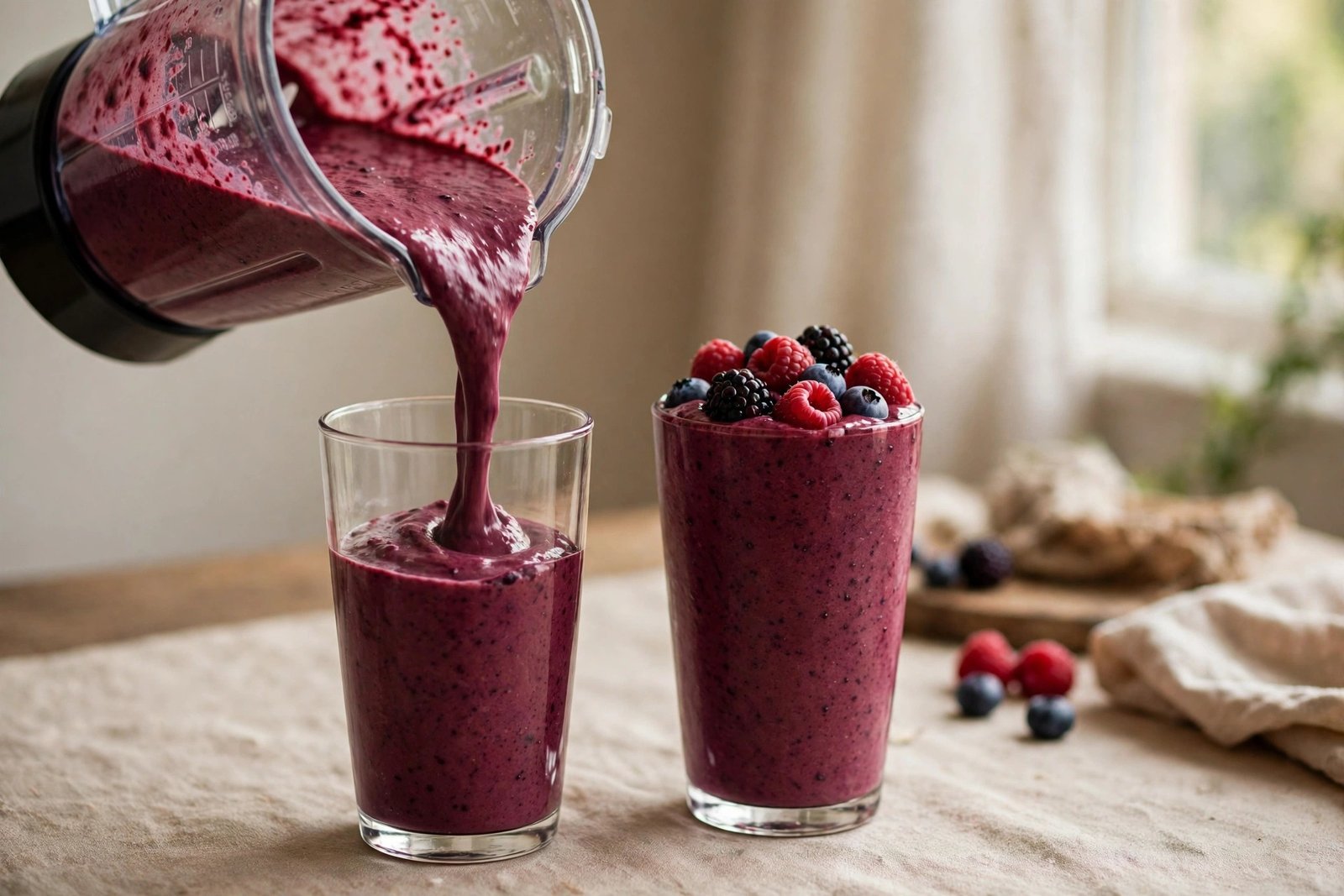
Taste before you pour. If the berries were tart, stir in a little more honey and blend for a few seconds more. If you used chia seeds, let it sit for a few minutes — it thickens noticeably as the seeds absorb liquid. Pour into tall glasses and drink straight away, cold and thick. The smoothie is at its best the moment it leaves the blender.
Storage and food safety
This smoothie is at its best drunk fresh, within minutes of blending — thickest, coldest and brightest in colour. But life does not always run to schedule, so here is what holds up and what does not.
In the fridge: pour any leftover into a clean airtight jar, fill it as full as you can to leave as little air as possible, and keep it on a shelf — not in the door, where the temperature swings every time the fridge opens. It keeps for up to 24 hours at 40°F (4°C) or below. It will separate as it sits, with liquid pooling at the bottom and thicker fruit rising to the top. That is normal, not spoilage — shake the jar hard or stir well before drinking. The colour darkens from oxidation and the flavour flattens after a few hours, so drink it sooner rather than later.
At room temperature: never leave a smoothie out for more than 2 hours — 1 hour if it is above 90°F (32°C). This one is dairy-based, and once blended fruit and milk sit in the danger zone between 40°F and 140°F (4°C and 60°C), bacteria multiply fast. If a glass has been sitting out warm, throw it away, however fresh it looks.
In the freezer: you can freeze a blended smoothie for up to 3 months in ice-cube trays or freezer-safe jars, leaving an inch of headspace because liquid expands as it freezes. Thaw overnight in the fridge and re-blend or shake well. One honest trade-off: freezing may reduce the number of live cultures in the kefir, so if the cultures are the reason you drink kefir, fresh is better than frozen. Never re-freeze a smoothie that has already thawed.
Never reheat it. Heat kills the live cultures that make kefir worth drinking, and warm kefir can split and curdle.
When to throw it away: trust your nose. Kefir is naturally tangy, so mild sourness is normal — but if it smells sharply fermented, vinegary or “off”, or you see bubbles, fizz or mould, discard it. Do not taste it to check.
Variations
- Tropical. Swap the berries for frozen mango and pineapple, and use coconut-milk kefir if you like. A little grated ginger wakes it up.
- Green boost. Add a small handful of baby spinach to the blender — the berries hide both the colour and the flavour completely.
- Protein power. Blend in a scoop of vanilla or unflavoured protein powder with an extra splash of kefir so it stays pourable — roughly 30 g of protein per glass.
- Dairy-free. Use plain coconut-milk kefir or water kefir instead of dairy kefir. Water kefir is thinner, so add half an avocado or an extra frozen banana to get the thickness back.
- No banana. Use a ripe avocado, or some extra frozen berries, for the same creamy body with less sweetness.
- Peanut butter and berry. Add a spoonful of smooth peanut butter before blending — it tastes like a peanut butter and jelly sandwich in a glass, and it adds peanuts to the allergen list, so say so if you serve it to anyone else.
Allergens and dietary information
Milk is the only allergen in this recipe as written — kefir is a fermented milk drink, and milk is one of the nine major food allergens in the US. Fermentation breaks down much of the lactose, which is why many people who struggle with milk find kefir easier to digest — but kefir is not lactose-free, and anyone with a milk allergy must not drink it at all. If you are lactose intolerant and trying kefir for the first time, start with a small glass.
As written, this smoothie is naturally gluten-free, egg-free, nut-free and soy-free, and vegetarian. It is vegan only with a non-dairy kefir and no honey, since honey is not vegan. Chia allergy is rare but real. And a reminder: honey is never for babies under twelve months.
You may also like
- Pumpkin Cream Cheese Muffins — soft, spiced muffins with a cream cheese centre, another make-ahead breakfast.
- High-Protein Breakfast Burritos — eggs, turkey sausage and crispy potatoes, rolled up and freezer-friendly.
- Apple Fritter Bread — a soft cinnamon-apple loaf with a crackly vanilla glaze, for slow weekend mornings.
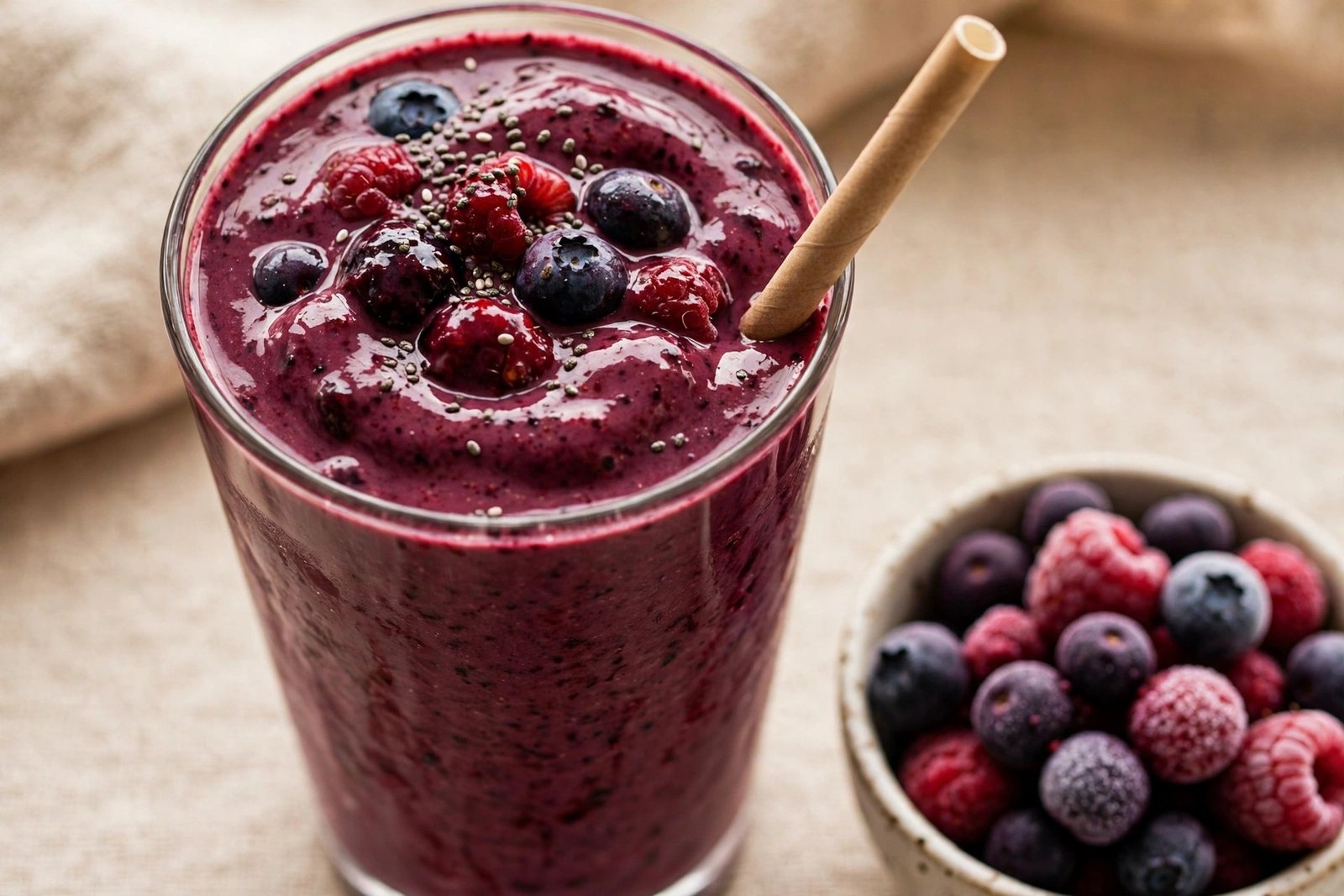
Kefir Berry Smoothie
Ingredients
Equipment
Method
- Freeze the bananas ahead: peel ripe bananas, slice into coins, spread in a single layer on a tray lined with baking paper, and freeze for at least 2 hours or overnight. Tip the frozen slices into a bag or container.
- Pour the kefir into the blender first, then add the vanilla extract and the honey, if using.
- Add the frozen banana slices and the chia seeds, if using, then tip the frozen berries in last so they sit on top.
- Blend on low for about 10 seconds, until the big frozen chunks break down, then push the blender to high and blend for 45 to 60 seconds, until completely smooth and deep purple-red, with no lumps and no visible berry skins.
- Stop once and scrape down the sides if anything is clinging above the blades. If the blender is struggling, add a small splash of kefir or water, a little at a time.
- Taste before pouring. If the berries were tart, stir in a little more honey and blend for a few seconds more.
- If you used chia seeds, let the smoothie sit for a few minutes — it will thicken noticeably as the seeds absorb liquid.
- Pour into tall glasses and serve immediately, while cold and thick.
Notes
Frequently asked questions
Can I use fresh berries instead of frozen?
Yes. Use fresh berries and add a handful of ice cubes so the smoothie still comes out thick and cold. Rinse fresh berries under cool running water just before using them, and pat them dry — never use soap or produce wash on fruit. Frozen berries are still my first choice for this recipe, because they thicken and chill the smoothie without watering it down.
What does kefir taste like?
Tangy, like a thin, drinkable yogurt with a little fizz of acidity. On its own it can taste sharp if you are not used to it, which is why the berries and banana matter — their sweetness balances the tang. If your first sip is too sour, add a little more honey rather than more kefir, and use a ripe banana next time.
Can I make this smoothie the night before?
Yes, and it is the one make-ahead move that actually works here. Blend it in the evening, pour it into a clean airtight jar filled to the top, and refrigerate it overnight. Shake or stir it well in the morning — it will have separated and thickened, especially if you used chia seeds. Drink it within 24 hours, and know that it will never be quite as bright or as thick as the fresh version.
Can I freeze a kefir smoothie?
Yes, for up to 3 months. Pour it into ice-cube trays or freezer-safe jars, leaving an inch of headspace, and thaw overnight in the fridge before drinking. Re-blend or shake well. One honest caveat: freezing may reduce the number of live cultures in the kefir, so if you are drinking kefir for the cultures, fresh is the better choice. Never re-freeze a smoothie that has already thawed.
Can I heat a kefir smoothie?
No. Heat kills the live cultures that make kefir worth drinking, and warm kefir can split and curdle into something nobody wants to drink. If you want a warm berry drink, make a compote instead — this smoothie is a cold drink, full stop.
Is this smoothie actually probiotic?
Honestly, the word “probiotic” carries more weight than the evidence supports for any single food. Kefir does contain live cultures — a mix of bacteria and yeast — and there is some evidence from small trials that fermented foods can support gut health. But “probiotic” is a claim tied to specific strains, doses and proven benefits, and no fermented food has an approved health claim from the European Food Safety Authority. So: this smoothie contains live cultures, which is a real and accurate thing to say. It will not fix your gut on its own, and anyone promising that is selling something.
Do I need to wash frozen berries?
No. Commercially frozen fruit is washed before it is frozen, and you should follow whatever the packet says. If the packet says the berries are ready to eat, use them straight from the bag. If it says to cook before eating, do not use them raw in a smoothie. Fresh berries are different — always rinse them under cool running water just before using, and never wash them with soap, detergent or commercial produce wash.
Can I make this smoothie dairy-free?
Yes. Swap the dairy kefir for plain coconut-milk kefir, which is the closest in thickness and tang, or water kefir, which is much thinner. With water kefir, add an avocado or an extra frozen banana to bring the body back. Check the label for “live and active cultures” — not every non-dairy kefir has them. The smoothie is then dairy-free and vegan, as long as you leave the honey out too.

1 Comment
Delicious