

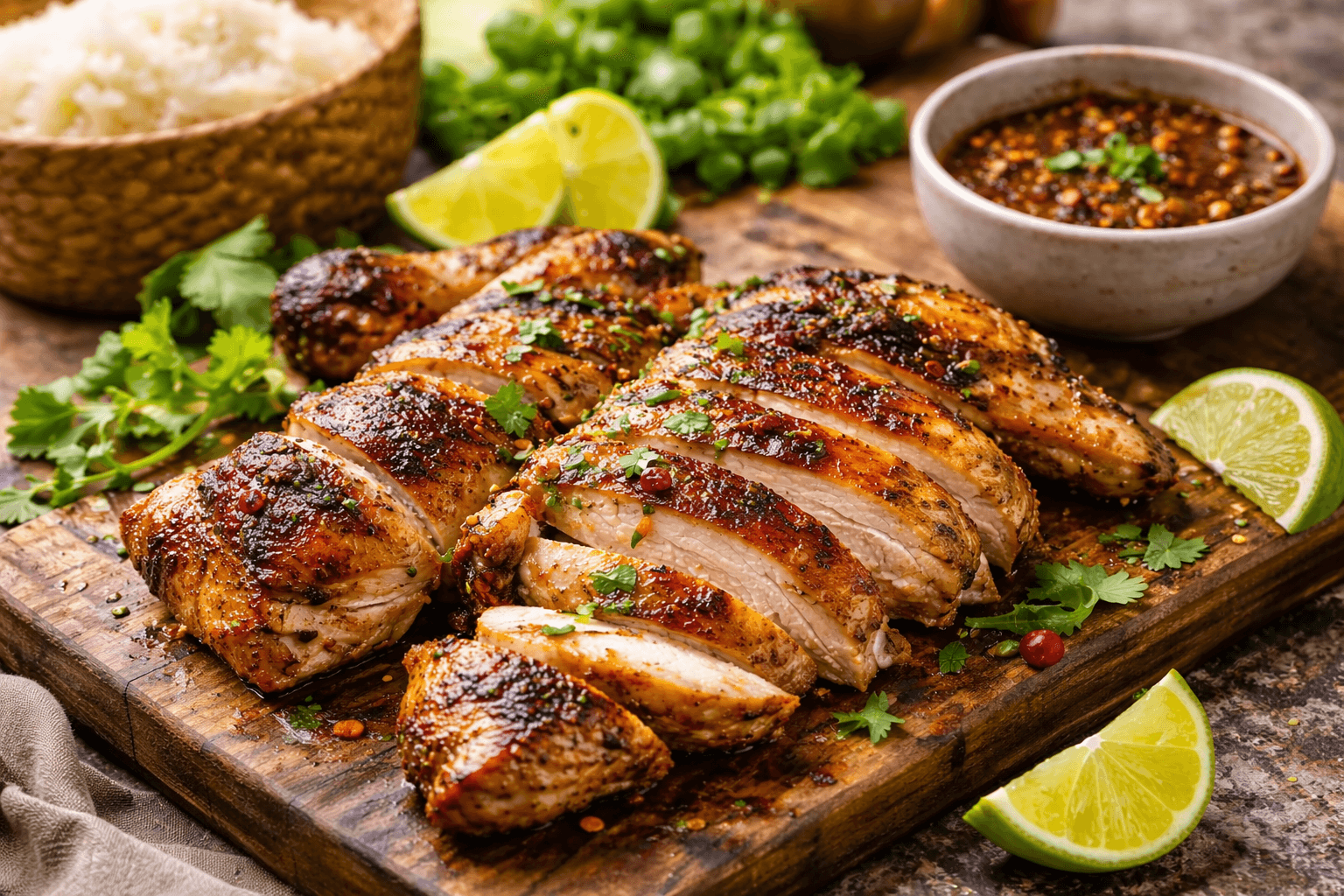
Thai Chicken (Gai Yang) is a famous Thai street food known for its smoky aroma, juicy meat, and bold herbal flavors. Traditionally grilled over charcoal, this dish is marinated with garlic, coriander root, fish sauce, and palm sugar, creating a perfect balance of savory, sweet, and umami. Served with sticky rice and a spicy dipping sauce, Gai Yang is simple, rustic, and incredibly satisfying.
This recipe is written to guide you like a professional chef would—clear steps, practical tips, and realistic results even for beginners.
What Makes Gai Yang Special
Unlike typical grilled chicken, Gai Yang focuses on deep marination and slow grilling. The marinade penetrates the meat, while gentle heat keeps the chicken juicy with crisp, lightly charred skin.
Ingredients
Chicken
- 1 whole chicken (about 1.2–1.5 kg), butterflied
- 2 tablespoons fish sauce
- 1 tablespoon light soy sauce
- 1 tablespoon palm sugar (or brown sugar)
- 1 tablespoon oyster sauce
- 1 tablespoon vegetable oil
Marinade Paste
- 4 cloves garlic
- 2 coriander roots (or stems)
- 1 teaspoon white peppercorns
Optional (Traditional Flavor Boost)
- 1 tablespoon coconut milk (for juicier meat)
Equipment Needed
- Mortar and pestle or food processor
- Grill, charcoal grill, or grill pan
- Basting brush
- Tongs
Step-by-Step Instructions
Step 1: Make the Aromatic Marinade Paste
Start by preparing the flavor base, which is the heart of authentic Gai Yang. Add the garlic cloves, coriander roots (or thick stems), and white peppercorns to a mortar and pestle. Pound slowly until the mixture turns into a smooth, fragrant paste. Take your time here—properly crushed herbs release natural oils that give the chicken its signature Thai aroma. If using a food processor, pulse gently and avoid over-blending into a watery paste.
Step 2: Build the Full Marinade
Transfer the paste to a mixing bowl. Add fish sauce, light soy sauce, palm sugar, oyster sauce, and vegetable oil. Stir until the sugar fully dissolves and the marinade looks glossy and well-balanced. If using coconut milk, mix it in at this stage for added richness and moisture. Taste the marinade—it should be savory first, slightly sweet, and deeply aromatic, not salty.
Step 3: Prepare and Marinate the Chicken
Pat the butterflied chicken completely dry with paper towels. Dry skin helps the marinade stick better and later crisp during grilling. Rub the marinade generously over the entire chicken, making sure to massage it into the meat, especially around the thighs and under the skin. This step ensures deep flavor penetration.
Cover the chicken tightly and refrigerate for at least 4 hours. For best results, marinate overnight (8–12 hours). Longer marination equals deeper flavor and juicier meat.
Step 4: Bring Chicken to Room Temperature
Before grilling, remove the marinated chicken from the refrigerator and let it sit at room temperature for 20–30 minutes. This helps the chicken cook evenly and prevents the meat from tightening when placed on the grill.
Step 5: Prepare the Grill Properly
Preheat your grill to medium heat. If using charcoal, wait until the coals are fully lit and covered with a light gray ash. You want steady heat with gentle smoke, not direct flames. High heat will burn the marinade before the chicken cooks through, so patience is key.
Step 6: Start Grilling Skin-Side Down
Place the chicken skin-side down on the grill first. This allows the fat to render slowly, crisping the skin naturally. Grill for about 10–15 minutes without moving it too much. Avoid pressing the chicken, as this releases juices and dries the meat.
Step 7: Flip and Slow-Cook Evenly
Turn the chicken and continue grilling over indirect or medium heat. Cook slowly for another 20–30 minutes, turning occasionally to prevent burning. Baste lightly with leftover marinade or oil during grilling to keep the surface moist and glossy. Watch for visual cues—the skin should be golden with light char marks, not blackened.
Step 8: Check for Doneness
The chicken is ready when the internal temperature reaches about 75°C (165°F) at the thickest part, or when juices run clear when pierced near the thigh. The meat should feel firm but springy, not hard or dry.
Step 9: Rest the Chicken
Remove the chicken from the grill and let it rest uncovered for 5–10 minutes. Resting allows the juices to redistribute throughout the meat, keeping every bite tender and juicy.
Step 10: Cut and Serve
Cut the chicken into serving pieces using a sharp knife. Serve warm with sticky rice, fresh vegetables, and a spicy Thai dipping sauce like Nam Jim Jaew. The chicken should be smoky, juicy, and deeply flavorful in every bite.
Chef’s Tips for Perfect Gai Yang
- Slow grilling prevents dryness and burning
- Butterflying the chicken ensures even cooking
- Do not grill on high heat—patience gives the best flavor
- Always rest the chicken before cutting
What to Serve with Thai Gai Yang
- Sticky rice
- Fresh cucumber slices
- Thai chili dipping sauce (Nam Jim Jaew)
- Papaya salad
Storage and Reheating
Store leftovers in an airtight container in the refrigerator for up to 3 days. Reheat gently on a pan or grill to maintain moisture.
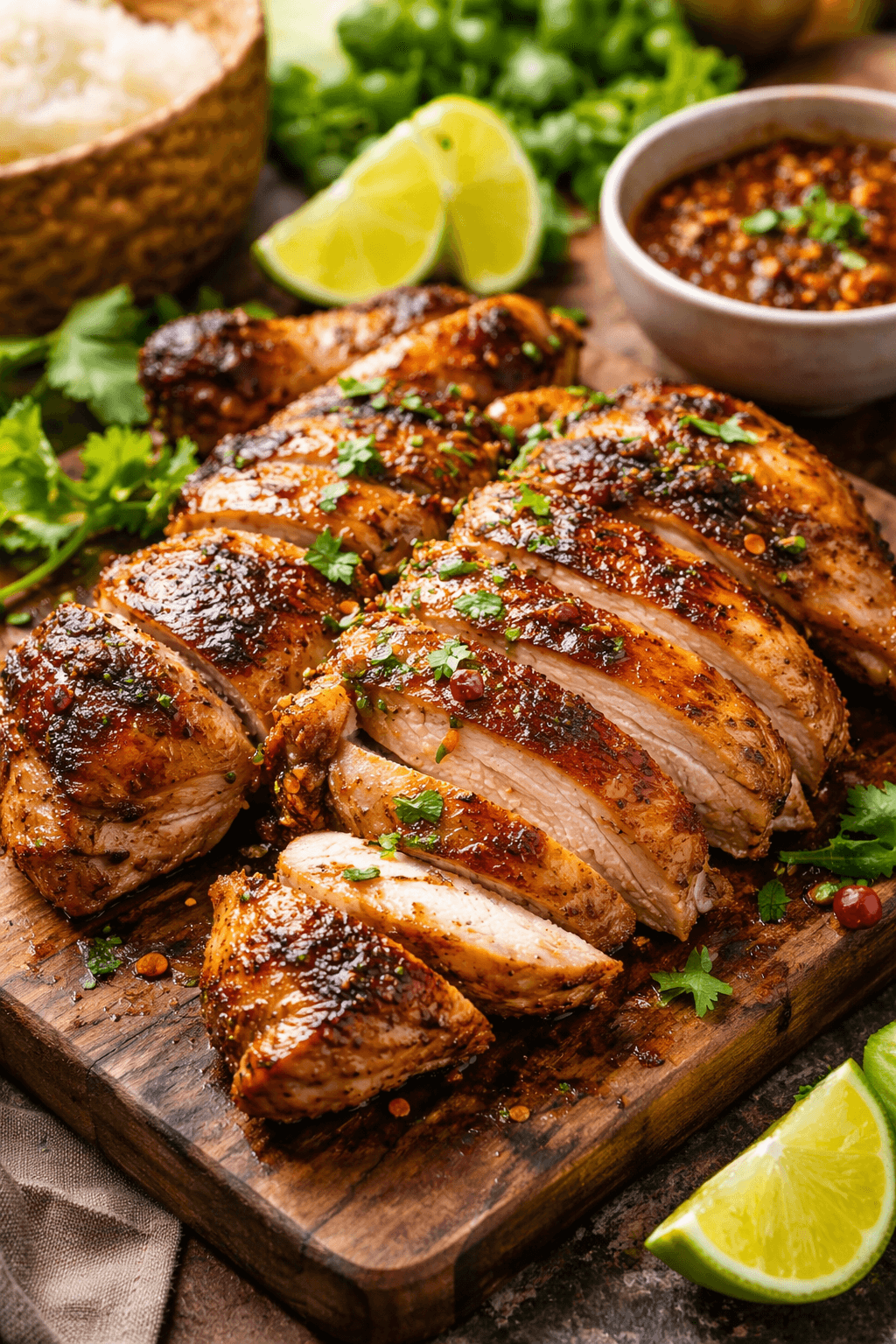
Thai Chicken (Gai Yang)
Ingredients
Equipment
Method
- Pound the garlic, coriander roots, and white peppercorns into a smooth and aromatic paste.
- Mix the paste with fish sauce, soy sauce, palm sugar, oyster sauce, oil, and coconut milk until well combined.
- Rub the marinade all over the chicken, including under the skin. Cover and refrigerate for at least 4 hours or overnight.
- Remove the chicken from the fridge and allow it to rest at room temperature for 20 minutes.
- Preheat the grill to medium heat and grill the chicken skin-side down first.
- Turn occasionally and grill slowly until fully cooked and lightly charred, about 40–45 minutes.
- Rest the chicken for 5–10 minutes before cutting and serving.
